

Most people don’t rethink their small space’s decor because they saw an aspirational photo online — they do it because something specific about living in a compact home has become genuinely frustrating. The room feels cramped no matter how the furniture’s arranged. There’s zero privacy in a studio. Clutter piles up faster than it can be cleared. Most small-space decor guides jump straight to inspiration without asking the more useful question first:
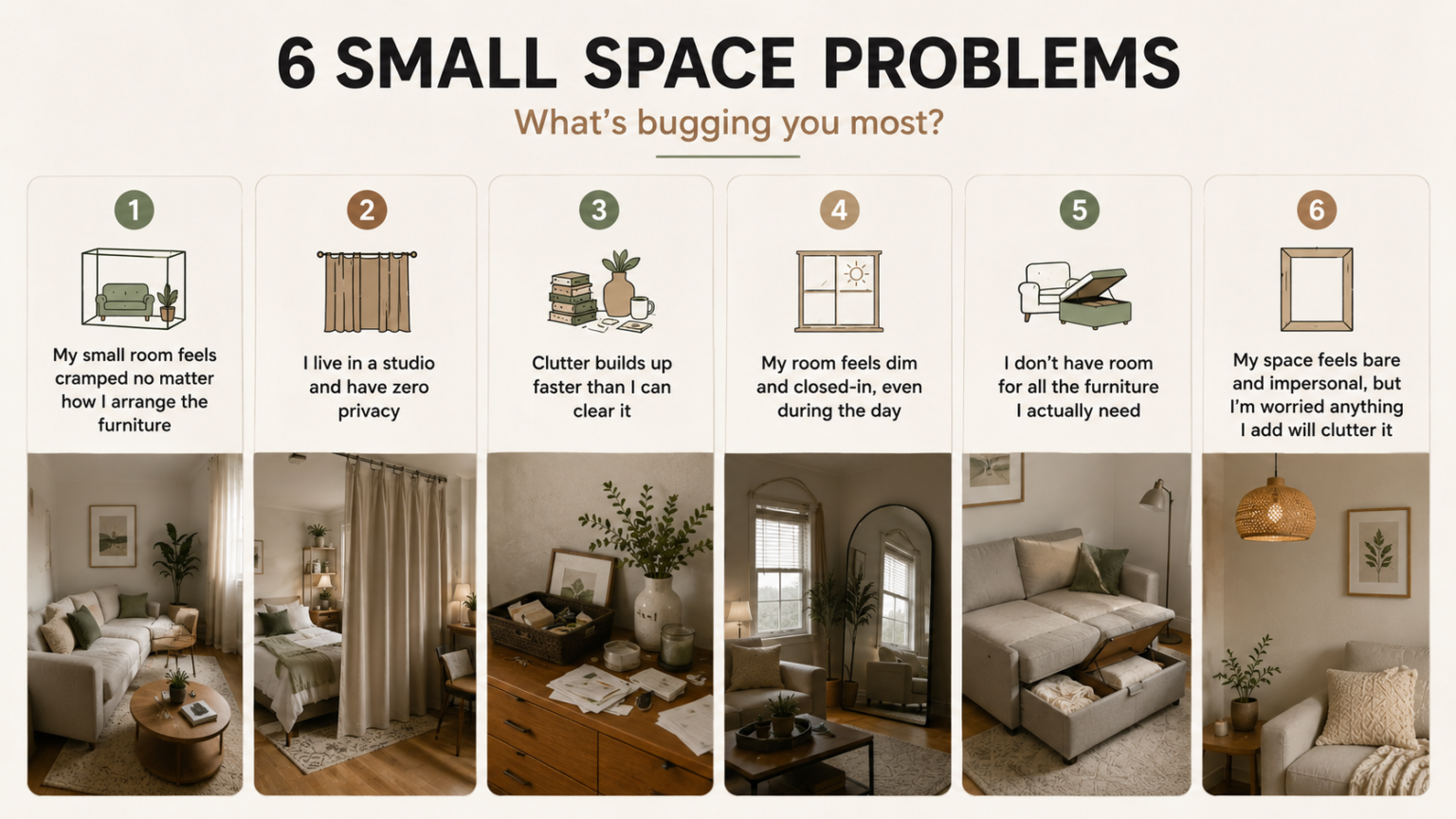
- Problem 1: “My small room feels cramped no matter how I arrange the furniture”
- Problem 2: “I live in a studio and have zero privacy”
- Problem 3: “Clutter builds up faster than I can clear it”
- Problem 4: “My small living room feels dim and closed-in, even during the day”
- Problem 5: “I don’t have room for all the furniture I actually need”
- Problem 6: “My small space feels bare and impersonal, but I’m worried anything I add will make it feel cluttered”
- Matching Problems to Decor Fixes: Quick Reference
- A Word on Solving More Than One Problem at Once
- FAQ’s
- Conclusion
what’s actually the problem you’re trying to solve?
Here are six common small-space problems in 2026, and the specific decor choices built to solve each one.
Problem 1: “My small room feels cramped no matter how I arrange the furniture”
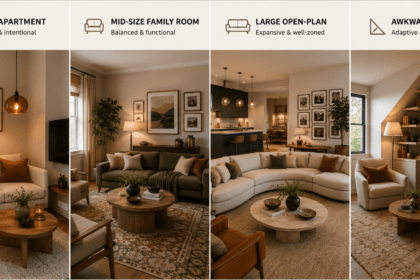
If rearranging hasn’t helped, the actual issue may be furniture scale and fragmentation, not placement — several small pieces scattered around a room often read as more cramped than a few larger, well-chosen ones.
The right fix: Go bigger, not smaller, with your key pieces. One appropriately-sized sofa, one substantial rug, and one large light fixture that work the walls and floor of the room can make the whole space feel larger than multiple smaller furniture pieces would, since scattered small items visually fragment a room rather than opening it up.
Where it falls short: This requires more careful upfront measuring and a bigger single purchase than buying several smaller pieces incrementally — it’s a commitment, not a quick fix you can test cheaply first.
Problem 2: “I live in a studio and have zero privacy”
An open studio layout is efficient, but it can genuinely wear on you if there’s no way to create even a temporary sense of separation between your sleeping area and the rest of the room.
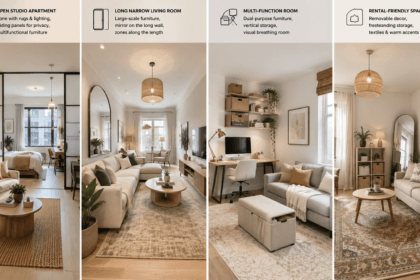
The right fix: Add sliding panels or curtains to divide the space. A sliding panel that quietly hides a sleeping area behind the living space can turn one compact, fully-open room into something that feels layered and private, without permanently sacrificing the flexibility a studio depends on.
Where it falls short: Sliding panels or dedicated room dividers involve more installation than a simple curtain rod setup, and may need landlord approval in a rental — a curtain is the lower-commitment starting point if permanence isn’t an option.
Problem 3: “Clutter builds up faster than I can clear it”
If surfaces fill up almost as fast as you clean them, the issue isn’t a lack of storage — it’s usually a lack of the specific discipline that keeps a small space from accumulating visual clutter in the first place.
The right fix: Designate and protect at least one completely clear surface. Visual clutter is genuinely more tiring to live with than physical clutter, since you can’t close a door on it — and a single surface kept intentionally clear (a console table, a section of counter) creates real, noticeable breathing room even if other areas of the room aren’t perfectly tidy.
Where it falls short: This is a habit, not a one-time fix — it requires ongoing maintenance rather than a single decluttering session, and it can slip if you don’t actively protect the designated clear surface from becoming a catch-all again.
Problem 4: “My small living room feels dim and closed-in, even during the day”
If a small room feels dark despite reasonable window access, the issue is often that available natural light isn’t being reflected or distributed effectively through the space.
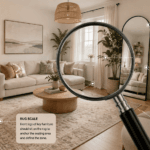
The right fix: Position a large mirror directly opposite your main window. This bounces natural light across the room and adds visual depth, making the space feel measurably brighter and larger than the same amount of natural light without the mirror’s reflective boost.
Where it falls short: A mirror reflects whatever’s actually in the room, including clutter or an unflattering view — check what the mirror will show before committing to a specific placement, or the trick can amplify a problem instead of solving one.
Problem 5: “I don’t have room for all the furniture I actually need”
If your space genuinely requires a sofa, a bed, a desk, and storage but the square footage doesn’t accommodate separate pieces for each, the issue is a mismatch between single-purpose furniture and a multi-purpose room.
The right fix: Replace single-purpose furniture with multifunctional pieces. A storage ottoman that serves as both seating and hidden storage, a sofa bed for occasional overnight guests, or a nesting coffee table that expands only when needed can reduce floor coverage by roughly 30–50% compared to separate single-purpose items.
Where it falls short: Multifunctional furniture is often somewhat less optimized at each individual function than a dedicated piece — a sofa bed is rarely as comfortable as either a dedicated sofa or a dedicated bed. Weigh that trade-off against how genuinely tight your space actually is.
Problem 6: “My small space feels bare and impersonal, but I’m worried anything I add will make it feel cluttered”
This is a genuine tension in small spaces — the instinct toward restraint to avoid clutter can tip into a room that feels cold or unfinished instead.
The right fix: Add personality through small, low-footprint textures rather than more furniture. Macramé pillows, a rattan pendant light, or a few woven accents layer in warmth and character without adding to the room’s floor footprint or working against the visual breathing room principle that keeps small spaces feeling calm.
Where it falls short: It’s possible to overdo even small textural touches — a few well-placed pieces read as intentional, while too many, even if each is individually small, can still tip a room from curated back into cluttered.
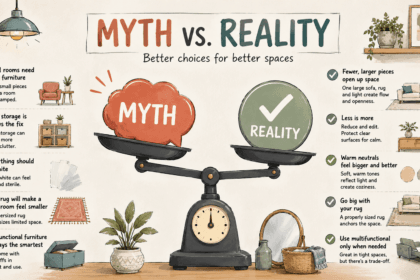
Matching Problems to Decor Fixes: Quick Reference
| Your Problem | Best-Fit Solution | Not the Right Fix For |
|---|---|---|
| Room feels cramped despite rearranging | Larger, fewer statement pieces | Rooms that are already appropriately furnished |
| No privacy in an open studio | Sliding panels or curtains | Spaces that need a fully removable, no-install solution (use curtains) |
| Clutter builds up constantly | One protected, permanently clear surface | A single deep clean (needs to be an ongoing habit) |
| Room feels dim despite windows | Large mirror opposite the main window | Rooms where the mirror would reflect clutter or a bad view |
| Not enough room for needed furniture | Multifunctional furniture | Anyone prioritizing dedicated single-purpose comfort |
| Feels bare but risk of clutter | Small textured accents (pillows, pendant) | Overdoing multiple textures at once |
A Word on Solving More Than One Problem at Once
It’s tempting to address every small-space frustration in one weekend. In practice, these fixes work best tackled based on what’s genuinely bothering you most day to day. A studio with both a privacy problem and a clutter problem doesn’t need both solved simultaneously — start with whichever one affects you more constantly (privacy tends to matter every single day; clutter can sometimes wait for a slower week), solve it, and reassess the rest afterward.
FAQ’s
What if my small space has more than one of these problems at once?
Prioritize by how constantly each problem affects you. A privacy issue in a studio is a daily frustration; a slightly dim room might only bother you at certain times of day. Fix the most persistent irritation first.
Is it worth trying a curtain divider before committing to a sliding panel system?
Yes — a curtain is a lower-cost, lower-commitment way to test whether a visual divider actually solves your privacy concern before investing in a more permanent or elaborate sliding panel setup.
How do I keep a “clear surface” from just becoming a new spot for clutter within a week?
Treat it as a designated rule, not just a one-time achievement — actively redirect new items elsewhere and do a quick daily reset of that specific surface, since it only works as an ongoing habit, not a single decluttering event.
Can I test the mirror trick before buying an expensive large mirror?
Yes — temporarily prop a smaller mirror or reflective surface in the intended spot to check what it would actually reflect and whether it visibly brightens the room, before committing to a larger, pricier piece.
Conclusion
The fastest way to end up frustrated with a small-space redecoration is choosing ideas because they looked appealing in a photo, rather than because they solve the specific problem that’s actually making your space harder to live in. Match the fix to the real issue — feeling cramped, lacking privacy, constant clutter, dim lighting, insufficient furniture capacity, or a bare, impersonal feel — and you’ll get a small space that genuinely works better day to day, not just one that photographs well.
Design trends, product availability, and pricing for home decor items change frequently. This article reflects general design guidance current at the time of publication; always assess your own space, budget, lease terms, and personal style before making purchasing or renovation decisions.