

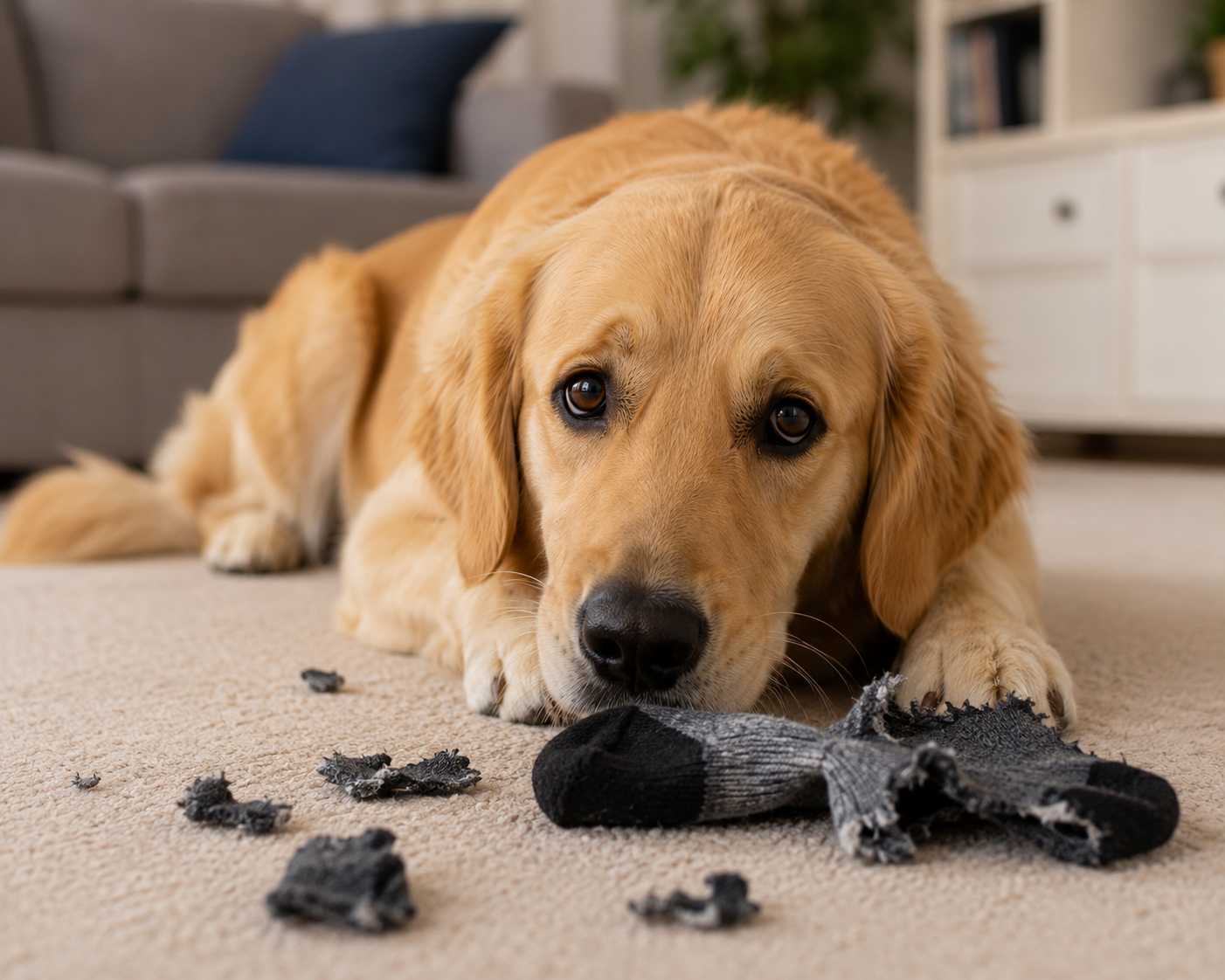
YYou turn your back for a second, and your dog has half a sock hanging out of their mouth. Or you catch them crunching on a rock in the yard. Or licking up mouthfuls of dirt like it’s a treat. It’s strange to watch, and it’s easy to worry that something is wrong.
- What Pica Actually Means
- Is This Just Chewing, or Is It Pica?
- Common Reasons Behind Pica
- Why Dogs Go for Socks
- Why Dogs Go for Rocks
- Why Dogs Go for Dirt
- Does Breed Matter?
- Puppies vs. Adult Dogs
- The Real Danger: Blockages and Injury
- Warning Signs to Watch For
- What a Vet Visit Usually Involves
- How Pica Is Typically Managed
- What to Do Right Now If Your Dog Swallowed Something
- Frequently Asked Questions
- Is pica common in dogs?+
- What’s the difference between normal chewing and pica?+
- Can a nutrient deficiency really make a dog eat dirt or rocks?+
- Are certain breeds more likely to develop pica?+
- My dog ate a sock. Should I make them throw it up myself?+
- Can pica go away on its own?+
- When does eating dirt or rocks become an emergency?+
- Final Thoughts
There’s actually a name for this: pica. It’s the term vets use when a dog eats things that have no food value — fabric, rocks, dirt, plastic, and so on. It’s not one single problem with one single cause. Some cases are mostly harmless. Others are the body or brain signaling that something needs attention. Here’s a plain-language breakdown of what’s usually going on, and what to do about it.
What Pica Actually Means
Pica is the compulsive or repeated eating of things that aren’t food. Veterinarians generally treat it as having two possible roots: a behavioral or psychological pattern, sometimes described as compulsive, or an underlying medical issue, such as a nutrient shortfall or a digestive problem. In many dogs, it’s some combination of both.
It’s considered a fairly uncommon condition overall, but when it does show up, it’s taken seriously, since the items involved can cause real physical harm.
This article is for general information only and is not a substitute for veterinary advice. If your dog is eating non-food items regularly, or you think your dog swallowed something dangerous, contact your veterinarian.
Is This Just Chewing, or Is It Pica?
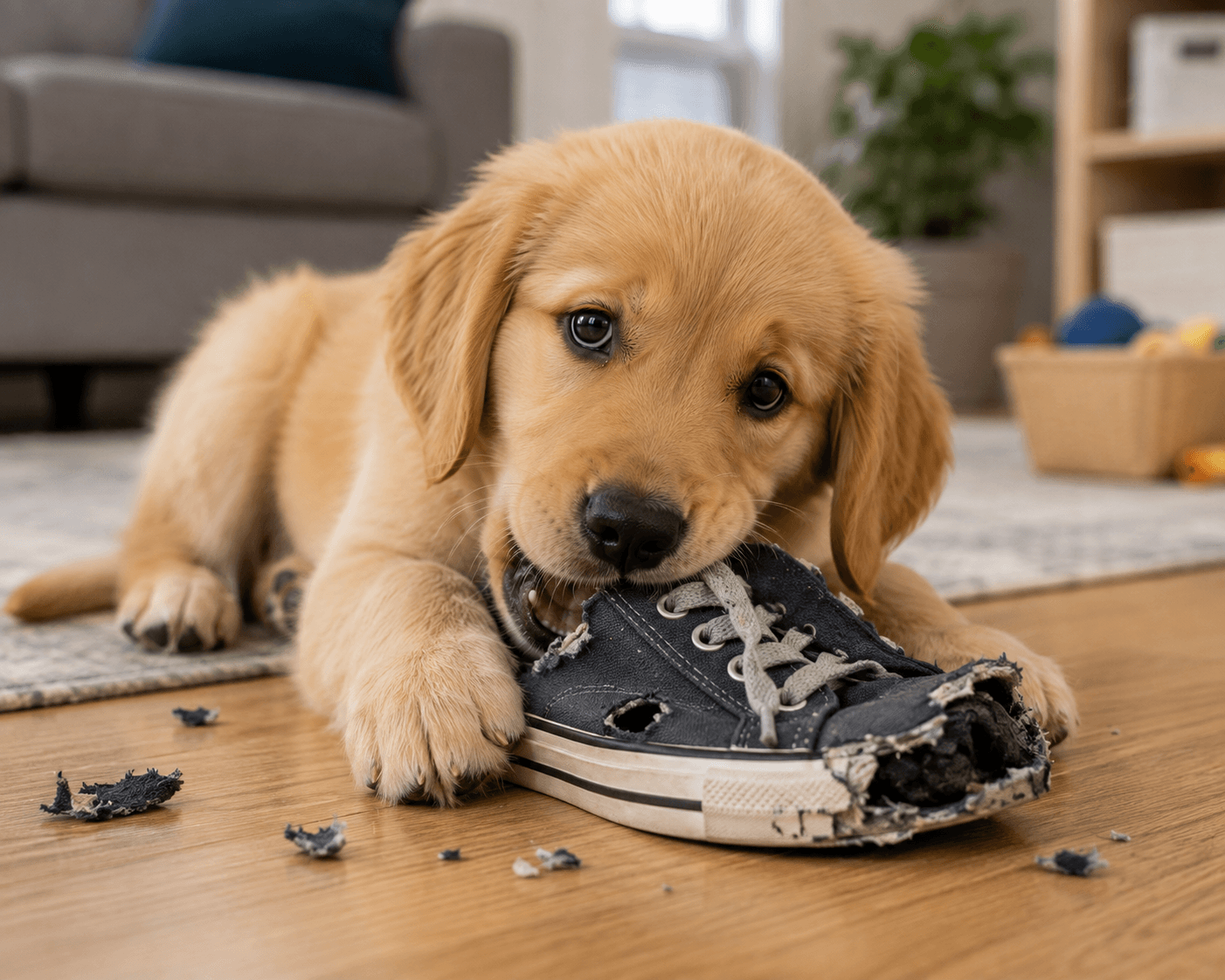
This distinction matters. Chewing on something is normal dog behavior — it’s how puppies especially explore the world, and it can also relieve teething discomfort. Pica goes a step further: the dog is actually consuming the item, not just mouthing or chewing on it, and doing so as a repeated pattern rather than a one-off.
A puppy gnawing on a shoe isn’t automatically a pica case. A dog who regularly and deliberately swallows non-food items is a different situation, and one worth mentioning to a vet.
Common Reasons Behind Pica
There’s rarely one clean explanation. The behavior tends to trace back to one or more of these:
- Nutrient shortfalls, particularly low iron or zinc
- Anemia, which can affect a dog’s ability to absorb nutrients properly
- Digestive issues, including intestinal parasites or inflammatory conditions
- Hormonal or metabolic conditions, such as thyroid imbalances or diabetes
- Stress or anxiety, including separation anxiety
- Boredom or a lack of mental and physical stimulation
- Compulsive behavior, similar in concept to an obsessive habit
- Simple curiosity, especially in young dogs still exploring their environment
Because so many different things can trigger this behavior, working out the actual cause for your dog usually takes a bit of investigation rather than a guess.
Why Dogs Go for Socks
Socks come up constantly in pica cases, and there are some practical reasons why:
- They carry your scent, which can be a source of comfort for an anxious dog
- They’re easy to find, since they end up on floors, near hampers, or half-hanging out of drawers
- The soft texture is satisfying to chew, especially for teething puppies or stressed dogs looking for an outlet
Once chewing starts, swallowing pieces can follow fast, which is part of why socks are one of the more frequently reported items involved in emergency blockage cases.
Why Dogs Go for Rocks
Rock-eating can come from a few different directions. Play that gets too rough is one — a dog chasing or mouthing a rock can end up swallowing it by accident. Teething puppies exploring texture is another. For some dogs, it becomes a repetitive, almost habitual behavior tied to boredom or anxiety, similar to a nervous habit.
Rocks are one of the higher-risk items on this list simply because of how hard and heavy they are, which is covered more under the safety section below.
Why Dogs Go for Dirt
Eating dirt, sometimes called geophagia, has its own pattern. It’s one of the behaviors most often linked to a nutritional cause — specifically, dogs dealing with anemia or a deficiency in iron or zinc are sometimes described as more likely to eat soil or clay, as if trying to make up for what’s missing. That link isn’t confirmed in every case, but it’s a common enough pattern that vets often check for it.
Dirt-eating can also simply be boredom-driven, especially in dogs that spend a lot of unsupervised time outside. An occasional mouthful during digging isn’t usually something to worry about. A dog who regularly and deliberately eats dirt is worth watching more closely, and possibly bringing up with a vet.
Does Breed Matter?
There’s a common idea that Retrievers and other Sporting-group breeds are more prone to pica, since these breeds are known for a strong instinct to carry things in their mouths. Some veterinary behaviorists question how strong that connection really is, and suggest that a dog’s environment and individual temperament may matter more than breed alone. In other words, breed might play some role, but it isn’t considered the main driver.
Puppies vs. Adult Dogs
Puppies do seem to be at higher risk for this kind of behavior, likely tied to how much they explore with their mouths and the discomfort of teething. That doesn’t make it automatically safe, though — puppies are also more impulsive and less experienced, which can make them more likely to actually swallow something risky rather than just mouth it.
In adult dogs, especially if the behavior shows up suddenly or out of nowhere, it’s more likely to point toward a medical or environmental change worth investigating.
The Real Danger: Blockages and Injury
Whatever the underlying cause, the physical risk is the same across the board. Swallowed non-food items can:
- Get stuck in the throat and cause choking
- Cause irritation or ulcers in the digestive tract
- Create a blockage in the stomach or intestines, which can become life-threatening without treatment
- Cause dental damage, especially with hard items like rocks
- Introduce toxins, parasites, or bacteria, depending on what was eaten
A blockage in particular is a genuine emergency. It stops food, water, and waste from moving through the digestive system properly, and it typically requires prompt veterinary treatment, sometimes surgery, to resolve.
Warning Signs to Watch For
Contact your veterinarian if your dog shows any of these after eating a non-food item, or if you suspect they may have swallowed something without seeing it happen:
- Vomiting, especially repeated episodes
- Straining to pass stool, or not passing any at all
- A swollen, tender, or painful abdomen
- Loss of appetite
- Low energy or noticeable lethargy
- Drooling, gagging, or retching
- Restlessness or visible discomfort
Some of these signs can take time to appear, so a dog who seems fine right after eating something isn’t necessarily out of danger.
What a Vet Visit Usually Involves
If pica is suspected, a veterinarian will typically start with a full physical exam, followed by diagnostic testing to look for an underlying cause. This commonly includes bloodwork, a fecal test to check for parasites, and sometimes imaging like an X-ray or ultrasound, particularly if a blockage or another internal issue is a concern. The goal is to rule medical causes in or out before assuming the behavior is purely behavioral.
How Pica Is Typically Managed
Treatment depends heavily on the cause, since a nutrient deficiency, a digestive issue, and a stress-driven habit call for different approaches. Common strategies include:
- Addressing any medical cause directly, such as treating parasites or correcting a nutrient deficiency through diet changes or supplements
- Feeding a high-quality, complete diet, which alone resolves some cases
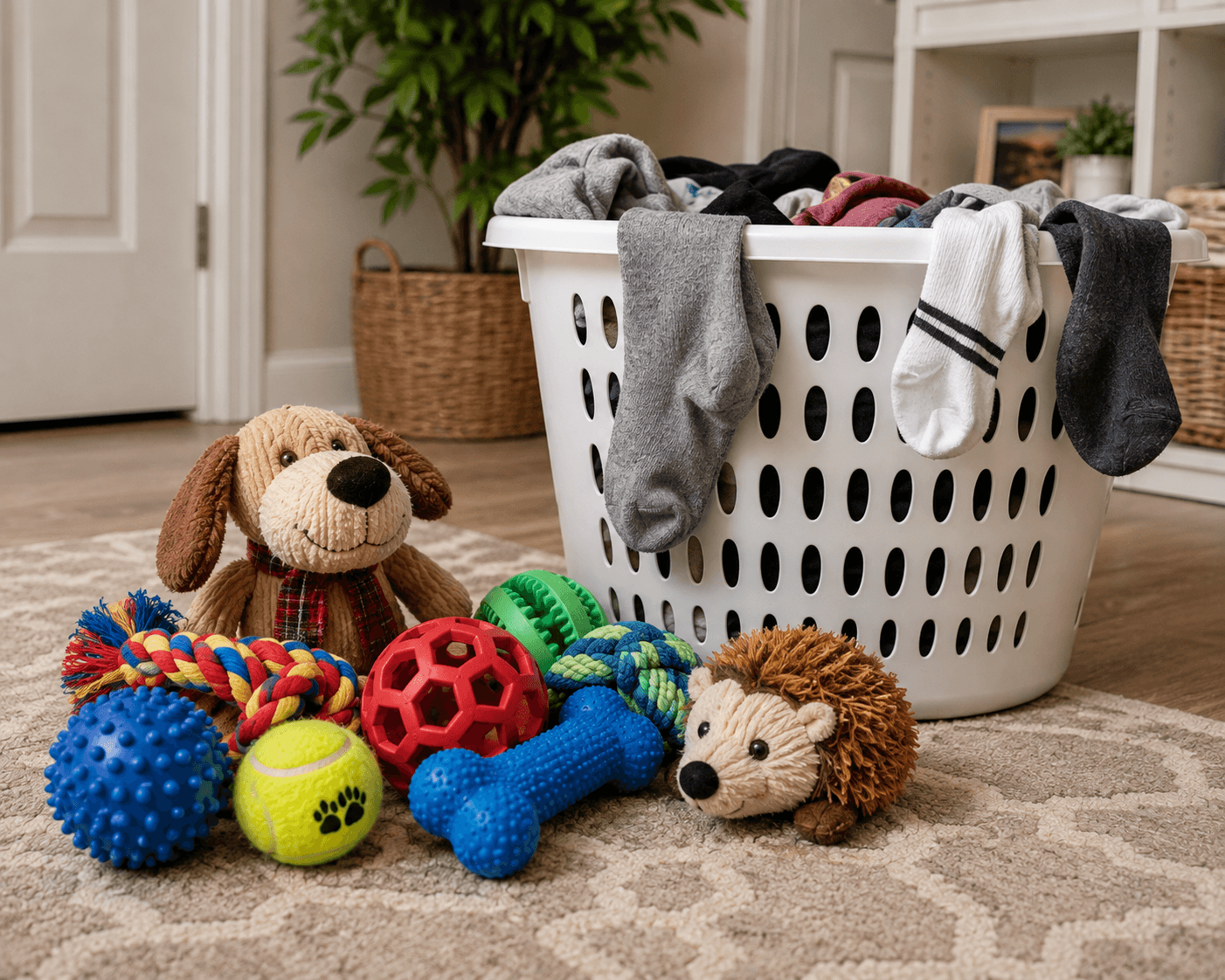
- Increasing exercise and mental stimulation, through walks, play, and interactive toys
- Limiting access to whatever the dog tends to eat, such as keeping a dog out of a rocky area or off leash-free access to soil
- Working with a veterinary behaviorist, particularly for cases that seem rooted in anxiety or compulsive behavior
When there’s an identifiable medical cause, the behavior often improves once that’s treated. When no clear cause is found, ongoing management — mainly supervision and limiting access to problem items — tends to be the long-term approach.
What to Do Right Now If Your Dog Swallowed Something
- Stay calm, and try to figure out exactly what was eaten and roughly how much.
- Call your veterinarian immediately, especially for anything solid like a sock or a rock — don’t wait to see if symptoms show up.
- Don’t try to make your dog vomit on your own unless a vet tells you to, since some items can cause more damage coming back up.
- Keep your dog calm and away from the same item while you’re getting guidance.
- Follow your vet’s instructions closely, which may include monitoring at home, inducing vomiting under supervision, or bringing your dog in for imaging.
Frequently Asked Questions
It’s generally considered an uncommon condition, though eating non-food items occasionally is a behavior many dogs display at some point, especially as puppies.
Chewing is normal and often relieves teething discomfort or boredom. Pica specifically refers to a dog actually swallowing non-food items as a repeated pattern, not just mouthing or chewing on them.
It’s one recognized possible cause. Low iron or zinc levels, or anemia that affects nutrient absorption, have been linked to this kind of behavior in some dogs, which is part of why a vet workup often includes bloodwork.
Retrievers and other Sporting-group breeds are sometimes mentioned because of their strong instinct to carry things in their mouths, though some veterinary behaviorists don’t consider the evidence for a strong breed link to be very solid. Environment and individual temperament may play a bigger role.
No, not without guidance. Call your veterinarian first, since the right response depends on your dog’s size, how long ago it happened, and exactly what was swallowed.
Sometimes, especially in puppies who outgrow the exploratory phase or once teething ends. In other cases, especially when there’s an underlying medical or behavioral cause, the behavior tends to continue until that cause is identified and addressed.
It becomes urgent if your dog swallows something sharp, toxic, or large enough to cause a blockage, or if they show symptoms like repeated vomiting, straining, a swollen abdomen, or unusual lethargy. Any of these warrant prompt veterinary attention.
Final Thoughts
Dogs eat socks, rocks, and dirt for a mix of reasons — sometimes it’s boredom or anxiety, sometimes it’s a nutrient gap or an underlying medical issue, and sometimes it’s simple curiosity that goes a step too far. Because the causes vary so much, there isn’t a single fix that works for every dog.
What matters most is recognizing when this crosses from an odd habit into a genuine safety risk. If your dog swallows something solid, or the behavior is frequent and persistent, a veterinary visit is the right next step to figure out what’s actually going on and how to address it.