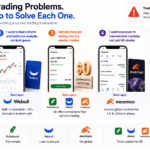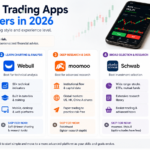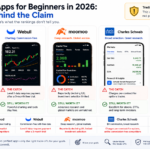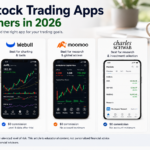


Ask ten new traders what makes a “good” trading app, and a lot of the answers trace back to assumptions nobody’s actually tested — commission-free means genuinely free, the most feature-rich app is automatically the best choice, a simple app is a sign you’re not being taken seriously as a trader. Some of this thinking made more sense before “commission-free” became the industry standard rather than a differentiator. In 2026, several of these assumptions are quietly steering beginners toward the wrong platform or unnecessary costs.
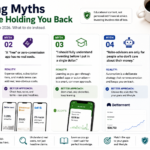
- Myth 1: “Commission-free trading means an app is genuinely free to use”
- Myth 2: “The most feature-rich, advanced app is automatically the best choice”
- Myth 3: “A simple trading app is a sign you’re not being taken seriously as an investor”
- Myth 4: “All commission-free options trading is equally good, so it doesn’t matter which app you pick”
- Myth 5: “You should pick one trading app and stick with it permanently”
- Myth vs. Reality: Quick Reference
- FAQ’s
- Conclusion
Here are five of the most common trading app myths, what current comparisons actually show, and what to do instead.
As always: trading carries real, elevated risk, and this is educational content, not personalized financial advice.
Myth 1: “Commission-free trading means an app is genuinely free to use”
The assumption: Since Robinhood, Webull, and moomoo all advertise commission-free stock, ETF, and options trading, using any of them comes with essentially no real costs.
The reality: “Commission-free” applies specifically to the trade execution fee, not necessarily to every feature within the app. Webull’s Level II market data, for instance, is only free for an initial three-month trial before requiring a paid subscription — a real, recurring cost that isn’t part of the headline “commission-free” claim. Similarly, some apps pay relatively little interest on uninvested cash sitting in your account, an indirect cost of leaving money uninvested on that specific platform.
What to do instead: Look past the “commission-free” headline and check for data subscription costs, interest paid on cash balances, and any other fees before assuming an app has zero meaningful costs beyond trade commissions.
Myth 2: “The most feature-rich, advanced app is automatically the best choice”
The assumption: Since moomoo offers 80+ technical indicators, institutional capital-flow data, and access to global markets, it must be the objectively best choice for anyone serious about trading, beginner or not.
The reality: Direct comparisons specifically note that for a complete beginner who just wants a simple buy-and-hold portfolio, moomoo’s interface and tool depth can feel busier than necessary — and separately, testers have flagged a reportedly declining user experience despite the platform’s genuine research strengths. More features and data don’t automatically translate to a better experience if you don’t yet have the trading knowledge to use them effectively, or if the added complexity comes with usability trade-offs.
What to do instead: Match the app’s depth to your actual current trading knowledge and needs, not to which platform has the most total features on paper — a simpler platform that you’ll actually use well often serves a beginner better than an advanced one that overwhelms.
Myth 3: “A simple trading app is a sign you’re not being taken seriously as an investor”
The assumption: Choosing a straightforward, beginner-focused platform like Robinhood signals that you’re not a “real” trader compared to someone using a data-dense platform like moomoo or Webull.
The reality: Robinhood’s straightforward platform is specifically noted as a good fit for brand-new traders precisely because it removes unnecessary friction for people who are, in fact, genuinely new — there’s nothing inherently less serious about starting with a platform matched to your actual current experience level. Its lowest average margin rates for the first half of 2026 among major platforms also show it’s not purely a “beginner toy” with no substance behind the simple interface.
What to do instead: Choose a platform based on your actual current knowledge and needs rather than worrying about how “serious” the app looks — you can always migrate to a more advanced platform later as your trading knowledge genuinely grows.
Myth 4: “All commission-free options trading is equally good, so it doesn’t matter which app you pick”
The assumption: Since Robinhood, Webull, and moomoo all offer commission-free options trading, there’s no meaningful difference between them for an options trader, and Charles Schwab’s per-contract fee simply makes it a worse choice across the board.
The reality: Commission-free options trading is genuinely a real cost advantage over per-contract fee structures like Schwab’s, but the apps aren’t otherwise identical — Webull offers built-in educational tutorials specifically for options strategies that the others don’t emphasize the same way, and moomoo offers institutional-level research that could inform options decisions differently than Robinhood’s more basic market information. The commission structure is one factor, not the only one.
What to do instead: Compare commission-free options apps on their actual educational support, research depth, and interface quality for options specifically, not just on the shared absence of a per-contract fee.
Myth 5: “You should pick one trading app and stick with it permanently”
The assumption: Choosing a trading app is a long-term, largely permanent decision, so it’s worth agonizing over picking the “perfect” one from the start rather than starting with something reasonable and adjusting later.
The reality: Comparisons across this category consistently frame trading apps as tools matched to a specific stage of experience or specific goal — starting simple with Robinhood and later adding a more research-focused platform like moomoo or Webull as your knowledge grows is a normal, commonly described progression, not a sign of an initial mistake. One direct piece of guidance on investing apps broadly notes that if you later decide you want more complex products or markets, you can always add a second, more advanced platform to your toolkit.
What to do instead: Choose a reasonable starting app based on your current needs, and treat switching or adding a second platform later as a normal part of growing as a trader, not something to avoid by trying to pick the “perfect” permanent app upfront.
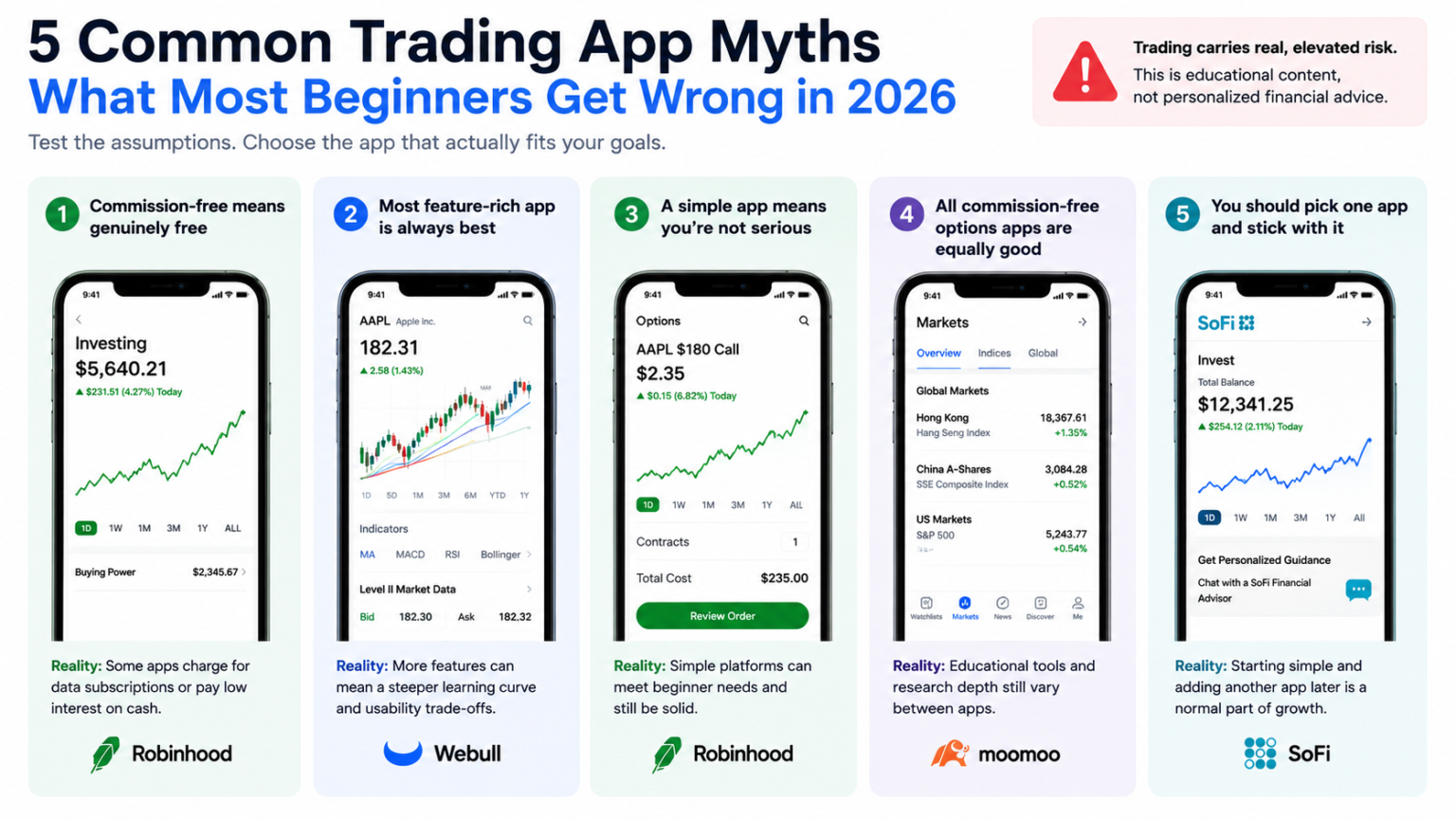
Myth vs. Reality: Quick Reference
| Myth | Reality |
|---|---|
| Commission-free means genuinely free | Data subscriptions and other fees can add real costs beyond trade commissions |
| The most feature-rich app is always best | Depth that outpaces your current knowledge can create real usability problems |
| A simple app means you’re not a serious trader | Simple platforms can genuinely fit a beginner’s actual current needs well |
| All commission-free options apps are equally good | Educational support and research depth still vary meaningfully between them |
| You must pick one trading app permanently | Starting simple and adding or switching platforms later is a normal progression |
FAQ’s
How do I find out about an app’s non-commission fees before signing up?
Check the app’s official fee schedule or disclosure page directly, specifically looking for data subscription costs, interest rates paid on uninvested cash, and any account maintenance fees, rather than relying solely on headline “commission-free” marketing.
Is it ever a mistake to start with a more advanced app like moomoo as a true beginner?
Not necessarily a mistake, but it’s worth being honest about whether you’re ready to use the added depth effectively — some beginners do fine starting with more advanced tools, while others find the complexity counterproductive before they’ve built basic trading comfort.
Should I feel behind if I’m still using a simple app after a year of trading?
No — how “advanced” your app looks isn’t a meaningful measure of trading skill or seriousness. If a simple platform is genuinely meeting your needs, there’s no requirement to upgrade just because more feature-rich options exist.
Is it complicated to switch trading apps or use more than one at once?
It adds some complexity (tracking positions across accounts, managing multiple logins), but it’s a common and manageable practice — many traders use one app for core long-term holdings and another for more active or research-driven trading.
Conclusion
None of these five myths are unreasonable on their face — they’re mostly assumptions that made more sense before “commission-free” became standard across the industry and before the beginner trading app category diversified into distinct use cases. The pattern across all five: checking past headline claims, matching app depth to your actual knowledge, and treating your first app choice as a starting point rather than a permanent decision all serve beginners better than the more anxious, assumption-driven defaults. Test these assumptions against your own trading experience and goals before defaulting to whichever app seems most impressive on paper.
This article is for informational and educational purposes only and does not constitute financial, investment, or tax advice. The authors are not licensed financial advisors. Trading and investing involve risk, including the potential loss of principal, and past performance does not guarantee future results. Fees, features, and account terms change frequently and may have been updated since this article was published — always verify current details directly on each provider’s official website, and consider consulting a qualified financial professional before making trading or investment decisions.