

If you’ve got a crab apple tree in the yard, you’ve probably already caught your dog sniffing around the fallen fruit — or worse, mid-bite. It’s a common enough scenario that it’s worth knowing exactly what’s safe here and what isn’t, rather than guessing in the moment.
- What Are Crab Apples?
- Can Dogs Eat Crab Apples? The Short Answer
- Nutritional Value of Crab Apples for Dogs
- The Cyanide Risk: Seeds, Stems, and Leaves
- How Much Would Actually Be Dangerous?
- Other Risks Beyond Cyanide
- How to Feed Crab Apples to a Dog Safely
- What to Do If Your Dog Ate Crab Apples
- Signs of a Problem to Watch For
- Which Dogs Should Be Extra Cautious
- FAQ’s
- Are crab apples poisonous to dogs?+
- My dog ate a whole crab apple, including the core. Should I worry?+
- Can dogs eat crab apple leaves?+
- Are crab apples safer than regular apples for dogs?+
- How many crab apple seeds would actually be dangerous?+
- Can puppies eat crab apples?+
- What if I don’t know how many crab apples my dog ate?+
- Final Thoughts
The short answer: the flesh of a crab apple is generally fine for dogs in small amounts. The seeds, stems, and leaves are a different story, since they contain compounds that can release cyanide. Here’s what that actually means in practice, and how worried you should be if your dog got into some.
What Are Crab Apples?
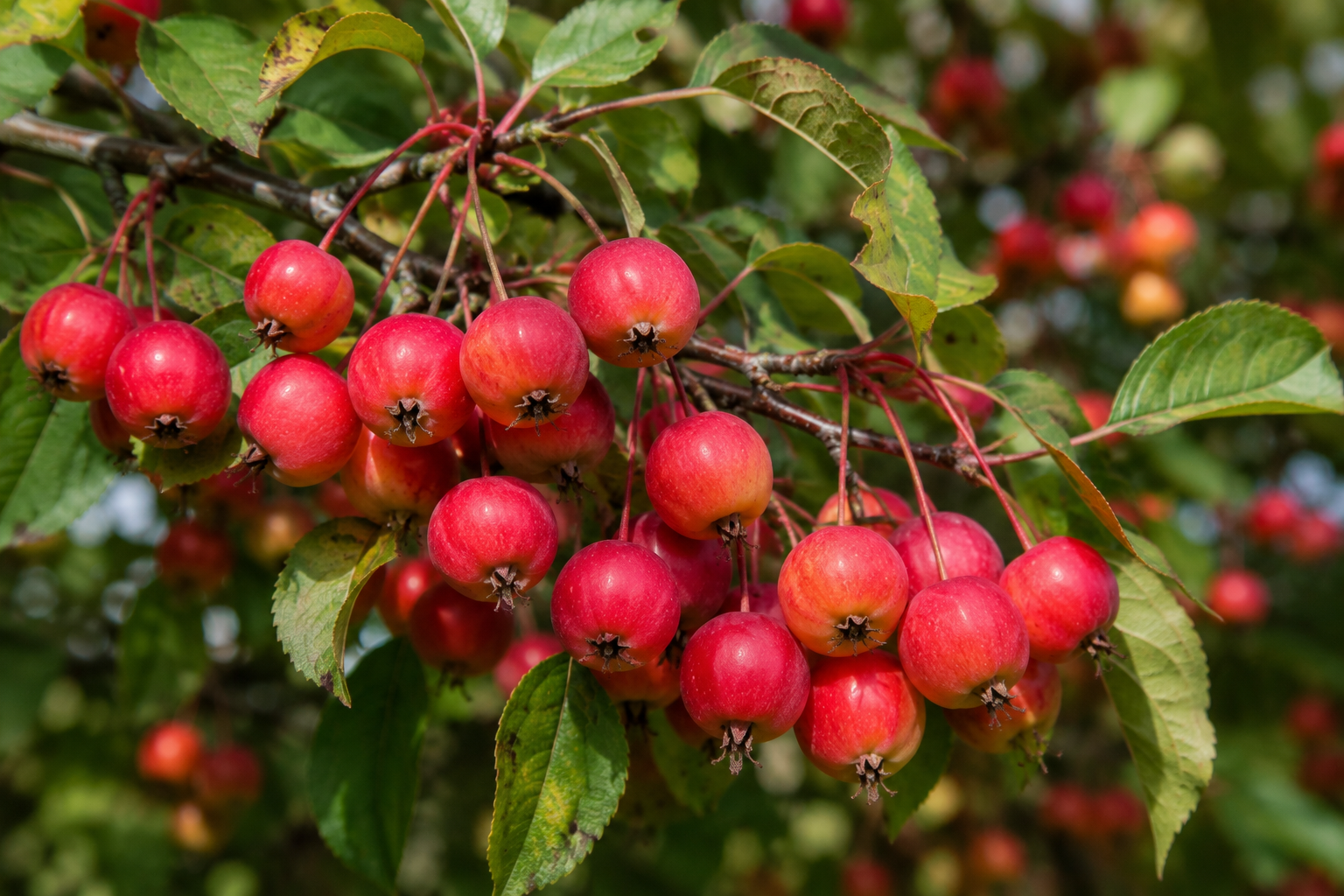
Crab apples are the smaller, tarter relatives of the apples sold in grocery stores. They grow on ornamental and ornamental-fruit trees commonly planted in yards, parks, and along streets, and the trees tend to drop a lot of small fruit in late summer and fall. Compared to a standard eating apple, crab apples are smaller, firmer, and noticeably more tart, with less sugar.
This article is for general informational purposes only and is not a substitute for professional veterinary advice. If your dog has eaten crab apples or is showing signs of illness, contact your veterinarian.
Can Dogs Eat Crab Apples? The Short Answer
Yes, the flesh of a crab apple is generally considered safe for dogs in small amounts. It’s the seeds, stems, and leaves that carry a real risk, since they contain cyanogenic glycosides — compounds that release cyanide when chewed and digested. In practice, this means a dog nibbling on the fruit itself usually isn’t cause for panic, while a dog chewing through a pile of seeds, stems, or leaves is a different situation that deserves closer attention.
Nutritional Value of Crab Apples for Dogs
Crab apples share a similar nutritional profile to regular apples, just on a smaller scale. The flesh can provide:
- Dietary fiber, which supports digestion in modest amounts
- Vitamin A
- Vitamin C
- Calcium and phosphorus
- Antioxidants
Crab apples are also naturally lower in sugar than many common eating-apple varieties, which is a minor advantage if you’re looking for a lower-sugar fruit treat. None of this makes crab apples a necessary or superior treat — they’re simply not nutritionally harmful in the small amounts a dog would realistically eat.

The Cyanide Risk: Seeds, Stems, and Leaves
This is the part that causes the most concern, so it’s worth being precise about it.
Crab apple seeds, stems, and leaves contain cyanogenic glycosides, specifically a compound called amygdalin, which converts into hydrogen cyanide once it’s chewed and metabolized. Cyanide interferes with the body’s ability to use oxygen at the cellular level, and in high enough doses, it’s dangerous.
The key detail is dose. The amount of cyanide in a typical handful of seeds is very small, and multiple veterinary sources note that a dog would need to chew and consume a large quantity of seeds — on the order of what’s found in roughly 200 apples’ worth of seeds — to reach a toxic dose. That volume is not something a dog is realistically going to eat in one sitting from a few fallen crab apples.
This is why the fruit’s flesh is generally treated as non-toxic, while direct, large-scale access to seeds, stems, or leaves (such as a dog left alone under a crab apple tree for an extended period) is treated more cautiously.
How Much Would Actually Be Dangerous?
Based on the toxicity information referenced above, an isolated incident — your dog snatching one or two fallen crab apples, or a few seeds — is very unlikely to cause cyanide toxicity. The scenario that raises more concern is a dog with sustained, unsupervised access to a large quantity of fallen fruit, seeds, stems, or leaves over an extended period, such as being left in a yard with a crab apple tree for hours.
Because the exact toxic threshold depends on your dog’s size and exactly how much plant material was consumed, it’s not something to calculate precisely at home. If you’re ever unsure how much your dog actually ate, that’s a reasonable moment to call your veterinarian rather than guess.
Other Risks Beyond Cyanide
Cyanide gets most of the attention, but it isn’t the only consideration with crab apples:
- Digestive upset. Like most fruit that isn’t a regular part of a dog’s diet, crab apples can cause an upset stomach, vomiting, or diarrhea if a dog eats a larger amount than they’re used to.
- Spoiled or moldy fruit. Fallen crab apples left on the ground can rot, mold, or attract bacteria. Eating spoiled fruit can make a dog sick independently of any cyanide concern.
- Choking or obstruction. A whole crab apple, core included, is a solid object that could pose a choking risk or, in smaller dogs, a digestive obstruction risk if swallowed in larger pieces.
- Sugar content. While lower in sugar than many apple varieties, crab apples still contain natural sugars, so larger amounts aren’t ideal for dogs managing their weight.

How to Feed Crab Apples to a Dog Safely
If you’d like to offer your dog a taste of crab apple deliberately, rather than dealing with one they found on the ground:
- Wash the fruit thoroughly to remove dirt, residue, or pesticide.
- Remove the core and all seeds before offering any piece to your dog.
- Cut the flesh into small, manageable pieces appropriate to your dog’s size.
- Skip the stem entirely.
- Offer only a small amount the first time, and watch for any digestive reaction.
- Keep it occasional, not a regular addition to your dog’s diet.
What to Do If Your Dog Ate Crab Apples
If your dog got into fallen crab apples in the yard, here’s how to think through it:
- A bite or two of the fruit itself: Usually not an emergency. Monitor your dog for any digestive upset over the next several hours.
- A larger quantity of fruit, or fruit plus seeds/stems: Contact your veterinarian to talk through what was eaten and how much, since they can advise based on your dog’s size and the amount consumed.
- Direct access to a large number of seeds, stems, or leaves, or any signs of illness: Contact your veterinarian or an emergency animal hospital promptly rather than waiting to see what happens.
Try to get a rough sense of how much your dog ate and how long ago, since that information helps your veterinarian assess the situation accurately.
Signs of a Problem to Watch For
Contact your veterinarian if your dog shows any of the following after eating crab apples, seeds, stems, or leaves:
- Vomiting or diarrhea
- Excessive panting or difficulty breathing
- Dilated pupils
- Red or bright gums, lips, or tongue
- Weakness or difficulty standing
- Drooling
- Lethargy or unusual behavior
These can be signs of digestive upset in milder cases, or, in more serious situations involving large amounts of seeds, stems, or leaves, potential signs of cyanide exposure. Either way, it’s worth a call to your vet rather than waiting to see if symptoms resolve on their own.
Which Dogs Should Be Extra Cautious
A few situations call for extra care around crab apples:
- Small dogs, since a given amount of seeds, stems, or fruit represents a larger share of their body weight
- Dogs with unsupervised yard access to a crab apple tree, since repeated or large-volume exposure to fallen fruit and plant material is the scenario most associated with risk
- Dogs with sensitive stomachs, who may react to the fiber and natural sugar in crab apples even without any cyanide involved
- Puppies, who are more likely to chew through stems, cores, and seeds indiscriminately
FAQ’s
The fruit’s flesh is generally not considered toxic in small amounts. The seeds, stems, and leaves contain compounds that release cyanide when chewed, but the amount needed to reach a toxic dose is large and unlikely to come from casual exposure to a few fallen apples.
One crab apple, core and all, is unlikely to cause cyanide poisoning based on the dose levels described by veterinary sources. It’s still worth watching your dog for digestive upset, and calling your vet if you’re unsure or if your dog shows any symptoms.
Leaves contain the same cyanogenic compounds as the seeds and stems, and the concentration can increase as leaves wilt. It’s best to prevent your dog from chewing on crab apple leaves, particularly in larger quantities.
They’re nutritionally similar, though crab apples tend to be lower in sugar. The core toxicity consideration — avoiding seeds, stems, and leaves — applies to both crab apples and standard apples, since regular apple seeds contain the same type of compound.
Veterinary sources describe the toxic threshold as very high, on the order of the seed content from roughly 200 apples for a medium-sized dog. This makes toxicity from a small, casual exposure highly unlikely, though it’s not a reason to let a dog have free access to seeds regularly.
The same general guidance applies, but puppies are more likely to chew indiscriminately through cores, stems, and seeds rather than eating just the flesh. Extra supervision is warranted, and checking with your veterinarian is a reasonable step if you’re unsure.
Contact your veterinarian and describe the situation as accurately as you can, including your dog’s size, how long they had access to the tree or fallen fruit, and any symptoms you’ve noticed. They can advise on next steps based on that information.
Final Thoughts
Crab apple flesh is generally fine for dogs in small, supervised amounts, and it isn’t the danger many people assume it is. The real caution points are the seeds, stems, and leaves, which contain cyanide-releasing compounds, along with the practical risks of spoiled fallen fruit and digestive upset from eating more than a dog is used to.
If your dog occasionally snags a piece of fallen crab apple in the yard, that’s rarely an emergency. If your dog has ongoing, unsupervised access to a crab apple tree, or you’re ever unsure how much fruit, seeds, stems, or leaves they’ve actually eaten, contacting your veterinarian is the safest way to get guidance specific to your dog’s size and situation.