

Most dog owners know to keep chocolate and grapes out of reach. Fewer realize that a stick of sugar-free gum, a dropped vitamin, or a bottle of fabric softener sitting under the sink can be just as dangerous — sometimes more so. According to the ASPCA Animal Poison Control Center, over-the-counter and prescription human medications have topped its list of pet toxin exposures for years running, ahead of food-related poisonings.
- Why “Hidden” Dangers Are the Ones That Catch Owners Off Guard
- Human Medications
- Xylitol (Sugar-Free Products)
- Household Cleaning Products
- Human Foods That Aren’t Always Obvious
- Plants, Indoors and Out
- Rodenticides and Insecticides
- Small Objects and Batteries
- Essential Oils and Home Fragrance Products
- Antifreeze and Garage Chemicals
- Recreational Substances
- General Signs of Poisoning to Watch For
- What to Do If Your Dog Is Exposed
- How to Poison-Proof Your Home
- FAQ’s
- What household item causes the most dog poisonings?+
- Is xylitol really that dangerous for dogs?+
- Are essential oils safe to diffuse around dogs?+
- What should I do if I don’t know what my dog ate?+
- Can antifreeze really be that dangerous in small amounts?+
- Are all houseplants safe if my dog doesn’t usually chew on plants?+
- Final Thoughts
This guide walks through the everyday household items that quietly pose the biggest risk to dogs, organized by category, along with what symptoms to watch for and what to do if your dog gets into one of them.
Why “Hidden” Dangers Are the Ones That Catch Owners Off Guard
Most people are careful about the obvious risks — chocolate on the counter, a bowl of grapes, an open bag of onions. What’s harder to guard against are the items that don’t look dangerous at all: a purse left on the floor, a dropped pill, a stick of gum, a bottle of cleaner under the sink. These are exactly the categories that consistently top poison control data, precisely because they’re so easy to overlook.
This article is for general informational purposes and isn’t a substitute for professional veterinary advice. If you believe your dog has ingested something toxic, contact your veterinarian or an emergency animal poison control service immediately.
Human Medications
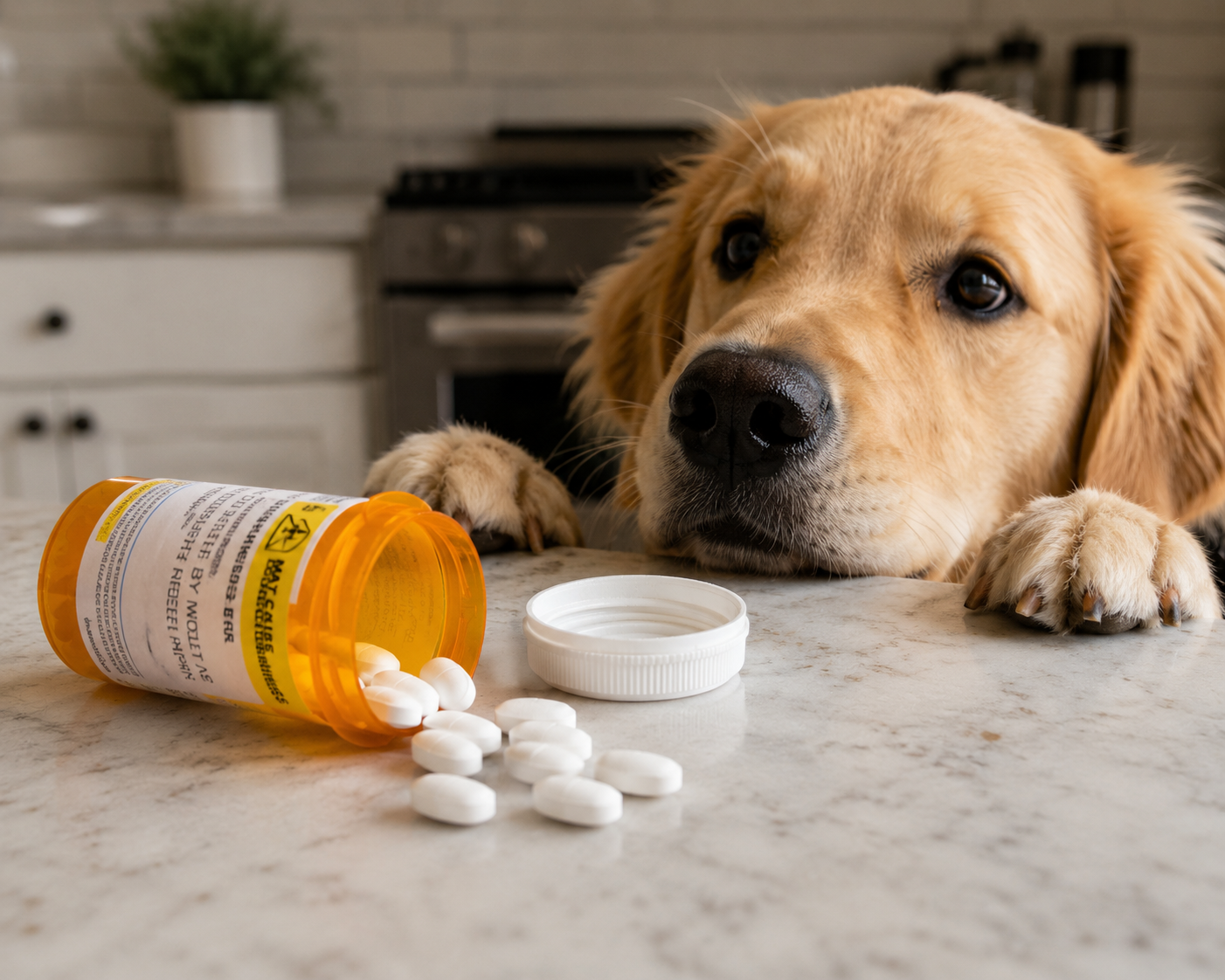
Over-the-counter and prescription medications are consistently the single largest category of pet poisoning calls to the ASPCA Animal Poison Control Center. Items commonly involved include:
- NSAIDs like ibuprofen and naproxen
- Acetaminophen
- Antidepressants and other psychiatric medications
- Vitamins and supplements
- Cold and flu medications
These are often ingested because they’re left in easy-to-reach places: purses, backpacks, nightstands, kitchen counters, or a pill that’s simply dropped and rolls under furniture. Dogs metabolize many of these drugs very differently from humans, which is part of why medications that seem mild to a person can cause serious harm to a dog.
Xylitol (Sugar-Free Products)
Xylitol is a sugar substitute used in a growing number of sugar-free products, including gum, mints, some peanut butters, baked goods, and toothpaste. It’s highly toxic to dogs, causing a rapid drop in blood sugar and, in larger amounts, potential liver damage.
The tricky part is that xylitol shows up in products people don’t think to check, and the amount used varies significantly by brand. It’s worth reading the ingredient label on any sugar-free product, gum, or “keto” baked good before it ends up somewhere your dog can reach it.
Household Cleaning Products
Most cleaning products are formulated to be reasonably safe around pets when used as directed, but concentrated or undiluted exposure is a different story. Disinfecting wipes have remained a common source of pet poisoning exposure in recent ASPCA data, alongside items like:
- Undiluted bleach, which can injure the mouth and esophagus
- Drain cleaners and other highly concentrated products
- Laundry and dishwasher detergent pods, which are appealing to chew due to their size and texture
- Fabric softener sheets
Storing these products in latched cabinets, rather than an easily accessible under-sink space, is one of the simplest ways to reduce this risk.
Human Foods That Aren’t Always Obvious
Chocolate and grapes get most of the attention, but a few less-obvious food items are worth flagging:
- Xylitol-sweetened peanut butter (see above)
- Onions and garlic, in any form — powdered, cooked, or raw — which can damage red blood cells
- Macadamia nuts, which can cause weakness, tremors, and elevated body temperature
- Alcohol, including unbaked dough containing yeast, which produces alcohol as it ferments
- Bread dough, which can expand in a dog’s stomach in addition to the fermentation risk
Plants, Indoors and Out
Indoor and outdoor plants are a consistent category in poison control data, accounting for a meaningful share of exposure calls in recent years. Commonly cited toxic plants include:
- Lilies (especially dangerous for cats, but still a concern for dogs)
- Sago palm
- Azaleas and rhododendrons
- Oleander
- Tulip and hyacinth bulbs
- Daffodils

Before bringing a new plant into the house or yard, checking a toxic-plant reference list — the ASPCA maintains one — is worth the few minutes it takes.
Rodenticides and Insecticides
Rat and mouse poison is designed to be appealing to rodents, which unfortunately can make it appealing to dogs as well. Depending on the type, rodenticide ingestion can cause internal bleeding, seizures, or kidney failure. Insecticides and certain garden or lawn products carry similar risks and should be stored well out of reach, with pets kept off treated areas according to product label instructions.
Small Objects and Batteries
Not every household hazard is a chemical. Items pets can choke on or that cause internal injury if swallowed include:
- Batteries, which can cause chemical burns if chewed or swallowed
- Coins, some of which contain zinc, which is toxic in larger amounts
- Buttons, paper clips, and other small sharp objects
- Silica gel packets and oxygen absorber packets, sometimes found in treat bags or shoeboxes
Essential Oils and Home Fragrance Products
Concentrated essential oils, potpourri (including liquid potpourri), and certain diffuser products can be harmful if ingested or, in some cases, from skin contact or inhalation. This is a category people often assume is “natural” and therefore safe, which isn’t necessarily the case for pets.
Antifreeze and Garage Chemicals
Antifreeze is one of the more serious garage-area hazards. It has a sweet taste that can make it appealing to pets, and even a small amount can cause severe kidney damage. Other garage chemicals worth securing include motor oil, paint, solvents, and adhesives — all flagged in ASPCA poison data as sources of exposure, particularly during home improvement projects.
Recreational Substances
Marijuana products, including edibles, and other recreational substances have become a more frequently reported category of pet exposure in recent years, according to ASPCA poison control data. Symptoms can include disorientation, tremors, vomiting, and in more serious cases, seizures. Keeping any such products stored securely and out of reach applies here just as it does with medications.

General Signs of Poisoning to Watch For
Symptoms vary a lot depending on what was ingested, but general signs that warrant attention include:
- Vomiting or diarrhea
- Drooling or foaming at the mouth
- Lethargy or weakness
- Tremors, seizures, or loss of coordination
- Difficulty breathing
- Loss of appetite
- Changes in gum color, or unusual bruising or bleeding
- Disorientation or unusual behavior
What to Do If Your Dog Is Exposed
- Stay calm. Dogs can pick up on stress, and a calm approach helps you think clearly.
- Identify what was ingested, if possible. Keep the packaging, label, or plant sample on hand — it helps a vet or poison control assess the situation faster.
- Contact your veterinarian or an animal poison control hotline immediately. The ASPCA Animal Poison Control Center is reachable at (888) 426-4435. Don’t wait to see if symptoms appear.
- Don’t induce vomiting unless specifically instructed to. Some substances cause more damage coming back up than staying down, so this decision should come from a vet or poison control professional, not guesswork.
- Follow professional guidance closely, including whether your dog needs to be seen in person.
How to Poison-Proof Your Home
- Store medications, vitamins, and supplements in closed cabinets, never on countertops or nightstands
- Keep purses, backpacks, and bags off the floor, since they often contain gum, medication, or other small hazards
- Store cleaning products, laundry pods, and chemicals behind latched doors
- Check ingredient labels on sugar-free products before they’re within reach of your dog
- Research any new plant before bringing it into the house or yard
- Keep the garage and any antifreeze, motor oil, or solvents secured
- Store rodenticides and insecticides in inaccessible locations, and keep pets off treated areas per label instructions
- Save the ASPCA Animal Poison Control number in your phone before you need it
FAQ’s
According to ASPCA Animal Poison Control Center data, over-the-counter and prescription human medications have been the leading category of pet poison exposure calls in recent years, ahead of food, plants, and household chemicals.
Yes. Xylitol, a common sugar substitute, can cause a dog’s blood sugar to drop rapidly and, in larger amounts, can damage the liver. It’s found in some sugar-free gum, peanut butter, baked goods, and toothpaste, so checking labels matters.
It depends on the specific oil, concentration, and method of exposure, and reactions can vary by product. If you use essential oils or diffusers in a home with pets, it’s worth researching the specific product or asking your veterinarian rather than assuming it’s automatically safe.
Contact your veterinarian or the ASPCA Animal Poison Control Center right away and describe your dog’s symptoms, environment, and anything unusual you’ve noticed. Even without a confirmed substance, this information helps guide next steps.
Yes. Antifreeze has a sweet taste that can attract pets, and even a relatively small amount can cause severe kidney damage. It’s one of the more serious garage-related hazards for dogs.
Not necessarily, and it’s better not to rely on a dog’s usual habits. Curiosity, boredom, or a new plant’s smell can prompt chewing behavior that wouldn’t normally happen, so checking a plant’s safety before bringing it home is the more reliable approach.
Final Thoughts
The most dangerous household hazards for dogs usually aren’t the ones people are already watching for — they’re the everyday items sitting in plain sight: a purse on the floor, a bottle of cleaner under the sink, a stick of sugar-free gum, a houseplant that’s never caused a problem before. Taking a few minutes to secure medications, chemicals, and certain foods, and knowing which plants to avoid, goes a long way toward preventing an emergency.
If your dog does get into something they shouldn’t have, don’t wait to see what happens. Contact your veterinarian or the ASPCA Animal Poison Control Center right away — quick action is one of the biggest factors in a good outcome.