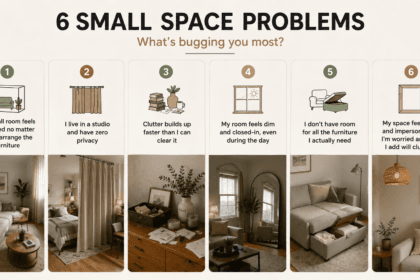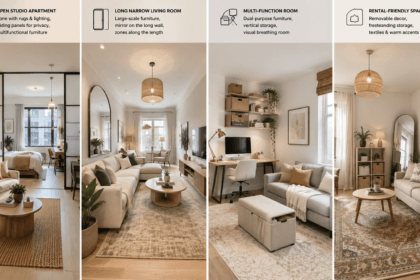


Every “small space decor ideas” list shows the same satisfying before-and-after photos — a cramped room transformed by a big mirror, a bold statement sofa, or a perfectly zoned rug. What these lists rarely mention is the practical trade-off behind each trick — the thing that isn’t a design flaw exactly, just a real consideration that doesn’t show up in a single styled photograph.
- Visual Breathing Room: The Trade-Off Is Discipline, Not a One-Time Fix
- Large Statement Furniture: The Trade-Off Is Real Commitment and Cost
- The Large Mirror Trick: The Trade-Off Is Reflection Content and Placement Risk
- Zoning With Rugs and Lighting: The Trade-Off Is Real Cost for Multiple Zones
- Multifunctional Furniture: The Trade-Off Is Compromised Function in Each Individual Use
- Vertical Storage Above 170cm: The Trade-Off Is Accessibility
- Warm Neutral Palettes: The Trade-Off Is Less Visual Excitement Than Bold Color
- Trend vs. Trade-Off Quick Reference
- FAQ’s
- Conclusion
This guide flips the format. For each popular 2026 small-space idea, we lead with the trade-off, then explain whether it’s still worth pursuing despite it.
Visual Breathing Room: The Trade-Off Is Discipline, Not a One-Time Fix
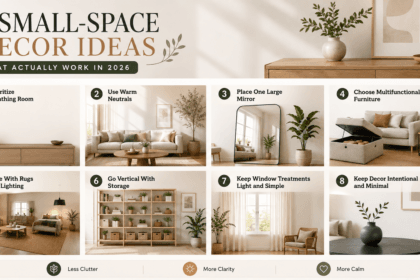
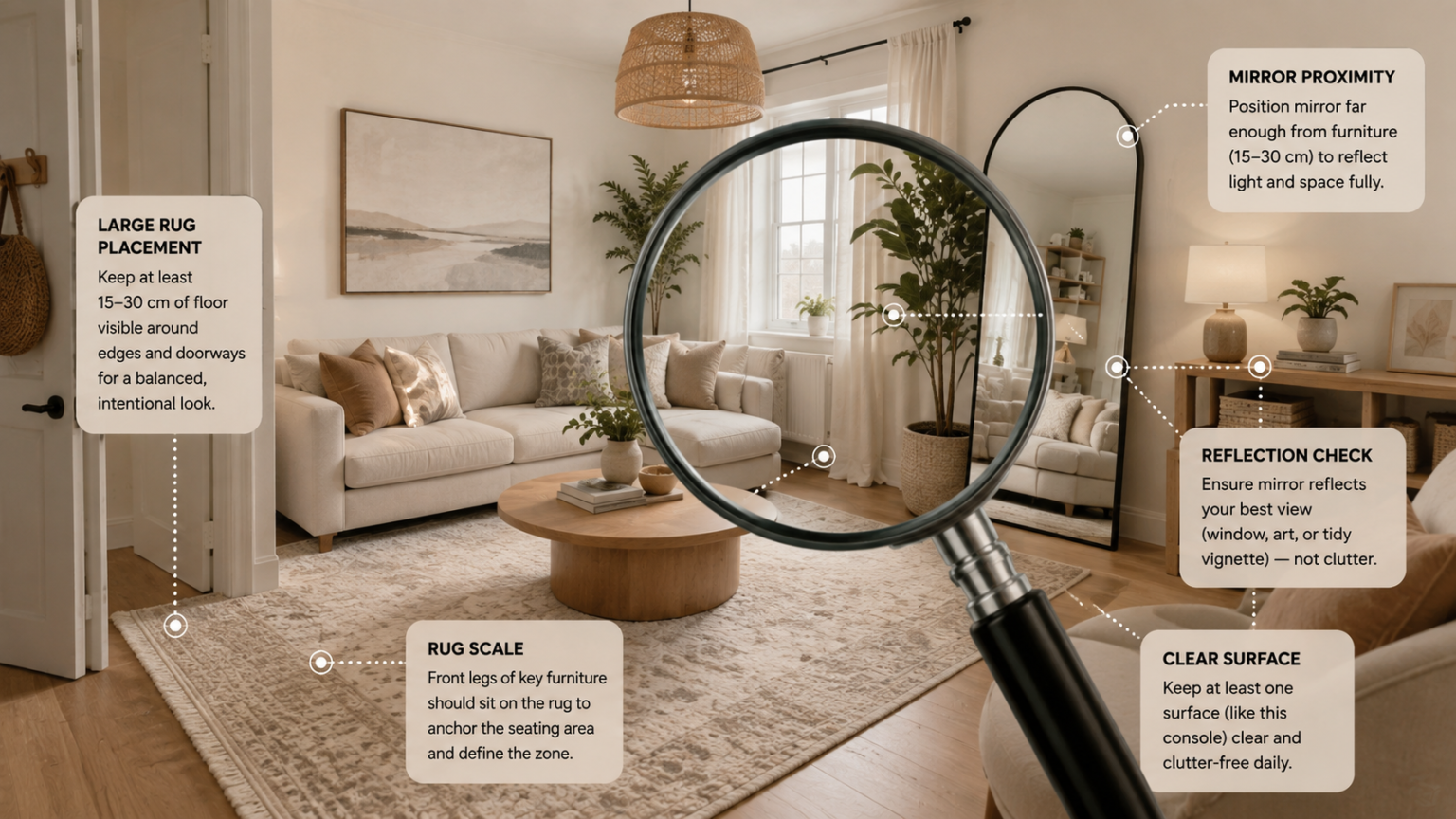
The principle that negative space and one clear surface make a small room feel calmer is genuinely well-supported, and it’s a zero-cost strategy since it works with furniture you already own. The trade-off: it’s not a one-time decorating decision — it requires ongoing discipline. A small space naturally attracts new mail, decor, and miscellaneous objects onto any available surface, and the “keep one surface clear” principle only works if you’re actively maintaining it, not just achieving it once during a single decluttering session.
Is it still worth it? Yes, but treat it as a habit rather than a project. Designating a specific clear surface as off-limits for daily clutter, and building a quick reset into your routine, matters more than the initial decluttering push.
Large Statement Furniture: The Trade-Off Is Real Commitment and Cost
The idea that one large sofa, one large rug, and one large light fixture make a small room feel bigger than filling it with smaller pieces is genuinely counterintuitive but well-supported. The trade-off: large, quality statement pieces — an appropriately-scaled sofa, a substantial area rug — typically cost more upfront than several smaller, cheaper items, and they’re a bigger commitment to move or replace if your space or taste changes.
Is it still worth it? Yes, generally, since the effect on how the room feels is meaningfully better than the alternative. But it’s worth measuring carefully and buying once rather than experimenting with several smaller, cheaper pieces first — the whole point of this approach is scale done right, and getting it wrong twice costs more than getting it right once.
The Large Mirror Trick: The Trade-Off Is Reflection Content and Placement Risk
Positioning a large mirror opposite your main window genuinely does expand a room’s feel by bouncing light and adding visual depth. The trade-off: a mirror reflects whatever is actually in the room, including clutter, an unflattering wall, or a less attractive view — meaning the trick can backfire and double the visible presence of anything you’d rather not emphasize, rather than simply adding light.
Is it still worth it? Yes, but check what the mirror will actually reflect before finalizing placement. A large mirror facing your best window and a tidy, intentional part of the room amplifies the positive; the same mirror facing a cluttered corner amplifies the negative just as effectively.
Zoning With Rugs and Lighting: The Trade-Off Is Real Cost for Multiple Zones
Defining separate functional areas in an open studio using large rugs and distinct lighting, rather than walls, is a genuinely flexible and non-permanent strategy. The trade-off: doing this properly for two or three zones means buying multiple substantial rugs (each recommended at a sizable minimum footprint) and multiple lighting fixtures — costs that add up faster than the “no walls needed” framing might suggest, especially compared to a single unified room with one rug and one light source.
Is it still worth it? Yes, for studios and multi-function rooms that genuinely need the separation — the functional benefit of a well-zoned space is real. Budget for it as a multi-item purchase rather than assuming zoning is inherently a cheaper alternative to construction.
Multifunctional Furniture: The Trade-Off Is Compromised Function in Each Individual Use
A storage ottoman, sofa bed, or nesting table set genuinely reduces floor coverage by doing double duty, cited at roughly 30–50% less floor coverage than single-purpose equivalents. The trade-off: multifunctional furniture is often somewhat less optimized at each individual function than a dedicated single-purpose piece would be — a sofa bed is rarely as comfortable as a dedicated sofa or as comfortable as a dedicated bed, and a storage ottoman’s lid rarely provides quite the stability of a true coffee table.
Is it still worth it? Yes, for genuinely space-constrained rooms where the floor-space savings clearly outweigh the modest function compromise. In a slightly larger small space with more flexibility, it may be worth choosing one or two dedicated single-purpose pieces where that specific function matters most to you, rather than converting everything to multifunctional by default.
Vertical Storage Above 170cm: The Trade-Off Is Accessibility
Using wall space above roughly 170cm for storage genuinely captures square footage that’s otherwise wasted, since floor space is the scarcest resource in a small home. The trade-off: anything stored that high is measurably less convenient to access than lower storage, generally requiring a step stool for frequent use — a real inconvenience if you underestimate how often you’ll need what’s stored up there.
Is it still worth it? Yes, specifically for infrequently-used items — seasonal decor, extra linens, books you’re not actively reading. Reserve the more accessible lower shelves for daily essentials, and be honest about how often you’ll actually need what goes up high before committing valuable vertical space to it.
Warm Neutral Palettes: The Trade-Off Is Less Visual Excitement Than Bold Color
Choosing a warm greige or warm white over stark white, cool gray, or bold color genuinely creates a calmer, more expansive feeling in a small space. The trade-off: a warm neutral palette is, by design, less visually exciting or distinctive than a bold color choice — some people may find a small space decorated this way feels safe or slightly bland compared to a more colorful approach, even though it functions better for the sense of spaciousness.
Is it still worth it? Yes, as the primary palette for a small space, but this doesn’t mean bold color is off-limits entirely — reserve it for smaller, swappable elements (a single accent pillow, artwork, a textured accessory) rather than the walls or major furniture, getting both the spaciousness of a neutral base and a personality boost from targeted color.
Trend vs. Trade-Off Quick Reference
| Idea | The Appeal | The Trade-Off |
|---|---|---|
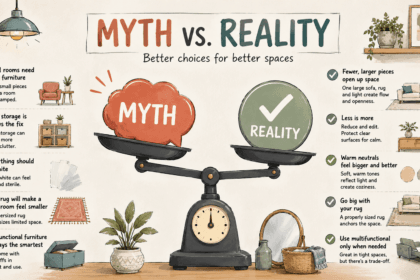
| Visual breathing room | Calmer, more spacious feeling | Requires ongoing discipline, not a one-time fix |
| Large statement furniture | Makes room feel bigger, not smaller | Higher upfront cost and commitment |
| Large mirror opposite window | Expands light and visual depth | Reflects clutter or an unflattering view just as effectively |
| Zoning with rugs/lighting | Defines areas without walls | Real cost for multiple rugs and fixtures |
| Multifunctional furniture | Reduces floor coverage 30–50% | Slightly compromised function at each individual use |
| Vertical storage above 170cm | Uses otherwise wasted space | Less accessible; usually needs a step stool |
| Warm neutral palette | Calmer, more expansive feeling | Less visually exciting than bold color |
FAQ’s
Is it worth buying expensive statement furniture for a small space, or should I start cheaper?
Generally worth investing in once you’ve measured carefully, since the whole strategy depends on getting scale and placement right — buying cheap and replacing later if it doesn’t work often costs more overall than a single, well-considered purchase.
How do I avoid the mirror trick backfiring and just reflecting clutter?
Check what’s actually in the mirror’s reflection before finalizing its position — ideally your best window, a tidy wall, or an intentional vignette, not a cluttered corner or an unflattering angle.
Is multifunctional furniture worth it if I have even a little extra space?
It depends on your priorities — if a specific function (a genuinely comfortable sofa, a sturdy coffee table) matters more to you than maximum floor-space savings, a dedicated single-purpose piece may be worth the extra footprint in a space that isn’t at its absolute limit.
Can I still use bold colors in a small space following the warm-neutral-palette approach?
Yes — keep the palette’s foundation (walls, major furniture) in warm neutrals for the spaciousness benefit, and introduce bold color through smaller, easily-changed elements like pillows or artwork.
Conclusion
None of these trade-offs make 2026’s small-space decor ideas bad choices — visual breathing room, large statement furniture, strategic mirrors, zoning, multifunctional furniture, vertical storage, and warm palettes are all genuinely effective. The difference between a small space that feels calm and considered and one that feels like it’s fighting its own tricks comes down to understanding the practical trade-off behind each idea before committing, not discovering it after the rug’s been placed or the mirror’s been hung.
Design trends, product availability, and pricing for home decor items change frequently. This article reflects general design guidance current at the time of publication; always assess your own space, budget, and personal style before making purchasing or renovation decisions.