


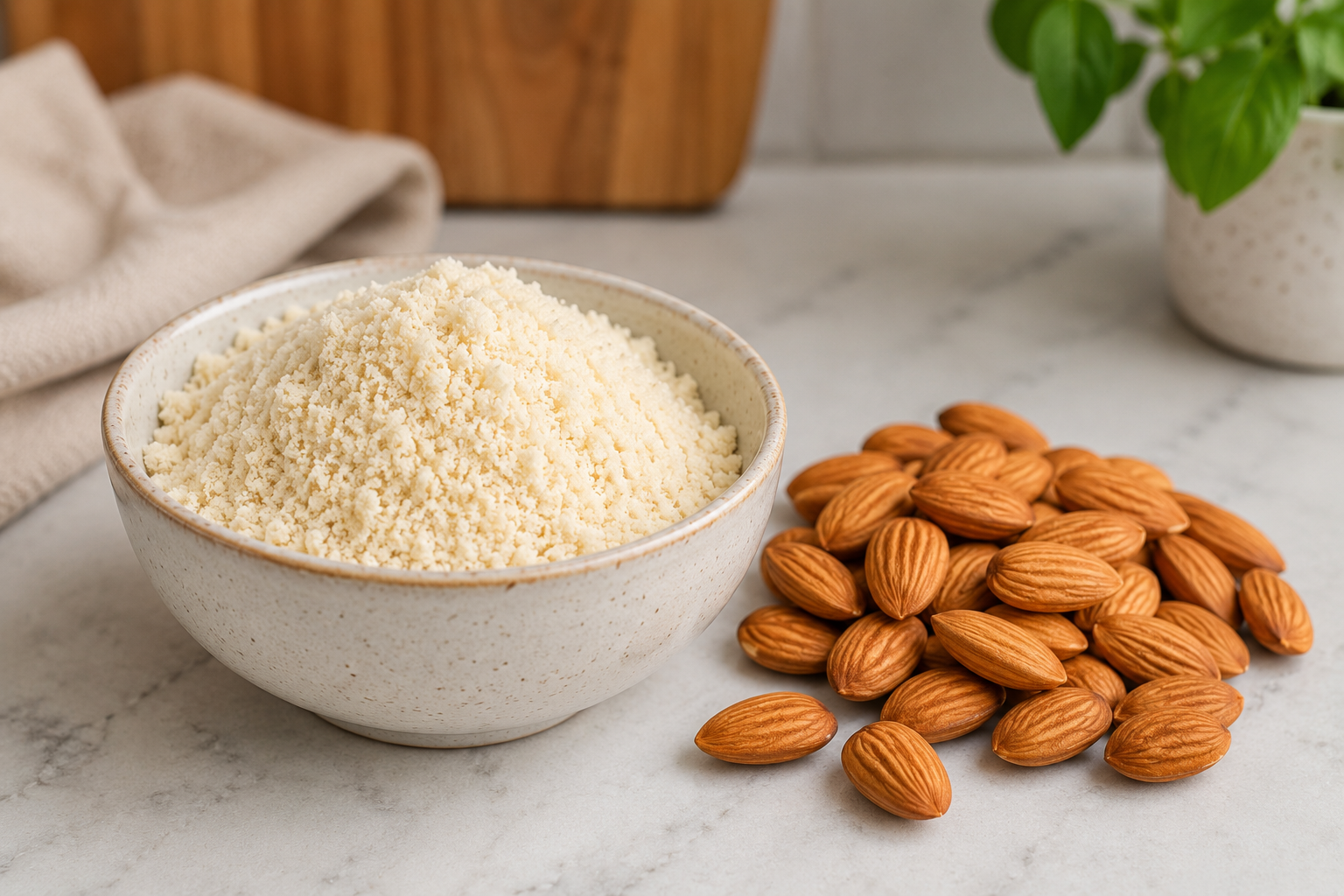
Almond flour has become a go-to substitute for wheat flour in a lot of home kitchens, and it’s a common ingredient in homemade dog treat recipes you’ll find online. If you’re baking for your dog, or your dog just got into a bag of almond flour left out on the counter, it’s worth understanding what this ingredient actually does once it’s in a dog’s system.
- What Is Almond Flour?
- Can Dogs Eat Almond Flour? The Short Answer
- Nutritional Profile of Almond Flour
- Potential Benefits for Dogs
- The Real Risks: Fat, Calories, and Digestive Upset
- Almond Flour vs. Whole Almonds
- Watch Out for Xylitol and Other Additives
- How Much Almond Flour Can a Dog Have?
- How to Use Almond Flour Safely in Homemade Treats
- Signs of a Bad Reaction
- Which Dogs Should Avoid Almond Flour
- Almond Flour vs. Other Dog-Safe Flours
- FAQ’s
- Can dogs eat almond flour every day?+
- Is almond flour toxic to dogs?+
- Can dogs eat almond flour treats from the store?+
- What happens if my dog eats a spoonful of dry almond flour?+
- Is almond flour better for dogs than wheat flour?+
- Can dogs have almond butter or almond milk instead of almond flour?+
- My dog ate raw almond flour dough with yeast. What should I do?+
- Are all dogs able to tolerate almond flour the same way?+
- Final Thoughts
The short version: plain almond flour is not toxic to dogs and is generally considered safe in small amounts. The details that actually matter are about portion size, fat content, and what else might be mixed into the flour or the recipe it’s used in.
What Is Almond Flour?
Almond flour is made by grinding blanched almonds into a fine powder. It’s naturally gluten-free, has a texture somewhere between wheat flour and cornmeal, and is popular in human baking because it’s lower in carbohydrates than wheat flour while still delivering protein, fiber, and healthy fats.
Because of that nutritional profile, it’s often used as a wheat flour substitute in homemade dog treat recipes, especially for owners looking to avoid grain- or gluten-heavy ingredients.
This article is for educational purposes only and does not replace veterinary advice. Consult your veterinarian before introducing almond flour or any new ingredient to your dog’s diet, especially if your dog has health conditions or food sensitivities.
Can Dogs Eat Almond Flour? The Short Answer
Yes, dogs can eat plain almond flour in small amounts. It isn’t classified as toxic to dogs the way some other nuts or ingredients are. That said, almond flour is calorie-dense and relatively high in fat, so it’s better suited as an occasional ingredient in homemade treats than as something fed on its own in any real quantity.
As with most human food ingredients, the plain, unflavored version is what matters here. Almond flour products marketed for keto or low-carb baking sometimes include added sweeteners, and that’s where the real risk shows up.
Nutritional Profile of Almond Flour
Compared to wheat flour, almond flour generally offers:
- Higher protein content
- Healthy fats, primarily unsaturated
- Dietary fiber
- Vitamin E
- Magnesium and phosphorus
- Fewer net carbohydrates
These are the same qualities that make almond flour popular in human diets, and in small amounts they aren’t harmful to dogs. The issue is scale: what counts as a modest amount of fat and calories for a person can be a much larger share of a dog’s daily intake, especially for smaller breeds.
Potential Benefits for Dogs
When used appropriately, almond flour can offer a few advantages over wheat flour in homemade treats:
- Grain-free and gluten-free, which can matter for dogs with wheat or grain sensitivities
- Protein and healthy fat content, which can add some nutritional value compared to a plain carbohydrate-based filler
- Fiber, which supports digestion when fed in appropriate amounts
These benefits apply mainly in the context of a homemade treat recipe, not as a reason to feed almond flour by the spoonful.

The Real Risks: Fat, Calories, and Digestive Upset
1. High Fat and Calorie Content
Almond flour is calorie-dense, largely because of its fat content. Fed in excess, this can contribute to weight gain over time, and in more serious cases, a high-fat diet is a recognized contributing factor in pancreatitis, a painful inflammation of the pancreas. This risk grows with the amount fed and is more relevant for dogs that already have a history of pancreatitis or are prone to weight gain.
2. Digestive Upset
Almond flour’s fiber content can help digestion in small amounts, but too much at once can cause the opposite effect: gas, bloating, vomiting, or diarrhea. This is more likely if a dog eats a large amount at once rather than a modest portion mixed into a baked treat.
3. Possible Sensitivity or Allergy
Some dogs can be sensitive or allergic to almonds, with reactions that may include vomiting, diarrhea, or skin irritation. This isn’t common, but it’s worth watching for the first time your dog tries anything made with almond flour.
Almond Flour vs. Whole Almonds
It’s worth separating almond flour from whole almonds, since they carry somewhat different risks.
Whole almonds are harder for dogs to chew and digest, and they carry a choking hazard, particularly for smaller dogs, along with the same fat and calorie concerns as almond flour. Almond flour, because it’s finely ground, removes the choking risk associated with whole nuts, but keeps the fat, calorie, and potential allergy considerations.
Watch Out for Xylitol and Other Additives
This is the single most important safety point in this article: always check the ingredient label.
Xylitol, a sugar substitute used in some keto and low-carb baking products, is highly toxic to dogs and can cause a rapid, dangerous drop in blood sugar, along with potential liver damage. Some almond flour blends marketed for human low-carb baking include xylitol or other sweeteners.
Plain almond flour should have exactly one ingredient: almonds. If a product lists any sweeteners, flavorings, or other additives, don’t feed it to your dog without confirming those ingredients are safe first.
How Much Almond Flour Can a Dog Have?
There’s no universal serving chart for almond flour and dogs, since it’s typically consumed as part of a baked treat rather than on its own. The general guidance that applies across most treat-type foods is that treats, including anything made with almond flour, should make up no more than about 10% of a dog’s daily calorie intake, with the rest coming from a complete and balanced dog food.
In practical terms:
- Small dogs: A very small taste of a homemade treat, offered occasionally rather than daily
- Medium dogs: A single small treat is generally a reasonable portion, not a handful
- Large dogs: Can typically tolerate a slightly larger portion, but the same “occasional, not routine” rule still applies
Because almond flour is calorie-dense, portion control matters more here than it does with lower-fat ingredients like plain vegetables.

How to Use Almond Flour Safely in Homemade Treats
- Check the label. Confirm the only ingredient is almonds, with no added sweeteners, salt, or flavorings.
- Choose fresh flour. Almond flour has a relatively high oil content and can spoil faster than wheat flour, so check freshness before baking.
- Combine with other flours. Mixing almond flour with a lower-fat option like oat flour can help balance a recipe’s overall fat content.
- Keep recipes simple. Avoid adding chocolate, raisins, xylitol-sweetened ingredients, or anything else that’s unsafe for dogs.
- Bake, don’t serve raw dough. Raw dough, especially anything containing yeast, poses separate risks and should never be given to a dog.
- Serve small portions. Treat the finished product as an occasional extra, not a meal component.
- Introduce gradually. The first time your dog tries an almond flour treat, offer a small piece and watch for any reaction before giving more.
Signs of a Bad Reaction
Contact your veterinarian if your dog shows any of the following after eating almond flour or a treat made with it:
- Vomiting or diarrhea that doesn’t resolve quickly
- Excessive gas or a bloated, uncomfortable abdomen
- Loss of appetite or lethargy
- Abdominal pain, which can be a sign of pancreatitis in more serious cases
- Itching, redness, or other signs of an allergic reaction
If your dog has eaten a product containing xylitol, this is an emergency. Symptoms of xylitol poisoning can include vomiting, weakness, loss of coordination, and seizures, and they can develop quickly. Contact your veterinarian or an emergency animal hospital immediately rather than waiting to see if symptoms appear.
Which Dogs Should Avoid Almond Flour
Almond flour is worth skipping, or checking with your veterinarian first, if your dog:
- Has a history of pancreatitis
- Is prone to obesity or is on a calorie-restricted diet
- Has a known nut allergy or sensitivity
- Has a sensitive stomach or a diagnosed digestive condition
- Is a small breed, where even modest amounts of a calorie-dense ingredient represent a larger share of daily intake
Almond Flour vs. Other Dog-Safe Flours
If you’re deciding what to bake with, here’s a general comparison of common flour substitutes used in homemade dog treats:
Almond flour: Grain-free, higher in protein and healthy fat, but calorie-dense and best used in small amounts, especially for dogs prone to weight gain or pancreatitis.
Oat flour: Lower in fat than almond flour, generally well tolerated, and a common base for homemade treat recipes.
Coconut flour: Grain-free and high in fiber, but very absorbent, so recipes typically need adjustment; also relatively high in fat.
Whole wheat flour: A standard option for dogs without a wheat or gluten sensitivity, lower in fat than almond flour but not grain-free.
Across all of these, the same principle applies: plain ingredients, appropriate portions, and no added sweeteners or flavorings.
FAQ’s
It’s not recommended as a daily addition. Because it’s calorie-dense, almond flour is better suited as an occasional ingredient in homemade treats rather than a regular part of your dog’s diet.
No, plain almond flour is not toxic to dogs. The main concerns are its fat and calorie content, potential digestive upset in large amounts, and the risk of added ingredients like xylitol in some commercial almond flour products.
Only if you’ve checked the ingredient list. Store-bought products can contain added sugar, salt, or sweeteners that aren’t appropriate for dogs, even when almond flour is the main ingredient.
A small amount of plain almond flour is unlikely to cause a serious problem, though it may lead to mild digestive upset. Monitor your dog for vomiting, diarrhea, or discomfort, and contact your veterinarian if symptoms appear or if a large amount was eaten.
It depends on the dog. Almond flour is grain-free and gluten-free, which can help dogs with wheat sensitivities, but it’s higher in fat and calories than wheat flour, which matters for dogs prone to weight gain or pancreatitis.
Both carry similar considerations. Almond butter is high in fat and calories, similar to almond flour, and almond milk is generally tolerated in small amounts, but both should be checked for added sugar, salt, or xylitol before feeding.
Contact your veterinarian immediately. Raw dough containing yeast can expand in a dog’s stomach and produce alcohol as a byproduct of fermentation, which is a separate and more urgent risk than almond flour itself.
No. Tolerance varies by dog, and factors like size, existing health conditions, and individual sensitivities all affect how well a dog handles almond flour. Checking with your veterinarian is the best way to get guidance specific to your dog.
Final Thoughts
Plain almond flour isn’t toxic to dogs and can be used in small amounts in homemade treats, offering some protein, healthy fat, and fiber along the way. The real considerations are its calorie density, the risk of digestive upset or pancreatitis if fed in excess, and the importance of checking labels for added sweeteners like xylitol.
Used occasionally, in small portions, and as one ingredient in a simple homemade recipe, almond flour is a reasonable option for dog owners who want an alternative to wheat flour. If your dog has a history of pancreatitis, weight issues, or a known nut sensitivity, it’s worth checking with your veterinarian before adding almond flour to any recipe.