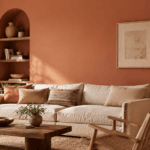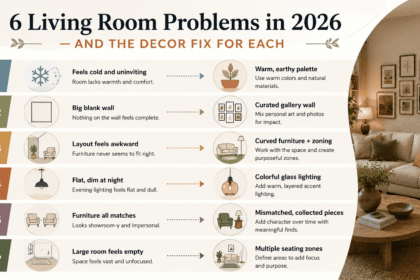


Most “best living room decor ideas” lists show the same inspiration photos regardless of room size—a sprawling open-plan space with a curved sectional, multiple seating zones, and a gallery wall spanning an entire feature wall. That’s genuinely beautiful and genuinely useless if you’re working with a 200-square-foot apartment living room or an oddly shaped space with an awkward angled wall.
This guide sorts 2026’s best living room trends by the room size and layout they’re actually built for, so you’re not trying to force a large-space idea into a small one—or under-decorating a large room by treating it like a studio.
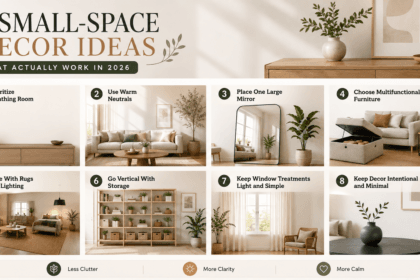
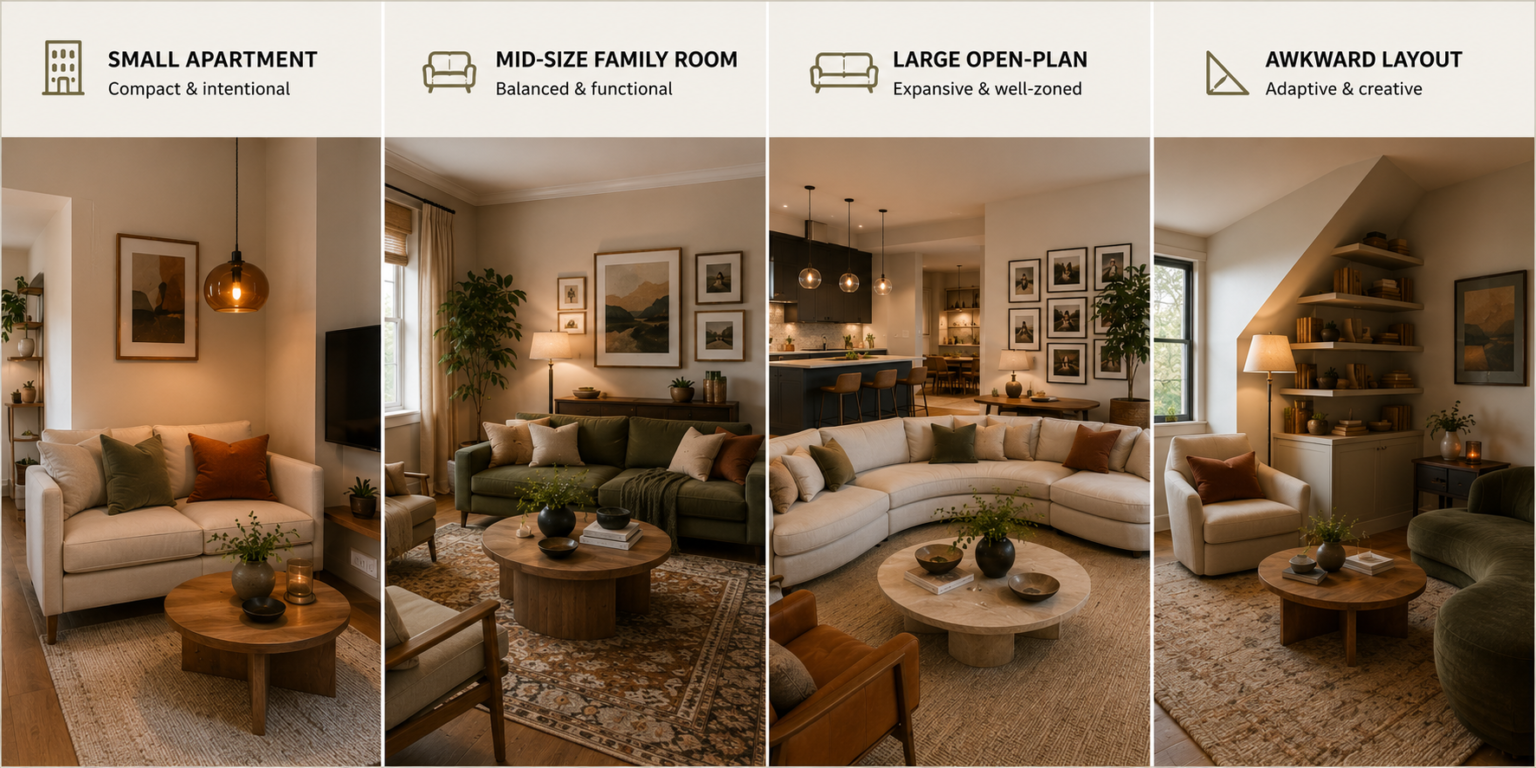
If You Have a Small Apartment Living Room
In a compact space, the priority is making the room feel intentional rather than cramped—which usually means fewer, better-chosen pieces rather than trying to fit in every trend at once.
Lean into low, deep, relaxed seating scaled to the room. A single well-proportioned loveseat or a compact two-seat sofa in a low profile creates the lounging feel that’s trending in 2026 without overwhelming a small floor plan the way a full sectional would.
Use colorful glass accents instead of large furniture statements. A single amber or cobalt glass pendant or table lamp adds the tinted, ambient light quality that’s defining 2026 interiors, without consuming floor space the way a large glass side table or cabinet would.
Skip for now: Multiple seating zones and full gallery walls. Both trends assume square footage a small apartment living room typically doesn’t have—trying to zone a small room usually just makes it feel chopped up and smaller, and an oversized gallery wall can visually shrink a compact space rather than personalize it.
What to prioritize instead: A warm, cohesive palette (a few key pieces in terracotta or olive rather than a full room repaint) and one or two meaningful mismatched pieces—a vintage side table or a single collected object—rather than a full curated collection.
If You Have a Mid-Size Family Living Room
This is the sweet spot for most of 2026’s headline trends—enough square footage to layer several ideas together without over-committing to any single one.
Design around multiple functional zones, since a mid-size family room usually needs to serve conversation, TV-watching, and casual lounging simultaneously. A rug can define a reading nook near a window separate from the main seating arrangement around the TV, without needing to add walls or full room dividers.
Introduce curved furniture as a focal point, since a mid-size room has enough space to let a curved sofa or an oval coffee table breathe without crowding the walkways. This is also a natural room size to start building a gallery wall—enough wall space for 8–12 pieces without needing to span an entire feature wall.
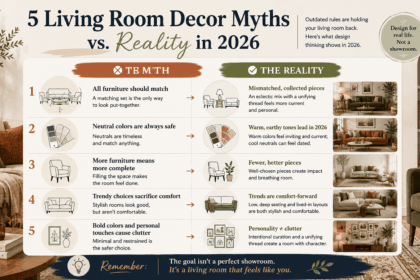
Skip for now: Overly formal, matched furniture sets. A family living room used daily benefits more from the mismatched, collected-look trend—genuinely comfortable pieces that can take wear from kids, pets, and daily lounging—than from a coordinated showroom set that feels precious to actually use.
What to prioritize instead: Durable, tactile natural materials (a matte linen sofa, a reclaimed wood coffee table) that hold up to daily family use while still delivering the warm, organic 2026 aesthetic.
If You Have a Large, Open-Plan Living Room
Large open-plan spaces face the opposite problem from small apartments: without deliberate zoning, they can feel cavernous, unfocused, or like several disconnected furniture arrangements floating in one big room.
Multiple seating zones are essential here, not optional. Use a rug to anchor the primary conversation area, a second rug or distinct flooring transition to define a reading corner or secondary lounging spot, and turn a sofa’s back toward an adjacent dining or entry area to create a subtle boundary without adding walls.
A full gallery wall or curated feature wall genuinely earns its place in a large room, where a big expanse of blank wall can otherwise feel underwhelming. This is also the room size where a full curved sectional, rather than a smaller curved accent piece, makes the most visual sense proportionally.
Skip for now: Treating the entire room as one single, matched arrangement. Open-plan spaces this large specifically benefit from the mismatched, collected-pieces approach—varying furniture styles between zones actually help visually distinguish one function area from another, rather than reading as inconsistent.
What to prioritize instead: Repeating one color or material across the different zones (as designers specifically recommend for open-plan zoning) so the varied furniture and functions still feel like one cohesive room rather than several disconnected ones.
If You Have an Awkward or Irregularly Shaped Living Room
Angled walls, an oddly placed support column, or a room that’s more L-shaped than rectangular all create genuine layout challenges that generic “best decor ideas” content rarely addresses directly.
Use furniture placement and lighting to define zones around the irregularity, rather than fighting it. An angled wall or alcove is often a natural spot for a reading nook—position an armchair and floor lamp directly into the awkward space rather than trying to square it off with standard furniture arrangements.
Curved furniture is particularly useful here. A curved sofa or rounded coffee table can follow the flow of an angled wall or irregular corner in a way that rectangular furniture often can’t, turning what’s usually treated as a liability into a genuine design feature.
Skip for now: Large, rigid furniture sets that assume a standard rectangular layout. Bulky sectional sofas or fixed-configuration furniture often fight an irregular room’s actual shape rather than working with it.
What to prioritize instead: A flexible mix of smaller, mismatched pieces that can be rearranged as needed—this room size and shape benefits directly from the 2026 shift away from matched, fixed furniture sets toward a more adaptable, curated approach.
Room Size Quick Reference
| Your Room Type | Prioritize | De-Prioritize |
|---|---|---|
| Small apartment | Low-profile seating, single glass accent, warm palette | Multiple zones, full gallery walls |
| Mid-size family room | Multiple zones, curved focal piece, durable natural materials | Formal matched furniture sets |
| Large open-plan space | Multiple zones (essential), full gallery wall, curved sectional | Single uniform arrangement |
| Awkward/irregular layout | Zone around the irregularity, curved furniture, flexible mismatched pieces | Bulky rigid furniture sets |
A Note on Renters and Temporary Spaces
If you’re renting or expect to move within a few years, prioritize the ideas above that don’t require permanent changes: accent lighting, rugs, mismatched furniture, and gallery walls (using removable hanging solutions) all deliver meaningfully on 2026’s trends without repainting walls or committing to built-in zoning features. Save the accent-wall repaint and any structural zoning changes for a space you’re planning to stay in longer-term.
FAQs
Can small living rooms use any of the 2026 trends, or are most of them built for larger spaces?
Most trends scale down fine—warm palettes, natural materials, and colorful glass accents work at any size. The trends that specifically assume more square footage (multiple zones, full gallery walls, large curved sectionals) are the ones worth skipping or significantly scaling back in a small space.
Is it worth building multiple seating zones in a room that’s only moderately sized?
Generally yes, if the room genuinely serves more than one function (conversation plus TV-watching, for example)—a rug and furniture placement can define two zones even in a mid-size room without needing large-room square footage.
How do I make an awkward layout feel intentional instead of like a compromise?
Lean into the irregularity with furniture that follows its shape (curved pieces, an armchair tucked into an angled alcove) rather than trying to force a standard rectangular furniture arrangement into a non-rectangular room.
Should renters avoid the accent-wall color trend entirely?
Not necessarily—many rentals allow paint with landlord approval, and reversible options like large removable wall decals or a bold piece of furniture or textile can introduce warm tones without repainting at all.
Conclusion
The best living room decor ideas for 2026 aren’t one-size-fits-all—a trend that transforms a large open-plan space can overwhelm a small apartment, and a layout tip for an awkward room may be irrelevant in a perfectly rectangular one. Match the trend to your room’s actual size and shape, prioritize the ideas that solve a real problem in your specific space, and skip the ones that were designed with a different kind of room in mind.
Design trends, product availability, and pricing for home decor items change frequently. This article reflects general design guidance current at the time of publication; always assess your own space, budget, and personal style before making purchasing or renovation decisions.