

Living rooms in 2026 have quietly moved away from the showroom look — the matching furniture sets, the cool gray everything, the room that looks perfect in a photo but never quite feels lived in. Designers this year are pointing in a different direction: warmer, more personal, more textured, and built around how people actually use the space rather than how it photographs.
- Swap Cool Grays for Warm, Earthy Tones
- Embrace Curved, Rounded Furniture Silhouettes
- Layer Mismatched and Collected Pieces Instead of Matching Sets
- Choose Natural, Tactile Materials Over High-Shine Finishes
- Add Colorful Glass Accents for Warm, Ambient Light
- Design Around Multiple Seating Zones, Not One Formal Focal Point
- Choose Lower, Deeper, More Relaxed Seating
- Build a Gallery Wall or Curated Display Around Personal Collections
- Quick Reference: 2026 Living Room Trends at a Glance
- How to Choose Which Trends Are Right for Your Space
- FAQ’s
- Conclusion
Whether you’re planning a full redesign or just want to refresh a few key elements, these eight ideas capture what’s genuinely defining living room design in 2026 — and each one is achievable at almost any budget.
Swap Cool Grays for Warm, Earthy Tones
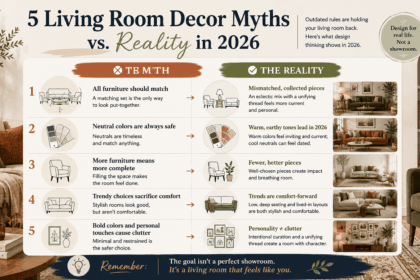
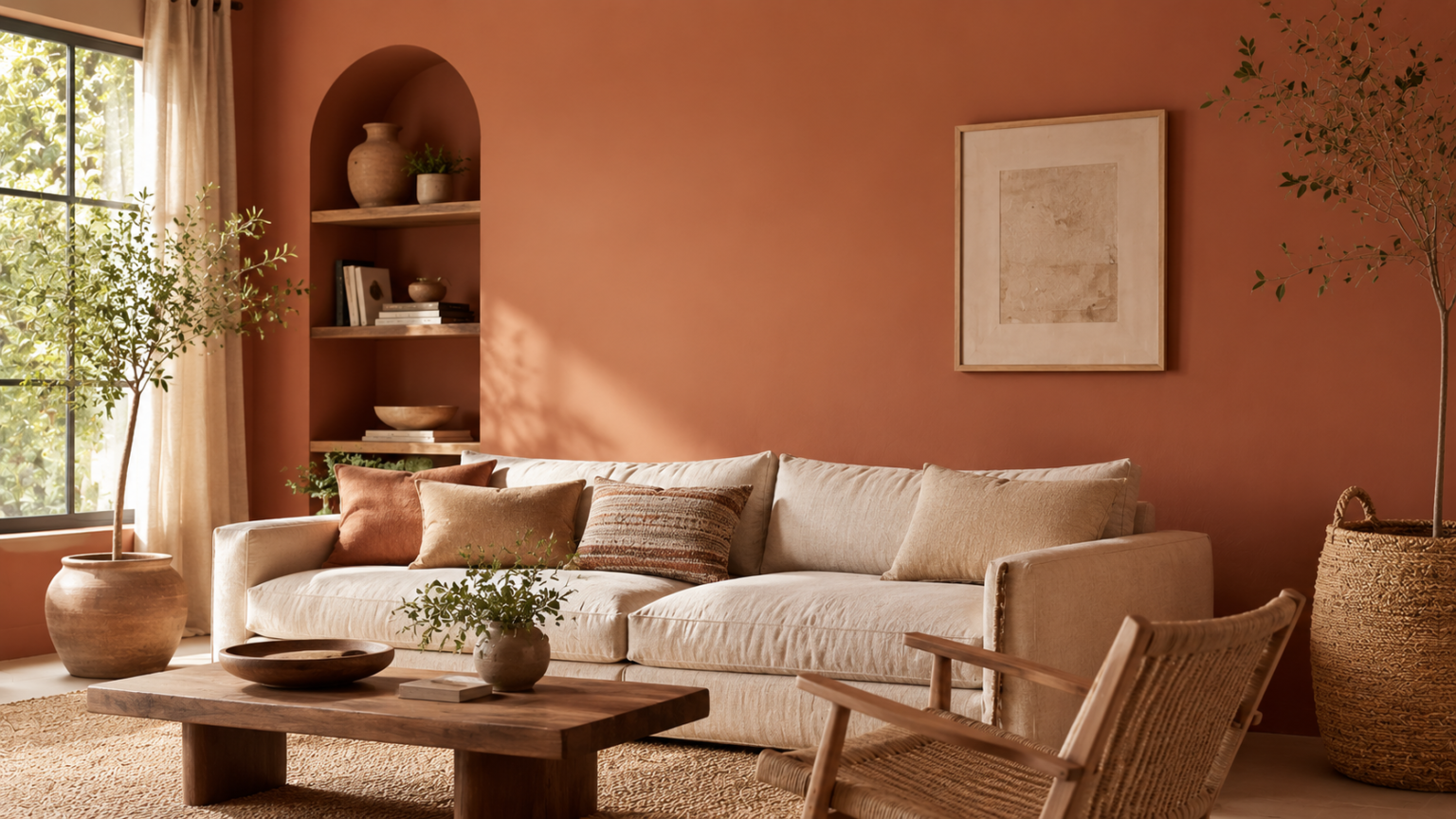
The cool gray palette that dominated living rooms for the past decade is fading, replaced by warmer, earthier tones — soft browns, olive greens, terracotta, clay, sand, and mushroom. These colors create a calmer, more inviting feel and pair naturally with wood and woven materials already common in most homes.
How to work it in:
- Repaint one accent wall in a warm clay or terracotta tone rather than committing to a full room repaint
- Swap cool-toned throw pillows and artwork for warmer shades — often the fastest, lowest-cost way to shift a room’s palette
- Layer in olive green through a single statement piece, like an accent chair or a large area rug
Embrace Curved, Rounded Furniture Silhouettes
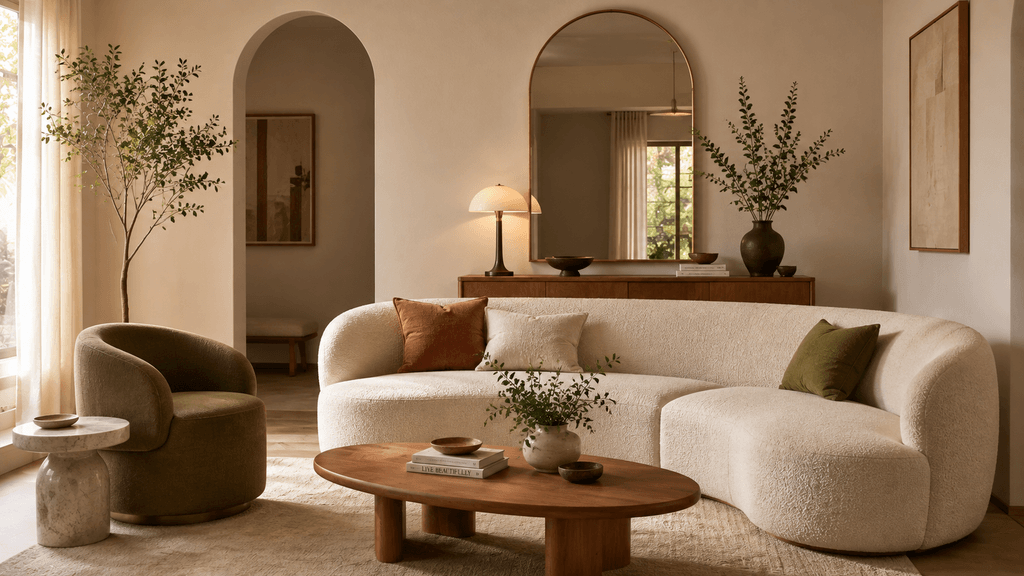
Rounded forms are softening living rooms dominated by straight walls and rectangular windows this year. Curved sofas, barrel chairs, oval coffee tables, and arched mirrors are showing up across both budget and high-end interiors, offering a gentler visual counterpoint to boxy architecture.
How to work it in:
- Start with one curved statement piece — a barrel accent chair or an oval coffee table are lower-commitment entry points than a full curved sofa
- Add an arched mirror or arched wall art to introduce the shape without new furniture
- Round out hard edges with a circular or oval area rug beneath your existing seating arrangement
Layer Mismatched and Collected Pieces Instead of Matching Sets
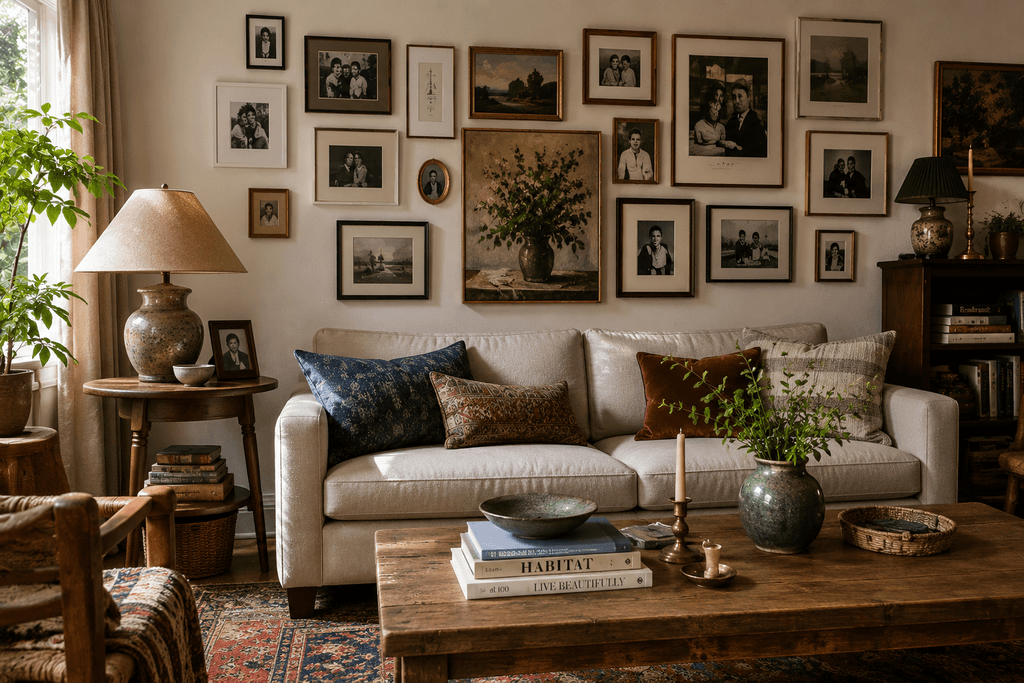
One of the clearest shifts in 2026 is a move away from matching furniture sets and showroom-style coordination. Designers are pairing contemporary sofas with vintage side tables, handmade lamps, and personal photographs and artwork collected over years, rather than starting from scratch with a single coordinated set.
How to work it in:
- Start with pieces that genuinely matter to you — a family heirloom, a thrifted find, a piece from a past home — and build the room around them rather than treating them as an afterthought
- Repeat one color, material, or shape across otherwise unrelated pieces to keep the room feeling connected rather than cluttered
- Reupholster or repair an existing piece instead of replacing it — this trend is explicitly friendlier to a sustainable, budget-conscious approach than buying an entirely new matching set
Choose Natural, Tactile Materials Over High-Shine Finishes
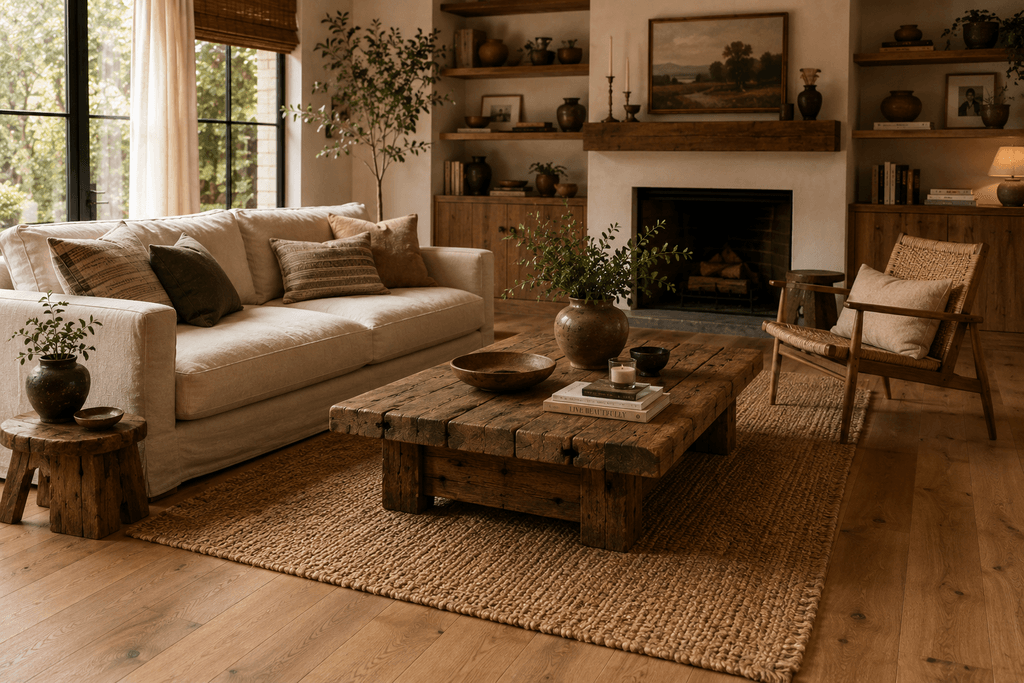
High-shine, glossy surfaces are notably out of favor in 2026. In their place, designers are emphasizing finishes that feel tactile and organic — matte linen, rattan, reclaimed wood with visible grain and knots, and wide-plank flooring that embraces natural irregularity rather than a polished, uniform look.
How to work it in:
- Choose matte-finish over glossy fabric and surface options when replacing upholstery or refinishing furniture
- Introduce rattan or woven elements through smaller pieces first — a rattan mirror frame, a woven storage basket, or a pendant lamp shade
- Look for reclaimed or visibly grained wood furniture rather than uniformly finished pieces; the imperfection is the point, not a flaw to avoid
Add Colorful Glass Accents for Warm, Ambient Light
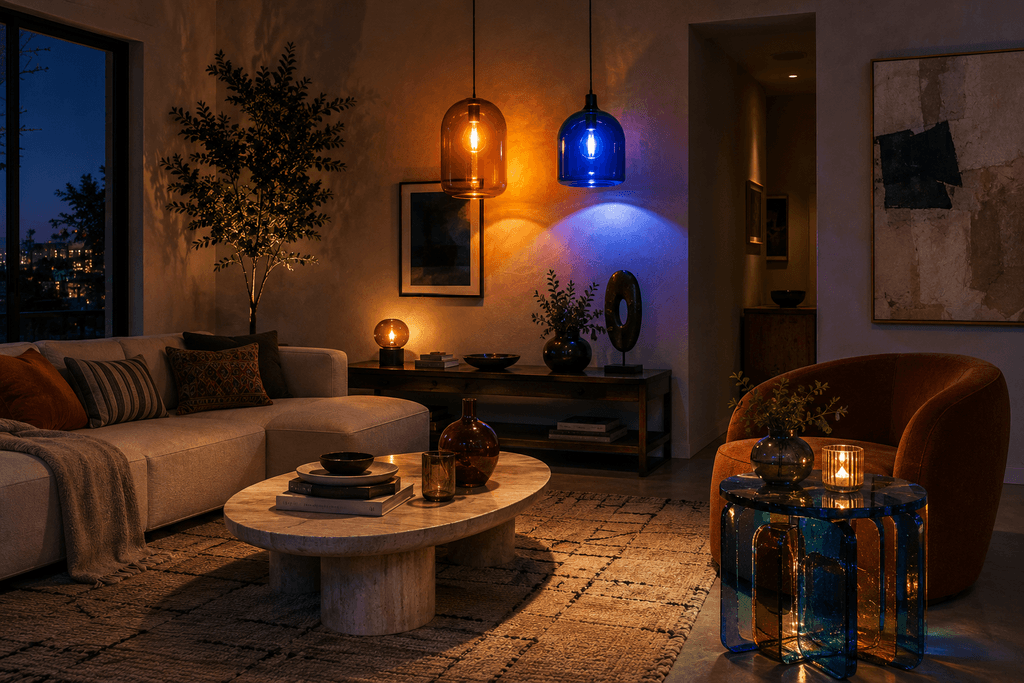
Colored glass is doing a lot of visual work in 2026 living rooms, appearing across lighting, furniture, and decorative objects. Pendant shades in amber, cobalt, or emerald cast tinted light onto walls and floors as sunlight and artificial light shift through the day, animating the room’s palette without requiring a repaint.
How to work it in:
- Swap a single pendant or table lamp shade for a colored glass version as a low-commitment starting point
- Add a fused or laminated glass side table to layer color and depth on a smaller surface
- Place a few smaller colored glass objects — vases, candle holders — on open shelving to punctuate the room with concentrated color
Design Around Multiple Seating Zones, Not One Formal Focal Point
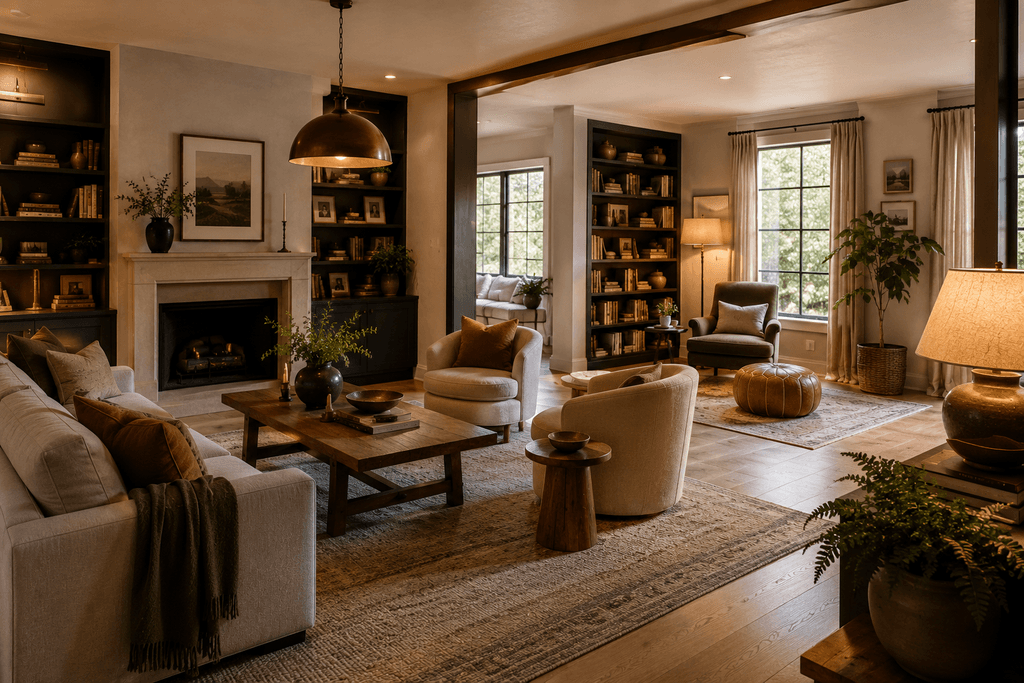
In 2026, living rooms are increasingly designed around everyday use rather than a single formal focal point. That means seating positioned for conversation, TV watching, and relaxing — often anchored by a central coffee table or soft ottoman — with rugs, lighting, and furniture placement used to define separate zones without adding walls.
How to work it in:
- Position seating to encourage conversation first, then work the TV viewing angle around that rather than centering the whole room on the screen
- Use a rug to visually define a reading corner or secondary seating area separate from the main conversation zone
- In open-plan spaces, turn a sofa so its back creates a subtle boundary between the living area and an adjacent dining or entry space
Choose Lower, Deeper, More Relaxed Seating
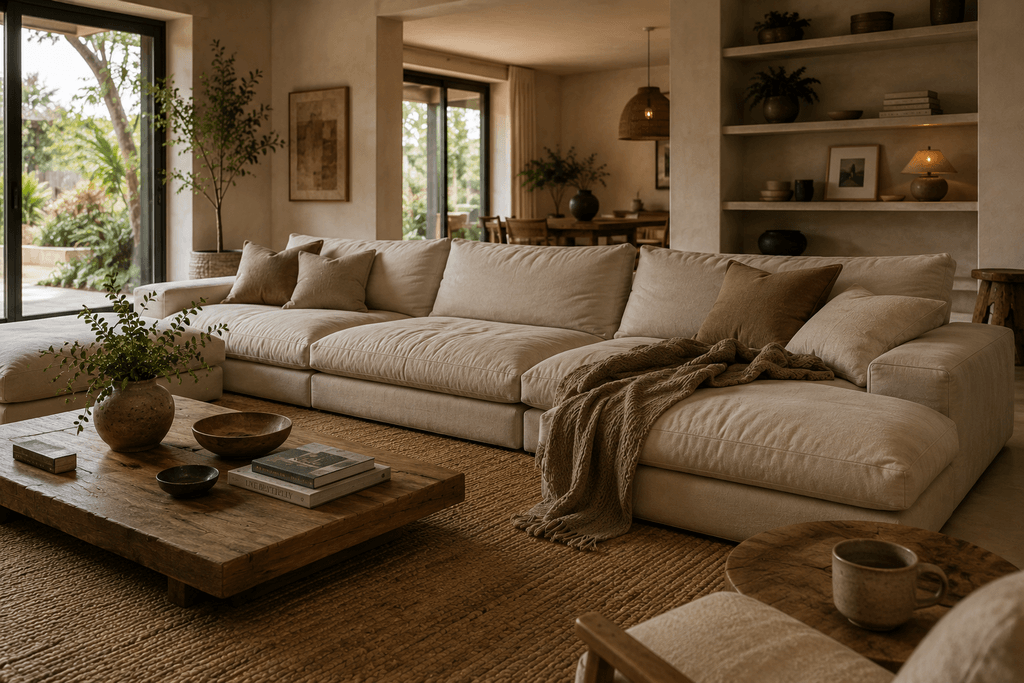
Sofas and chairs are trending slightly lower, deeper, and more relaxed in 2026, encouraging lounging rather than upright, formal sitting. Combined with the shift away from showroom styling, this reflects a broader move toward living rooms that prioritize genuine comfort over a polished, formal appearance.
How to work it in:
- If you’re not ready to replace your sofa, add a low upholstered ottoman or a pair of floor cushions to create the same relaxed, lounging feel
- Look for deep-seat sofas and sectionals over traditional upright designs when it’s time to replace existing seating
- Layered ottomans — used as both seating and a coffee-table substitute — are a specific detail designers are calling out as a growing 2026 trend
Build a Gallery Wall or Curated Display Around Personal Collections
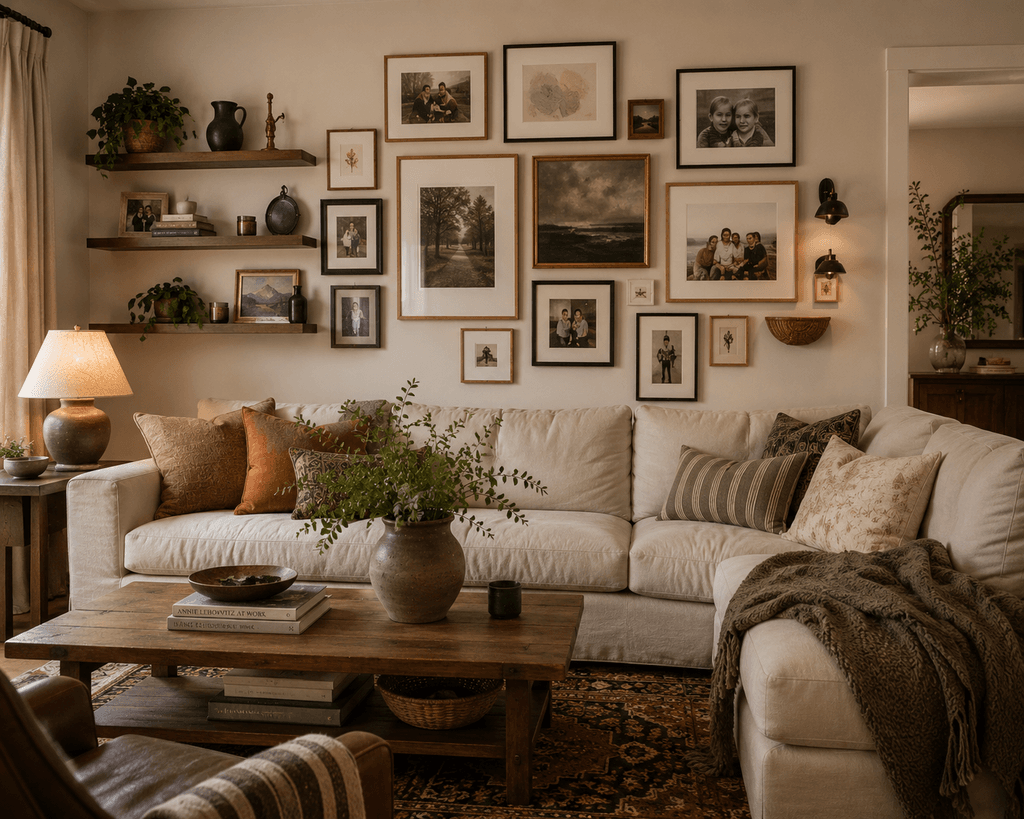
As maximalism evolves in 2026, it’s showing up less as loud, over-the-top statements and more as texture, rich neutral palettes, and thoughtfully curated gallery walls that tell a personal story. The goal isn’t clutter — it’s a room that reflects the people living in it.
How to work it in:
- Start with pieces that genuinely matter — travel photographs, family portraits, a piece of art from somewhere meaningful — rather than purchasing decor purely to fill wall space
- Repeat a frame color or material across the gallery wall to keep an eclectic mix of pieces feeling intentional rather than random
- Mix in a few three-dimensional objects (a small shelf, a decorative plate) alongside framed pieces for texture and depth beyond flat wall art
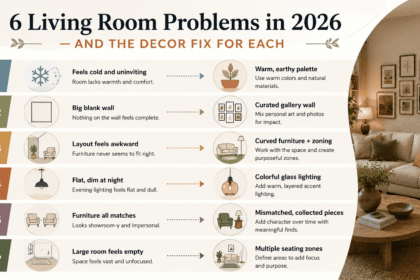
Quick Reference: 2026 Living Room Trends at a Glance
| Trend | Key Materials/Colors | Easiest Entry Point |
|---|---|---|
| Warm, earthy palette | Terracotta, olive, clay, sand | Throw pillows, artwork |
| Curved furniture | Boucle, wood, oval/arched shapes | Arched mirror, oval coffee table |
| Mismatched, collected look | Vintage + contemporary mix | One meaningful heirloom or thrifted piece |
| Natural, tactile materials | Rattan, reclaimed wood, linen | Woven basket, pendant shade |
| Colorful glass accents | Amber, cobalt, emerald glass | Single pendant or lamp shade swap |
| Multiple seating zones | Rugs, lighting, furniture placement | Rug to define a reading nook |
| Low, relaxed seating | Deep-seat sofas, layered ottomans | Add a low ottoman or floor cushions |
| Personal gallery walls | Photos, art, curated objects | Start with 3–5 meaningful pieces |
How to Choose Which Trends Are Right for Your Space
Not every trend needs to be adopted at once, and trying to layer all eight into a single room risks the exact showroom-perfect, impersonal feel these trends are moving away from. Before diving in, consider:
- Start with the lowest-cost, lowest-commitment changes first. Swapping throw pillows, a lamp shade, or artwork lets you test a warmer palette or a colored glass accent before committing to larger furniture purchases.
- Work with what you already own. The mismatched, collected-look trend is specifically designed to let you build around existing furniture rather than replacing everything — reupholstering or repositioning current pieces often gets you most of the way there.
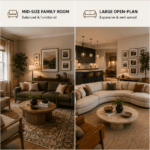
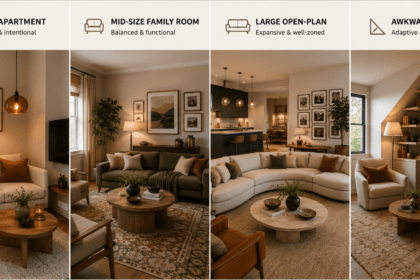
- Match trends to your room’s actual size. Multiple seating zones work best in larger or open-plan spaces; smaller living rooms may benefit more from a single well-defined zone with layered texture and a warm palette instead.
FAQ’s
Do I need to repaint my whole living room to follow the 2026 warm-tone trend?
No — a single accent wall, plus swapping cooler-toned pillows and artwork for warmer shades, can meaningfully shift a room’s palette without a full repaint.
Is the mismatched furniture trend just an excuse to avoid buying new furniture?
Not quite an excuse, but it is a legitimate, designer-endorsed approach — the trend specifically values curating from inherited pieces, thrifted finds, and existing furniture over replacing everything with a matching set, which also tends to be more budget-friendly and sustainable.
Are curved sofas practical for smaller living rooms?
They can be, but a full curved sofa is a bigger commitment in a small space. Starting with a smaller curved piece — a barrel chair, an oval coffee table, or an arched mirror — introduces the shape without the space demands of a full curved sectional.
How do I keep a gallery wall from looking cluttered rather than curated?
Repeating a frame color, material, or spacing pattern across an otherwise eclectic mix of photos and art helps tie the pieces together visually, so the wall reads as intentional rather than random.
Conclusion
The throughline across 2026’s living room trends isn’t a single color or furniture shape — it’s a shift toward rooms that feel warm, personal, and genuinely lived in rather than staged for a photograph. Start small: a warmer palette here, a curved accent piece there, a gallery wall built from pieces that actually mean something to you. Layered gradually, these eight ideas add up to a living room that feels current in 2026 without requiring a full renovation.
Design trends, product availability, and pricing for home decor items change frequently. This article reflects general design guidance current at the time of publication; always assess your own space, budget, and personal style before making purchasing or renovation decisions.