

Every “best living room ideas for 2026” list shows the same beautiful, styled photos — a curved sofa catching perfect light, a gallery wall that looks effortlessly curated, a room bathed in amber glow from a colored glass pendant. What these lists rarely mention is the practical trade-off behind each look — the thing that isn’t a design flaw exactly, just a real consideration that doesn’t show up in a photograph.
- Warm, Earthy Palettes: The Trade-Off Is Resale and Longevity Risk
- Curved Furniture: The Trade-Off Is Space Efficiency
- Colorful Glass Lighting: The Trade-Off Is Color Accuracy in the Room
- Mismatched, Collected Furniture: The Trade-Off Is It Takes Longer to Get Right
- Low, Deep, Relaxed Seating: The Trade-Off Is Getting In and Out
- Multiple Seating Zones: The Trade-Off Is More Furniture and Higher Cost
- Gallery Walls: The Trade-Off Is Wall Damage and Commitment
- Trend vs. Trade-Off Quick Reference
- FAQ’s
- Conclusion
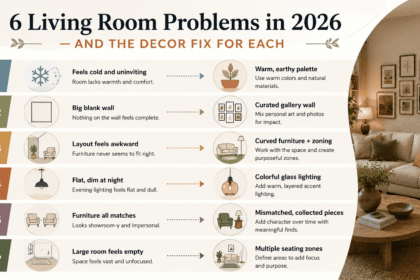
This guide takes the opposite approach. For each 2026 trend, we lead with the trade-off, then explain whether it’s still worth pursuing despite it.
Warm, Earthy Palettes: The Trade-Off Is Resale and Longevity Risk
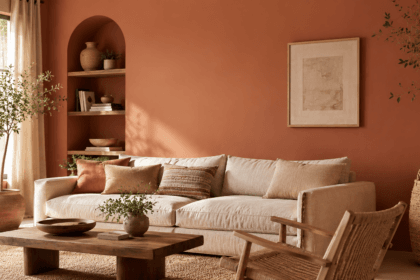
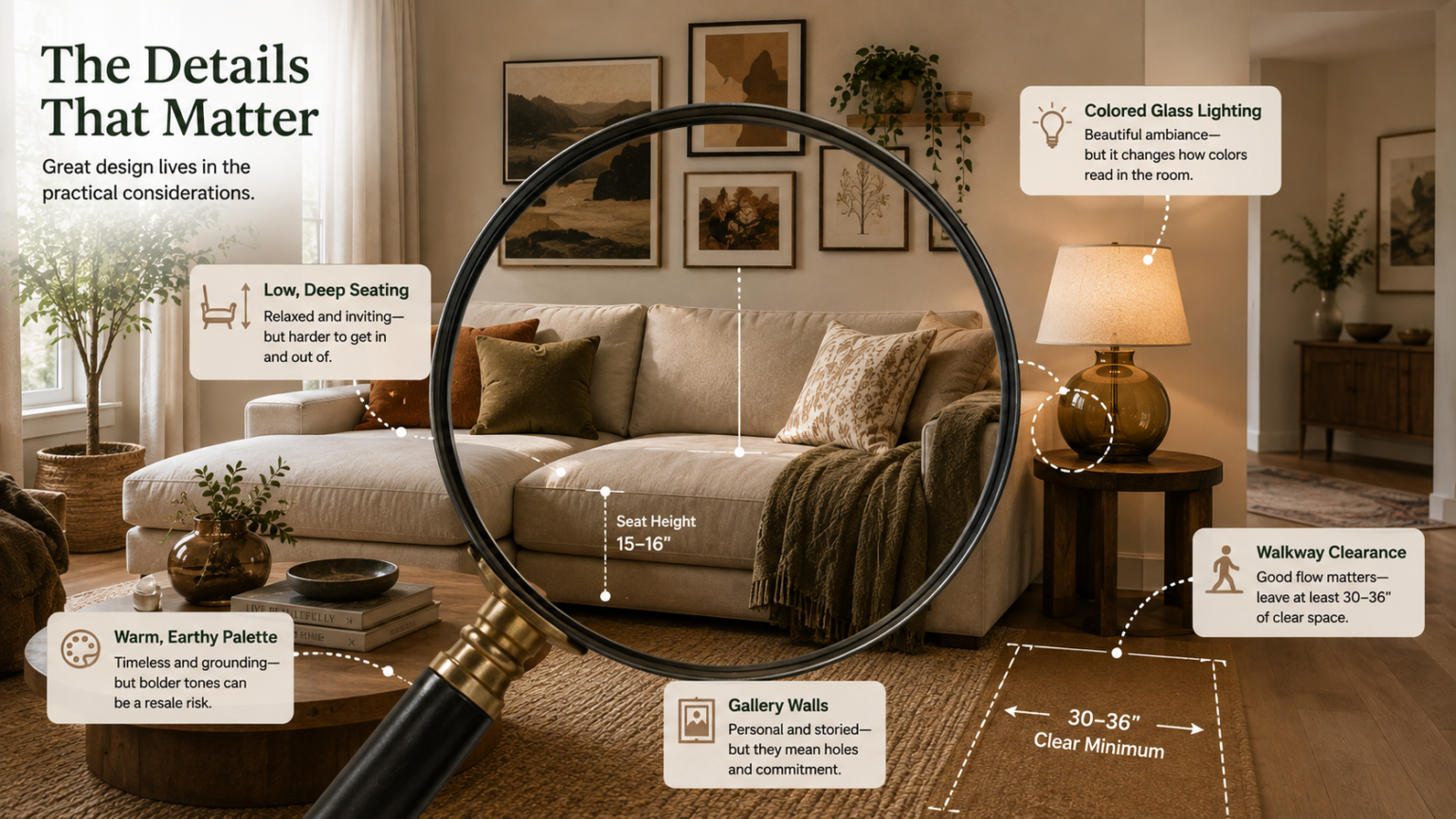
Soft browns, olive greens, terracotta, and clay tones are genuinely dominating 2026 living room design, and they create a warmer, calmer feel than the cool grays they’re replacing. The trade-off: strong, specific color choices — a full terracotta accent wall, for instance — carry more resale and longevity risk than a neutral would, since a future buyer or your own future self may tire of a bold, specific tone faster than a true neutral.
Is it still worth it? Yes, for most homeowners, especially through lower-commitment applications — throw pillows, artwork, a single accent wall rather than a whole-room repaint. If you’re staging to sell or genuinely uncertain about long-term commitment to a bold tone, keep the boldest colors to easily-swappable textiles rather than paint or built-ins.
Curved Furniture: The Trade-Off Is Space Efficiency
Curved sofas, barrel chairs, and oval coffee tables are a defining 2026 shape, softening rooms dominated by straight walls and rectangular windows. The trade-off that rarely makes it into styled photos: curved furniture is generally less space-efficient than its rectangular counterpart. A curved sectional often occupies more floor area than a comparable rectangular one for the same seating capacity, because the rounded shape doesn’t tuck neatly into corners the way a right-angle sectional does.
Is it still worth it? Yes, in rooms with enough square footage to accommodate the shape without crowding walkways — mid-size to large rooms handle this well. In genuinely tight spaces, a smaller curved accent piece (an oval coffee table, a single barrel chair) delivers the aesthetic without the space cost of a full curved sofa.
Colorful Glass Lighting: The Trade-Off Is Color Accuracy in the Room
Amber, cobalt, and emerald glass pendants and lamps are doing real visual work in 2026 living rooms, casting tinted, ambient light that shifts through the day. The trade-off: colored glass fixtures alter the color temperature and accuracy of light in the room, which can subtly shift how other colors — your sofa fabric, your artwork, your paint — actually read once the lights are on, sometimes differently than expected based on how they looked under neutral showroom lighting.
Is it still worth it? Yes, as an accent rather than a primary light source. Pairing one or two colored glass fixtures with a neutral primary light source (an overhead fixture or additional lamps) lets you enjoy the ambient color effect in the evening without the tinted light distorting how the room reads for everyday tasks and true-color viewing.
Mismatched, Collected Furniture: The Trade-Off Is It Takes Longer to Get Right
The move away from matching furniture sets toward curated, collected pieces is one of 2026’s clearest trends, and it’s explicitly framed as more sustainable and personal than a showroom-matched set. The trade-off: this look genuinely takes longer to assemble well. A matched set can be purchased in a single trip; a cohesive mismatched room, built from meaningful pieces collected over time, doesn’t happen in one shopping session — and done carelessly, it reads as genuinely cluttered rather than curated.
Is it still worth it? Yes, but plan for it as a gradual process rather than a weekend project. Start with the pieces that already matter to you, add new pieces slowly, and use a repeated color, material, or shape across the room to keep the mix looking intentional as it grows.
Low, Deep, Relaxed Seating: The Trade-Off Is Getting In and Out
Low-profile, deep-seated sofas and chairs are trending in 2026 specifically because they encourage lounging over upright, formal sitting. The trade-off: lower seat heights are genuinely harder to get in and out of for some people — older adults, anyone with mobility or joint considerations, or households where guests span a wide age range — a factor that rarely comes up in styled photography focused purely on the relaxed aesthetic.
Is it still worth it? Yes, for most households, but it’s worth testing the seat height in person if mobility is a consideration for anyone who regularly uses the room, rather than assuming the trend’s comfort framing applies universally.
Multiple Seating Zones: The Trade-Off Is More Furniture and Higher Cost
Designing a living room around multiple functional zones — a conversation area, a reading nook, a TV-watching arrangement — genuinely makes larger rooms feel more purposeful and less cavernous. The trade-off: more zones generally means more furniture, more rugs, and more lighting fixtures than a single, unified arrangement would require, which adds up in both cost and the number of individual pieces you need to select well.
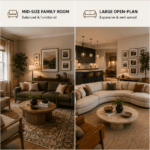
Is it still worth it? Yes, for rooms genuinely large enough to need it — without deliberate zoning, a large open room can feel unfocused regardless of how nice any single piece is. In smaller or mid-size rooms, one well-defined zone with careful layering may deliver more value than spreading the same budget across multiple partial zones.
Gallery Walls: The Trade-Off Is Wall Damage and Commitment
Curated gallery walls, built from personal photographs and collected art, are a defining detail in 2026’s move toward more personal, storied living rooms. The trade-off: a well-populated gallery wall involves genuine wall damage from multiple nail or hook holes, and rearranging it later (which curated collections often invite, as new pieces are added) means additional holes and patchwork over time — a real consideration for renters or anyone who repaints periodically.
Is it still worth it? Yes, but renters and frequent movers should look specifically at removable hanging strips or a leaning gallery arrangement on a console or mantel rather than a fully nailed wall arrangement, preserving the personal, curated look without the permanent wall commitment.
Trend vs. Trade-Off Quick Reference
| Trend | The Appeal | The Trade-Off |
|---|---|---|
| Warm, earthy palette | Calmer, more inviting feel | Bold specific tones carry more resale/longevity risk than neutrals |
| Curved furniture | Softens boxy rooms | Generally less space-efficient than rectangular furniture |
| Colorful glass lighting | Warm, ambient, shifting light | Alters color accuracy in the room; best as an accent, not primary light |
| Mismatched, collected pieces | Personal, sustainable, less showroom-y | Takes genuine time to assemble well; rushed attempts look cluttered |
| Low, deep seating | Encourages relaxed lounging | Harder to get in and out of for some users |
| Multiple seating zones | Makes large rooms feel purposeful | Requires more furniture, rugs, and lighting — and more budget |
| Gallery walls | Personal, storied, characterful | Genuine wall damage; ongoing commitment as the collection grows |
FAQ’s
Is it risky to commit to a bold accent wall color if I might sell my home eventually?
It’s a modest risk, not a major one — a single accent wall (rather than the whole room) is a relatively low-cost, easily repainted commitment if a future buyer’s taste differs, and it’s far less risky than committing a bold color to built-ins or permanent fixtures.
How do I know if curved furniture will actually fit my room, or if it’ll feel cramped?
Measure the floor space a curved piece requires (often more than its rectangular equivalent for the same seating capacity) and compare it against your room’s actual walkway clearance before purchasing, rather than judging fit from inspiration photos alone.
Should I avoid colored glass lighting entirely if I do detailed visual work at home (like sewing or painting)?
Not entirely — just make sure your primary task lighting is neutral-toned and positioned where you actually do detailed work, and reserve colored glass fixtures for ambient, evening-use areas of the room instead.
Is there a way to get the gallery wall look without permanent damage as a renter?
Yes — removable adhesive hanging strips rated for picture frames, or a leaning arrangement on a mantel, shelf, or console, both deliver the curated look without nail holes, and can be rearranged freely as your collection grows.
Conclusion
None of these trade-offs make 2026’s living room trends bad ideas — warm palettes, curved furniture, colorful glass lighting, mismatched collected pieces, low relaxed seating, multiple zones, and gallery walls are all genuinely worth pursuing. The difference between a room that looks good in photos and one that actually works for your daily life comes down to understanding the practical trade-off behind each trend before you commit, not discovering it after the paint has dried or the furniture’s been delivered.
Design trends, product availability, and pricing for home decor items change frequently. This article reflects general design guidance current at the time of publication; always assess your own space, budget, household needs, and personal style before making purchasing or renovation decisions.