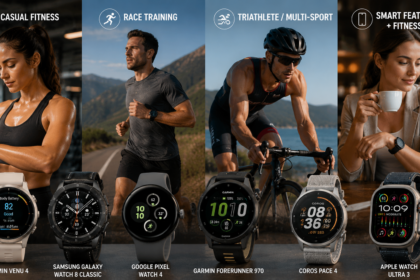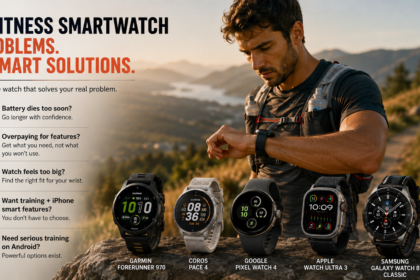


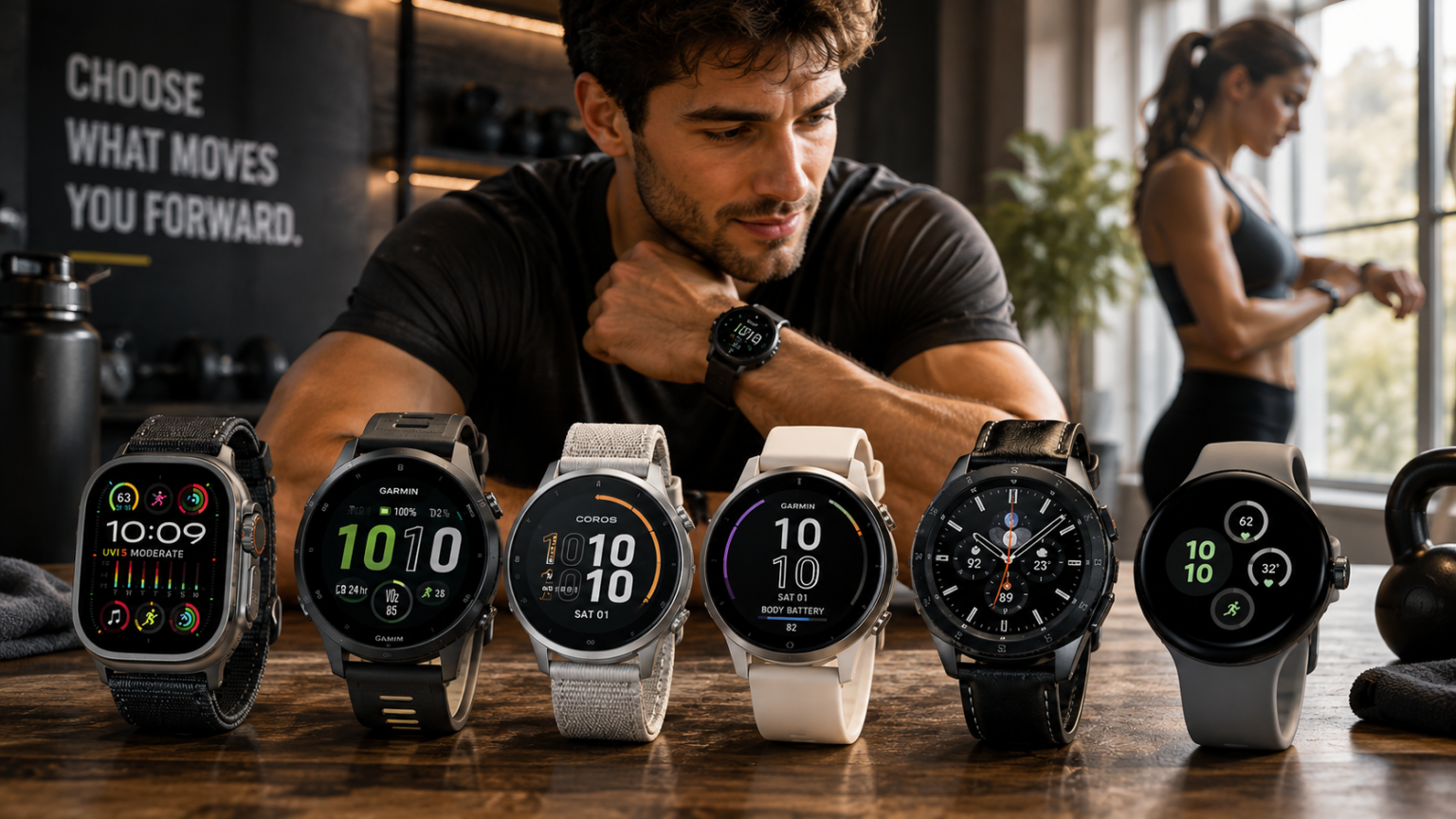
Choosing a smartwatch for fitness in 2026 means picking a side in a real trade-off: the app-rich, notification-heavy world of Apple Watch and Wear OS, or the longer battery life and deeper training metrics of dedicated sports brands like Garmin and COROS. Neither side is objectively better — it depends on how seriously you train and how much you want your watch to double as a phone-adjacent device.
- Direct Answer: The Best Smartwatches for Fitness at a Glance
- Apple Watch Ultra 3 — Best Overall for iPhone Users
- Garmin Forerunner 970 — Best for Serious Training
- COROS Pace 4 — Best Value Sports Watch
- Garmin Venu 4 — Best Lifestyle-Fitness Hybrid
- Samsung Galaxy Watch 8 Classic — Best for Android Users
- Google Pixel Watch 4 — Best Battery Life on Wear OS
- Comparison Table
- How to Choose the Right Fitness Smartwatch
- FAQ’s
- Conclusion
This guide covers six smartwatches that consistently show up as 2026 favorites for fitness, spanning both camps, with real pricing and where each one falls short.
Direct Answer: The Best Smartwatches for Fitness at a Glance
- Best overall for iPhone users: Apple Watch Ultra 3
- Best for serious training: Garmin Forerunner 970
- Best value sports watch: COROS Pace 4
- Best lifestyle-fitness hybrid: Garmin Venu 4
- Best for Android users: Samsung Galaxy Watch 8 Classic
- Best battery life on Wear OS: Google Pixel Watch 4
Below, we break down what each watch actually does well, current pricing, and who should look elsewhere.
Apple Watch Ultra 3 — Best Overall for iPhone Users
For iPhone users who want the strongest balance between genuine fitness tracking and full smartwatch functionality, the Apple Watch Ultra 3 remains the standout — it’s the rare device that handles serious workouts and everyday smart features equally well.
Key features:
- Built-in GPS, heart rate, and comprehensive activity tracking
- Full smartwatch functionality: apps, notifications, contactless payments
- Rugged titanium build with sapphire crystal display
Pricing: Starts at $799, positioning it as a premium purchase compared to dedicated sports watches at similar or lower prices.
Pros:
- Genuinely dominant in the “smart” category — apps, notifications, and ecosystem integration are unmatched by sports-focused competitors
- Battery life reaches roughly 35 hours in normal smartwatch mode, a meaningful improvement over standard Apple Watch models
Cons:
- Battery life drops to about 12 hours in GPS tracking mode, a real limitation for long endurance events compared to dedicated sports watches
- iOS-only, so it’s not an option at all for Android users regardless of its other strengths
Garmin Forerunner 970 — Best for Serious Training
For anyone genuinely serious about training — tracking VO2 max, training load, recovery time, and running power in real detail — the Garmin Forerunner 970 is widely regarded as the best sports watch on the market, striking a rare balance between advanced metrics, battery life, comfort, and day-to-day usability.
Key features:
- 1.4-inch AMOLED display with sapphire crystal glass and titanium bezel
- Continuous heart rate, Pulse Ox, ECG, sleep score, Body Battery, HRV status, and fitness age estimation
- Offline maps, built-in speaker/microphone for calls, and multi-band GPS
- 41 hours (42mm) or 65 hours (46mm) of GPS tracking battery life
Pricing: Launched at $749, with sales occasionally bringing it down to around $649.
Pros:
- Best-in-class sports and navigation features in a genuinely lightweight, durable watch
- Training insights are specifically praised as useful and actionable, not just data for its own sake
Cons:
- Expensive, and reviewers note it’s not a huge leap over the more affordable Forerunner 570 for basic, non-competitive use
- Only comes in a 47mm size, which can look oversized on smaller wrists
COROS Pace 4 — Best Value Sports Watch
If you want genuinely accurate GPS tracking and in-depth running dynamics without paying Garmin’s premium prices, the COROS Pace 4 delivers exactly what matters without charging for features you won’t use — a rare sweet spot of performance, battery life, and a thin, lightweight design.
Key features:
- Accurate GPS tracking and detailed running dynamics metrics
- Thin, lightweight build with strong battery life for its price class
- Available in black or white with nylon or silicone band options
Pricing: Priced at $249, notably cheaper than comparable Garmin models — COROS rarely discounts its watches, but the launch price already undercuts most competitors.
Pros:
- Outstanding value — rivals from Garmin with similar functionality often cost hundreds more
- Strong core running metrics (GPS, pace, running dynamics) that punch above the price point
Cons:
- Not a do-it-all device — lacks some of the deeper smartwatch and mapping features of pricier Garmin models
- Smaller companion ecosystem and fewer third-party app options compared to Apple Watch or Wear OS devices
Garmin Venu 4 — Best Lifestyle-Fitness Hybrid
The Garmin Venu 4 packs the performance capabilities of a running watch like the Forerunner 970 into a more polished, lifestyle-focused design — a strong pick for anyone who wants serious health tracking without a sport-watch aesthetic.
Key features:
- Fully stainless steel case with multi-band GPS
- Training Readiness score and Triathlon Mode, features typically reserved for pricier Garmin lines
- Body Battery energy score, a broadly appealing recovery metric for users of all fitness levels
- Vibrant AMOLED display and polished, everyday-wearable design
Pricing: Generally seen in the $550–$610 range depending on band and configuration, with occasional sales bringing it to its lowest prices.
Pros:
- Stellar health and recovery tracking with approachable, actionable insights, not just raw numbers
- Bright display and intuitive day-to-day usability make it appealing for everyday wear, not just workouts
Cons:
- Trades off some battery life and navigation depth compared to dedicated running watches like the Forerunner line
- Meaningfully pricier than the COROS Pace 4 for buyers who mainly want core running metrics
Samsung Galaxy Watch 8 Classic — Best for Android Users
For Android users, the Samsung Galaxy Watch 8 Classic is a strong first choice, particularly if you already own a Samsung phone — its rotating bezel and stainless steel case give it a distinctly more traditional watch feel than most smartwatch competitors.
Key features:
- 1.34-inch Super AMOLED display with up to 3,000 nits peak brightness
- ECG, sleep coaching, Running Coach, fall detection, and body composition tracking
- Wear OS with Samsung’s One UI 8 and Google Gemini AI assistant support
- Up to 30 hours of battery life
Pricing: Lists at $499.99 (Bluetooth) or $549.99 (4G LTE), though it has been seen discounted as low as $219.99–$269.99 during sales.
Pros:
- Comprehensive health metrics (Energy Score, Vascular Load, Antioxidant Index) alongside strong fitness tracking
- Samsung’s Running Coach tool is specifically praised as comprehensive and encouraging for beginners and marathon-curious users alike
Cons:
- At 46mm with no smaller size option, the Classic can feel large on smaller wrists compared to the standard Galaxy Watch 8
- Battery life of roughly 30 hours is well behind dedicated sports watches, requiring more frequent charging
Google Pixel Watch 4 — Best Battery Life on Wear OS
If you want a full-featured Wear OS smartwatch with the best battery life in its category, the Google Pixel Watch 4 in 45mm is the strongest overall Android pick, delivering plentiful health and fitness tracking alongside Google’s Gemini-based AI assistant.
Key features:
- Available in 41mm and 45mm case sizes, offering more size flexibility than the Galaxy Watch 8 Classic
- Domed display design with slimmer bezels than Samsung’s competing model
- Google Gemini AI voice assistant built in
- Plentiful health and fitness tracking tools
Pricing: Competitively priced against the Galaxy Watch 8 Classic, with deals seen bringing it down further (around $40 off during sales periods).
Pros:
- The 45mm model surpasses 60 hours of battery life per charge, notably better than the Galaxy Watch 8 Classic’s roughly 30–40 hours and the Apple Watch Series 11’s roughly 30 hours
- Offers two case sizes, making it a better fit for smaller wrists than the Galaxy Watch 8 Classic’s single 46mm option
Cons:
- Lacks the rotating bezel and traditional-watch aesthetic that draws some buyers to the Galaxy Watch 8 Classic
- Still behind dedicated sports watches like the Forerunner or COROS lines on fitness-specific depth and battery life during GPS tracking
Comparison Table
| Smartwatch | Best For | Starting Price | Battery Life |
|---|---|---|---|
| Apple Watch Ultra 3 | iPhone users, all-around balance | $799 | ~35 hrs smartwatch, ~12 hrs GPS |
| Garmin Forerunner 970 | Serious structured training | $749 (seen at $649) | 41–65 hrs GPS tracking |
| COROS Pace 4 | Best value sports watch | $249 | Strong for its price class |
| Garmin Venu 4 | Lifestyle-fitness hybrid | ~$550–$610 | Multi-day, less than Forerunner |
| Samsung Galaxy Watch 8 Classic | Android users | $499.99 (seen from $219.99) | Up to 30 hrs |
| Google Pixel Watch 4 | Wear OS battery life | Competitive with Galaxy Watch 8 | 60+ hrs (45mm) |
How to Choose the Right Fitness Smartwatch
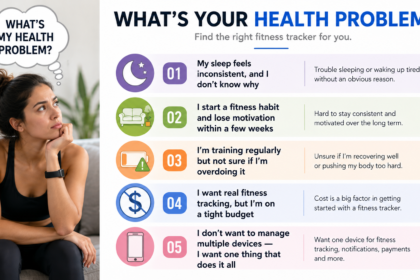
Before comparing spec sheets line by line, get clear on a few practical priorities:
- Check your phone’s operating system first. The Apple Watch Ultra 3 only works with iPhones; the Galaxy Watch 8 Classic and Pixel Watch 4 are built for Android. This single factor eliminates half the list immediately for most buyers.
- Decide how seriously you actually train. If you’re logging structured workouts, tracking VO2 max, or training for a race, a dedicated sports watch (Garmin Forerunner 970 or COROS Pace 4) will outperform a general smartwatch on training-specific metrics.
- Weigh battery life against smart features honestly. Dedicated fitness watches from Garmin and COROS generally offer a week or more between charges, while app-rich smartwatches from Apple, Samsung, and Google rarely exceed a day or two — a real trade-off if you don’t want a daily charging routine.
- Set a realistic budget. The COROS Pace 4 delivers strong core training data for a fraction of the Garmin Forerunner 970’s price — worth considering if you don’t need every advanced feature the pricier option offers.
FAQ’s
Is a dedicated sports watch better than a smartwatch for fitness?
It depends on your priority — dedicated watches from Garmin and COROS generally offer longer battery life and deeper training metrics, while smartwatches from Apple, Samsung, and Google trade some of that depth for broader app support, notifications, and payments.
What’s the best budget smartwatch for fitness in 2026?
The COROS Pace 4, at $249, is widely regarded as the best value option — it delivers accurate GPS tracking and detailed running metrics without the premium price of comparable Garmin models.
Do I need the most expensive watch to get accurate fitness tracking?
No — reviewers specifically note that the Garmin Forerunner 970 isn’t a huge leap over the more affordable Forerunner 570 for basic use, and the COROS Pace 4 delivers strong core metrics at a fraction of premium sports watch pricing.
Which smartwatch has the best battery life?
Among smartwatches (not dedicated sports watches), the Google Pixel Watch 4 in 45mm leads with over 60 hours per charge, ahead of the Galaxy Watch 8 Classic’s roughly 30–40 hours and the Apple Watch Ultra 3’s roughly 35 hours in smartwatch mode. Dedicated sports watches like the Garmin Forerunner 970 still outlast all of them by a wide margin.
Conclusion
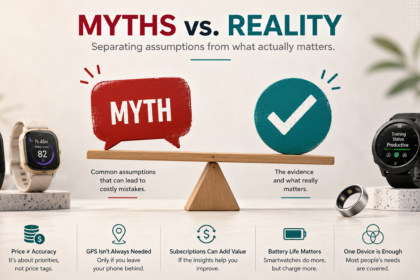
There’s no single best smartwatch for fitness — the right pick depends on your phone’s operating system, how seriously you train, and how much you value smart features versus battery life. The Apple Watch Ultra 3 is the strongest all-around choice for iPhone users, the Garmin Forerunner 970 is worth the investment for serious structured training, the COROS Pace 4 delivers outstanding value for runners on a budget, the Garmin Venu 4 blends performance with everyday polish, and the Samsung Galaxy Watch 8 Classic and Google Pixel Watch 4 are the strongest Android options depending on whether you prioritize a traditional watch aesthetic or maximum battery life.
Pricing, specifications, and availability for smartwatches change frequently and may have been updated since this article was published. Always verify current pricing and specs directly on the manufacturer’s or retailer’s official website before purchasing. This article is for informational purposes and does not constitute medical advice; consult a healthcare provider for health-related concerns.