

Ask ten people what makes a “good” fitness tracker, and a lot of the answers trace back to assumptions nobody’s actually tested — more expensive always means more accurate, you need onboard GPS to track anything meaningful, a subscription-based device is automatically a bad deal. Some of this thinking made more sense a few years ago, before the category diversified into distinct use cases. In 2026, several of these assumptions are quietly steering people toward overspending or picking a device that doesn’t match how they’ll actually use it.
- Myth 1: “A more expensive tracker is always more accurate”
- Myth 2: “You need onboard GPS for a fitness tracker to be genuinely useful”
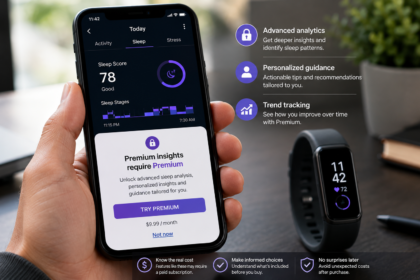
- Myth 3: “A subscription-based device is automatically a worse deal than a one-time purchase”
- Myth 4: “A smartwatch is always a better choice than a dedicated fitness tracker”
- Myth 5: “You need a smart ring and a fitness watch to get complete health data”
- Myth vs. Reality: Quick Reference
- FAQ’s
- Conclusion
Here are five of the most common fitness tracker myths, what the evidence actually shows, and what to do instead.
Myth 1: “A more expensive tracker is always more accurate”
The assumption: Since the Garmin Vivoactive 6 ($299–$300) and Oura Ring 5 ($399) cost significantly more than the Google Fitbit Air ($100), they must deliver meaningfully more accurate core tracking across the board.
The reality: Price often reflects a specific design priority — GPS precision, sleep-focused comfort, recovery coaching depth — rather than uniformly “better” accuracy at every metric. In fact, one specific comparison found the cheaper Fitbit Charge 6 includes an ECG sensor and EDA stress scanning that the pricier Garmin Vivoactive 6 doesn’t have — a rare case where the less expensive device wins on a specific health-tracking feature. Higher price buys specific capabilities, not a blanket accuracy upgrade across every metric.
What to do instead: Compare devices on the specific metrics that matter most to you, rather than assuming the pricier option automatically wins across the board. A cheaper device can genuinely outperform a pricier one on a specific feature.
Myth 2: “You need onboard GPS for a fitness tracker to be genuinely useful”
The assumption: A tracker without built-in GPS, relying on your phone instead, is a meaningfully inferior product for tracking any outdoor activity.
The reality: Onboard GPS matters specifically if you regularly walk, run, or cycle without carrying your phone — for that use case, it’s a real, meaningful advantage. But devices like the Google Fitbit Air, which rely on phone-based GPS, are explicitly built for and marketed toward people who typically have their phone with them anyway, where the distinction is largely irrelevant in daily practice.
What to do instead: Check whether you actually leave your phone behind during exercise before prioritizing onboard GPS. If your phone is always with you anyway, a phone-dependent tracker delivers the same practical outcome at a lower price.
Myth 3: “A subscription-based device is automatically a worse deal than a one-time purchase”
The assumption: Devices requiring an ongoing membership, like the Oura Ring 5 or WHOOP 5.0, are inherently a worse value than a tracker you simply buy once and use indefinitely, like the Fitbit Charge 6 or Garmin Vivoactive 6.
The reality: Whether a subscription is a “worse deal” depends entirely on whether the ongoing service delivers value that a one-time purchase can’t. Oura’s membership and WHOOP’s subscription both fund continuously updated software insights and coaching — a fundamentally different value proposition than a static, one-time-purchase device. The real question isn’t “subscription versus no subscription” in the abstract, but whether the specific ongoing insights are worth the specific ongoing cost to you.
What to do instead: Evaluate subscription-based devices on whether their ongoing insights genuinely matter to your goals, not on a blanket rule that subscriptions are worse than one-time purchases. For some users (those genuinely engaged with detailed recovery coaching), the subscription model delivers real, ongoing value; for others, it’s an unnecessary recurring cost for data they won’t act on.
Myth 4: “A smartwatch is always a better choice than a dedicated fitness tracker”
The assumption: Since a smartwatch like the Apple Watch SE 3 does more overall — notifications, apps, payments, plus fitness tracking — it’s a strictly better purchase than a single-purpose device like the Fitbit Charge 6 or Oura Ring 5.
The reality: More functionality comes with a real trade-off: the Apple Watch SE 3’s roughly 18-hour battery life requires daily charging, a genuine departure from the multi-day (or multi-week) battery life of dedicated trackers. For anyone who specifically wants to wear their tracker overnight for sleep tracking without worrying about a charging routine, a dedicated tracker’s longer battery life is a meaningful practical advantage a smartwatch can’t currently match.
What to do instead: Weigh the smartwatch’s broader functionality against its shorter battery life honestly, based on your actual charging habits and whether overnight wear matters to you — “does more” isn’t the same as “better for your specific use case.”
Myth 5: “You need a smart ring and a fitness watch to get complete health data”
The assumption: Since a ring like the Oura Ring 5 excels at sleep tracking and a watch like the Garmin Vivoactive 6 excels at exercise tracking, genuinely complete health tracking requires owning and wearing both simultaneously.
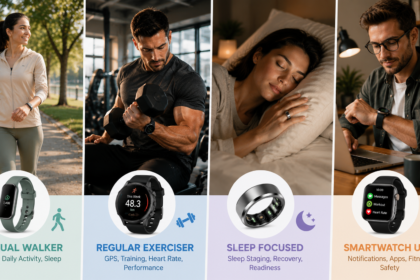
The reality: Most people don’t need to double up on devices to get meaningful health insight — the category has fractured into distinct use cases specifically so people can choose the single device that matches their primary priority, not so they’re expected to buy multiple devices to cover every angle. A single well-matched device (a Fitbit Charge 6 for balanced everyday tracking, for example) covers the core basics of both sleep and activity reasonably well for most non-specialized needs.
What to do instead: Start with one device matched to your primary priority. Only consider adding a second, specialized device (a ring for sleep, a dedicated GPS watch for training) if you find a genuine, specific gap that your first device isn’t covering — not as a default expectation from the start.
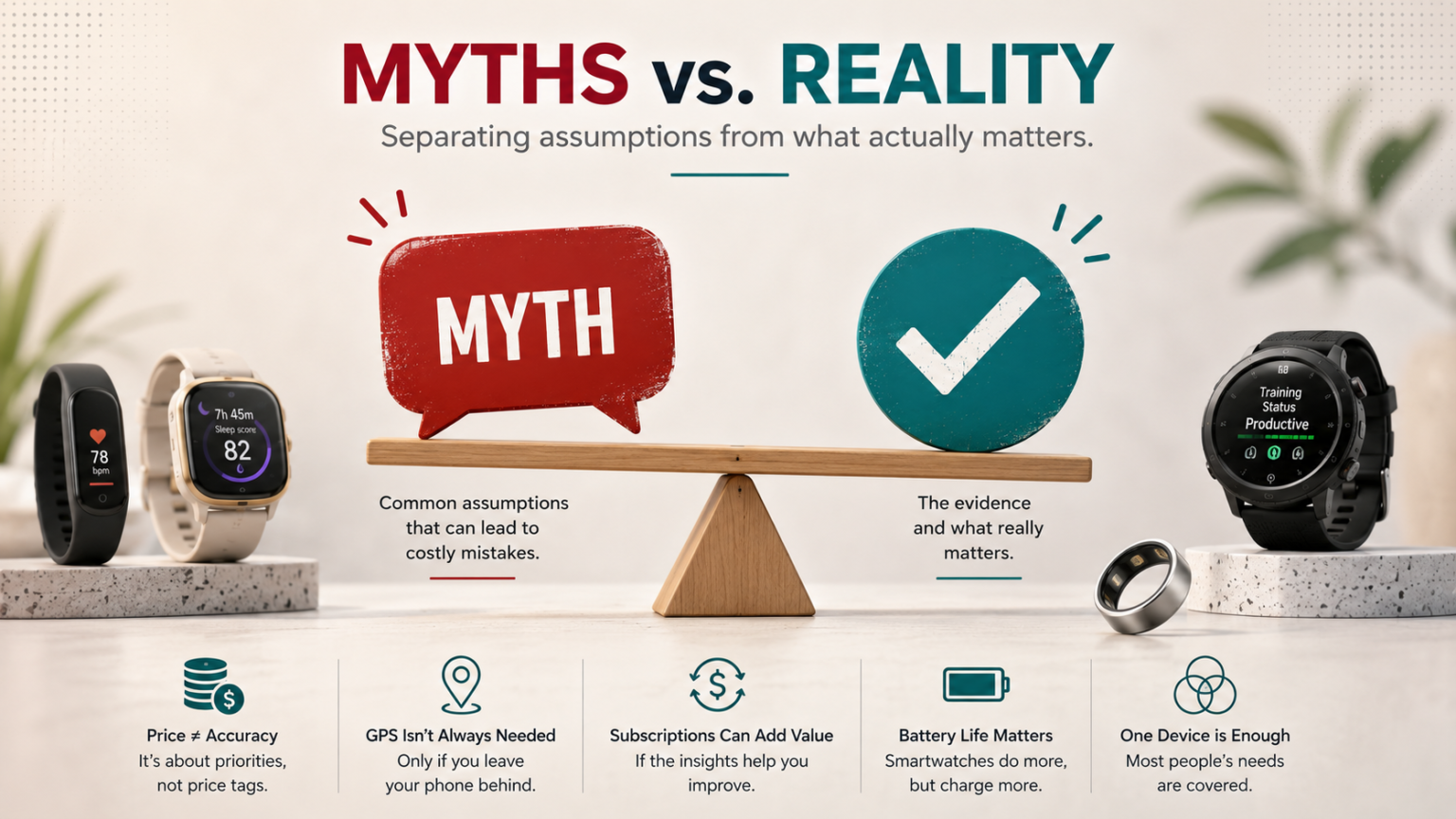
Myth vs. Reality: Quick Reference
| Myth | Reality |
|---|---|
| More expensive always means more accurate | Price reflects specific priorities; a cheaper device can win on specific features |
| You always need onboard GPS | Only matters if you exercise without your phone; otherwise phone-based GPS is fine |
| Subscriptions are automatically worse value | Depends on whether the ongoing insights genuinely matter to your goals |
| A smartwatch is always better than a dedicated tracker | Comes with a real battery-life trade-off that matters for overnight wear |
| You need both a ring and a watch for complete data | One well-matched device covers most people’s core needs |
FAQ’s
How do I know if a subscription-based tracker is worth it for me specifically?
Consider whether you’ll actually engage with the detailed insights (recovery scores, sleep staging trends) it provides, or whether you mainly want basic activity and sleep data — the latter is well-covered by non-subscription trackers.
Is it ever worth owning both a ring and a watch?
It can be, for people with genuinely distinct priorities — serious daily training plus dedicated sleep optimization, for example — but it’s not a default requirement, and most people’s needs are reasonably covered by a single well-matched device.
Should I prioritize onboard GPS even if I usually carry my phone?
Not necessarily — if your phone is reliably with you during exercise, phone-based GPS delivers essentially the same practical outcome at a lower price, so onboard GPS is worth prioritizing specifically for people who train without their phone.
Is a cheaper tracker ever the objectively better technical choice, not just the more affordable one?
Yes — as one direct comparison found, the Fitbit Charge 6 includes an ECG sensor and EDA stress scanning that the pricier Garmin Vivoactive 6 lacks, showing that price and feature completeness don’t always move together.
Conclusion
None of these five myths are unreasonable on their face — they’re mostly assumptions that made more sense before the fitness tracker category diversified into distinct, specialized use cases. The pattern across all five: the right tracker decision comes down to your specific habits, priorities, and willingness to pay for ongoing insights, not a general rule about price, GPS, subscriptions, or device type. Test these assumptions against your own daily routine before defaulting to whichever tracker seems most feature-complete on paper.
Pricing, specifications, and availability for fitness trackers change frequently and may have been updated since this article was published. Always verify current pricing and specs directly on the manufacturer’s or retailer’s official website before purchasing. This article is for informational purposes and does not constitute medical advice; consult a healthcare provider for health-related concerns.