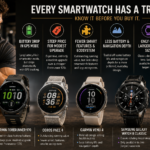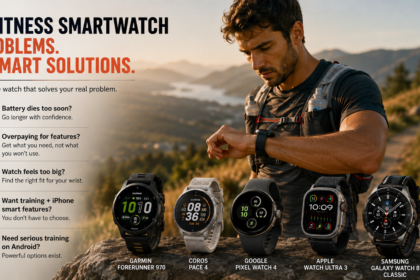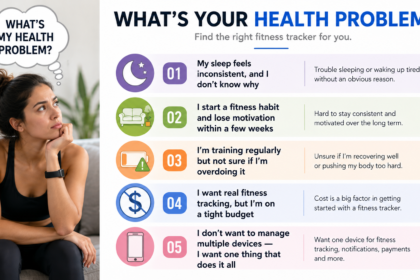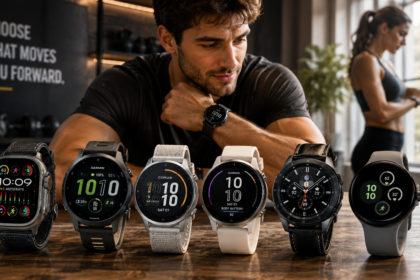


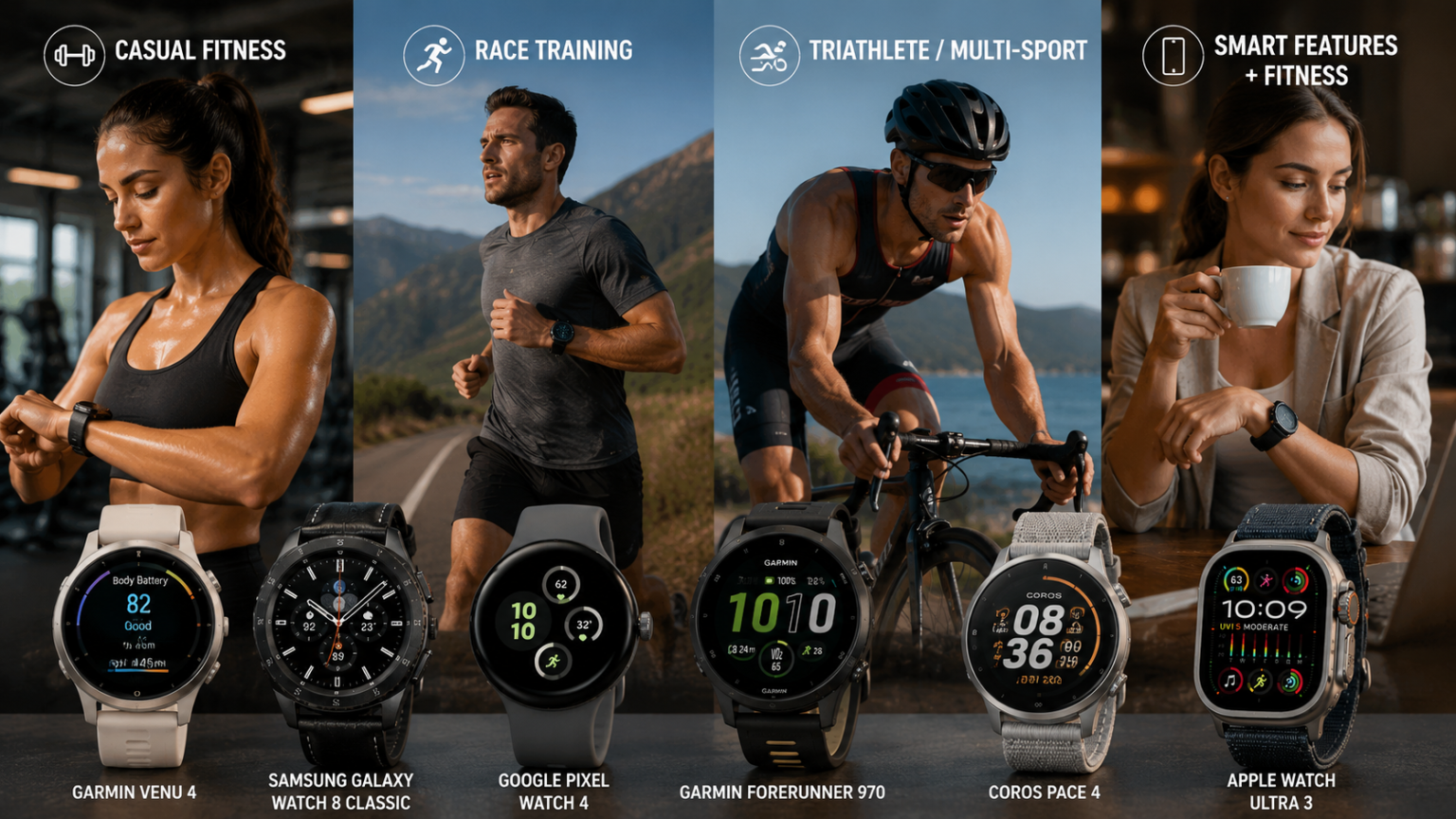
Most “best fitness smartwatch” lists rank devices as if every buyer trains the same way, as if a casual gym-goer doing three weekly sessions has the same needs as a marathoner logging 50 miles a week or a triathlete juggling three disciplines. They don’t. Buying a $749 Garmin Forerunner 970 for occasional walks is overkill you’ll never use; buying a basic smartwatch for serious marathon training means you’ll hit its limits fast.
- If You’re a Casual Gym-Goer or Occasional Exerciser
- If You’re Training for a Race (Marathon, Half-Marathon, 10K)
- If You’re a Triathlete or Multi-Sport Athlete
- If You Want Fitness Tracking Plus a Full Smart Assistant Experience
- Training Style Quick Reference
- A Note on Changing Training Goals
- FAQ’s
- Conclusion
This guide sorts 2026’s best fitness smartwatches by training style, so you’re matching the device to how you actually train.
If You’re a Casual Gym-Goer or Occasional Exerciser
If your week includes a few gym sessions, some walking, and general activity rather than structured training, you don’t need a device built around VO2 max and training load — you need something comfortable, easy to use, and reasonably priced.
The Garmin Venu 4 is a strong fit here. It packs genuinely useful health tracking — heart rate, Body Battery energy score, sleep insights — into a polished, everyday-wearable design, without demanding the same training-obsessed engagement a dedicated running watch expects. Priced around $550–$610, it’s a meaningful investment, but one that pays off in daily usability rather than race-day precision.
The Samsung Galaxy Watch 8 Classic or Google Pixel Watch 4 are the strongest Android alternatives for this use case, particularly if smartwatch features (notifications, apps, payments) matter as much to you as fitness tracking itself.
Skip for now: The Garmin Forerunner 970 and COROS Pace 4. Both are genuinely excellent, but their advanced training metrics — training load, running power, recovery time — are built for structured training you’re not doing yet, and you’d be paying for depth you won’t use.
If You’re Training for a Race (Marathon, Half-Marathon, 10K)
Structured race training calls for precise pace tracking, accurate GPS, and recovery guidance that tells you when to push and when to back off — features a general lifestyle smartwatch simply isn’t built around.
The Garmin Forerunner 970 is the strongest overall pick for serious race training. Its offline maps, multi-band GPS, and detailed metrics (VO2 max, training load, recovery time, running power) are specifically designed for exactly this kind of structured buildup, and its battery life (41–65 hours in GPS mode depending on size) comfortably covers long training runs without needing a mid-run charge.
The COROS Pace 4 is the strong value alternative — at $249, it delivers accurate GPS tracking and detailed running dynamics that reviewers specifically praise for race training, at roughly a third of the Forerunner 970’s price. It’s not a do-it-all device, but for runners who stick mostly to standard road or trail routes, it delivers exactly what race training needs.
Skip for now: The Apple Watch Ultra 3, if pure race-training depth is your only priority. It’s a genuinely strong watch, but its 12-hour GPS battery life is a real limitation for marathon training’s longest runs compared to the Forerunner 970’s multi-day GPS endurance.
If You’re a Triathlete or Multi-Sport Athlete
Triathletes need a device that seamlessly handles transitions between swimming, cycling, and running, plus the battery life to cover a full race day across all three disciplines.
The Garmin Venu 4’s Triathlon Mode — a feature typically reserved for pricier Garmin lines like the Forerunner and Fenix series — makes it a genuinely capable pick for multi-sport athletes who also want a more polished, everyday-wearable design between training blocks. The Garmin Forerunner 970 is the more serious alternative for athletes who want deeper performance insights across all three disciplines and don’t mind the sportier aesthetic.
Skip for now: The COROS Pace 4 if triathlon-specific features are a priority — while it’s an excellent value running watch, it’s positioned more specifically around running and general training rather than dedicated multi-sport transition support.
If You Want Fitness Tracking Plus a Full Smart Assistant Experience
If you want your watch to double as a genuine smartphone companion — apps, voice assistants, payments, notifications — alongside solid fitness tracking, a sports-first watch from Garmin or COROS will feel limited regardless of its training depth.
For iPhone users, the Apple Watch Ultra 3 delivers the strongest balance of the two worlds — genuinely capable fitness tracking wrapped in Apple’s mature app ecosystem and smart features, though at a premium $799 price.
For Android users, the Google Pixel Watch 4 stands out specifically for battery life among smartwatches, surpassing 60 hours per charge in the 45mm size with Google’s Gemini AI assistant built in. The Samsung Galaxy Watch 8 Classic is the close alternative, particularly appealing if a traditional rotating-bezel watch aesthetic matters to you, with Samsung’s Running Coach tool a specific standout for beginners.
Skip for now: The Garmin Forerunner 970 and COROS Pace 4, if smart features are a real priority. Both offer some connected functionality, but neither matches the depth of Apple’s or Google’s app ecosystems and voice assistant integration.
Training Style Quick Reference
| Your Training Style | Recommended Smartwatch(es) | Skip For This Style |
|---|---|---|
| Casual gym-goer/occasional exerciser | Garmin Venu 4, Galaxy Watch 8 Classic, Pixel Watch 4 | Forerunner 970, COROS Pace 4 |
| Training for a race | Garmin Forerunner 970 or COROS Pace 4 | Apple Watch Ultra 3 (for longest runs) |
| Triathlete/multi-sport athlete | Garmin Venu 4 (Triathlon Mode) or Forerunner 970 | COROS Pace 4 |
| Wants fitness tracking + full smart features | Apple Watch Ultra 3 (iPhone) or Pixel Watch 4/Galaxy Watch 8 Classic (Android) | Forerunner 970, COROS Pace 4 |
A Note on Changing Training Goals
If you’re a casual exerciser now but planning to train for a race in the next year, it’s worth considering whether to buy for your current needs or your near-future ones. The COROS Pace 4’s relatively low price makes it a reasonable “grow into it” purchase even for someone not yet training seriously, since you won’t be paying a steep premium for capability you’re not using yet the way you would with the Forerunner 970.
FAQ’s
Can a lifestyle-focused smartwatch like the Garmin Venu 4 handle actual race training?
To some degree, yes — it has real training metrics and even Triathlon Mode, but dedicated running watches like the Forerunner 970 offer deeper race-specific insights (training load, recovery time) and longer GPS battery life better suited to serious training blocks.
Is the COROS Pace 4 a good choice for a triathlete?
It’s a strong choice specifically for running-focused training, but it’s not positioned around dedicated triathlon transition support the way the Garmin Venu 4 or Forerunner 970 are, so a true multi-sport athlete may find Garmin’s triathlon-specific features more useful.
Should I buy the Apple Watch Ultra 3 if I’m training for a marathon?
It’s a strong general fitness watch, but its roughly 12-hour GPS battery life is a real limitation for marathon training’s longest runs compared to the Garmin Forerunner 970’s 41–65 hours in GPS mode — worth weighing against how much you value its broader smartwatch features.
What’s the best smartwatch if I’m not sure how serious my training will get?
The COROS Pace 4 is a reasonable middle-ground purchase — affordable enough that it’s not a wasted investment for casual use, but capable enough to support real training if your goals become more serious.
Conclusion
The best fitness smartwatch isn’t a single universal answer — a casual gym-goer, a race-training runner, a triathlete, and someone who wants a full smart-assistant experience are all solving genuinely different problems, even though they’re all shopping in the same “fitness smartwatch” category. Match the watch to your actual training style rather than the highest-rated overall pick, and you’ll get far more genuine value from the purchase.
Pricing, specifications, and availability for smartwatches change frequently and may have been updated since this article was published. Always verify current pricing and specs directly on the manufacturer’s or retailer’s official website before purchasing. This article is for informational purposes and does not constitute medical advice; consult a healthcare provider for health-related concerns.