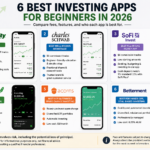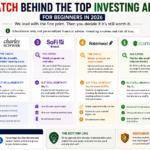


Most “best investing apps for beginners” lists rank apps as if every new investor wants the same experience — as if someone who’s never bought a stock and wants to genuinely understand what they’re doing has the same needs as someone who just wants their money automated and out of sight. The better starting point for a first-time investor is often an app that explains the basics, helps build a repeatable habit, and lets the user practice decisions before real money is on the line — not necessarily the app that lets you place the fastest trade.
- If You Want to Learn the Basics Before Risking Real Money
- If You Want Your Money Automated and Mostly Out of Sight
- If You Want to Actively Pick Your Own Investments
- If You Want Investing Consolidated With Your Everyday Banking
- If You’re Working With a Genuinely Tight Budget
- Learning Style Quick Reference
- A Note on Changing Needs Over Time
- FAQ’s
- Conclusion
This guide sorts 2026’s best investing apps by how you actually want to learn, so you’re picking based on your real starting point, not a generic ranking.
A quick note before diving in: this article is educational, not personalized financial advice. Investing carries real risk, and none of the authors are licensed financial advisors.
If You Want to Learn the Basics Before Risking Real Money
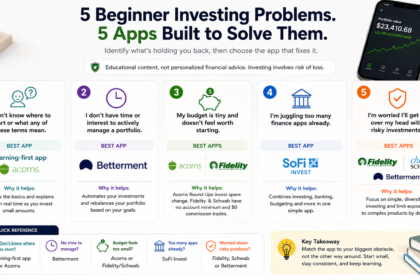
If you genuinely don’t know the difference between a stock and an ETF yet, jumping straight into a trading app can feel overwhelming and risky — the better first step is an app built specifically to teach before it asks you to invest.
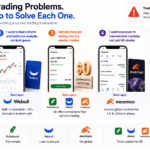
Learning-first apps that combine daily lessons, guided challenges, and simulator practice with beginner-focused tools are specifically designed for this starting point, letting you practice investment decisions in a low-stakes environment before committing real money.
Acorns is also a strong fit here for a different reason — its educational content is specifically built to explain unfamiliar financial terms in real time as you use the app, meaning the learning happens alongside small, automated real-money investing rather than in a separate practice environment.
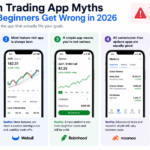
Skip for now: Robinhood and other apps built around fast, self-directed trading. Their minimalist interfaces are great once you know what you’re doing, but they don’t provide the same guided, explanatory structure a true beginner benefits from first.
If You Want Your Money Automated and Mostly Out of Sight
If picking individual investments, researching companies, or actively managing a portfolio sounds like more effort than you want to put in, an automated approach removes that decision-making entirely.
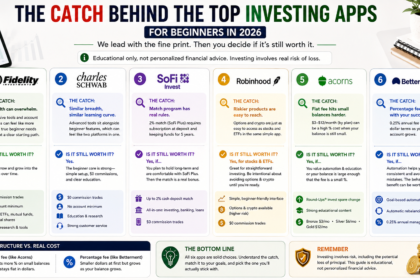
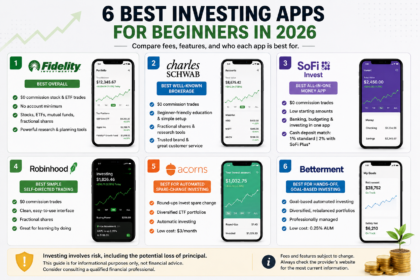
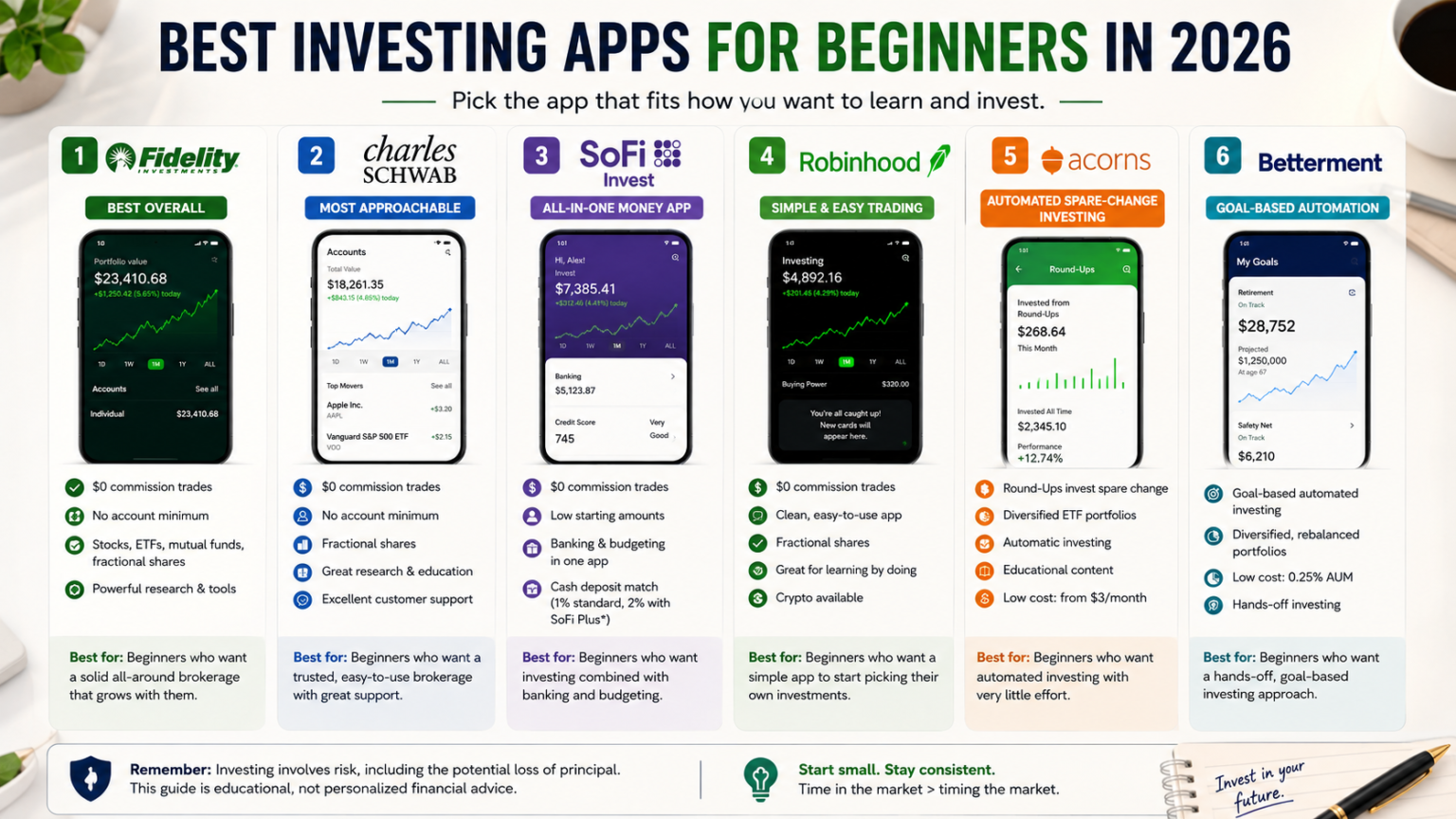
Betterment is the strongest fit for goal-based automation — you set a goal (retirement, a house down payment, general growth), and its robo-advisor model builds and manages a diversified portfolio automatically, including ongoing rebalancing you’d otherwise have to remember to do yourself.
Acorns is the strongest fit for automation built around spending rather than a specific goal — its Round-Ups feature invests spare change from everyday purchases automatically, requiring essentially no ongoing decisions once it’s set up.
Skip for now: Robinhood and other self-directed trading apps, if genuine hands-off automation is your priority — both require you to actively choose and manage investments, which defeats the purpose if you specifically want to set it and mostly forget it.
If You Want to Actively Pick Your Own Investments
If part of the appeal of investing is genuinely learning to research and choose individual stocks or ETFs yourself, a robo-advisor’s automated approach will feel restrictive rather than helpful.
Fidelity and Charles Schwab are the strongest picks for this style, offering a genuinely broad investment menu — stocks, ETFs, mutual funds, fractional shares — alongside research and planning tools that scale with you as your knowledge grows, all with $0 commission trades and no account minimum.
Robinhood is the strongest pick specifically for a simple, uncluttered self-directed interface, if you want to make your own decisions without the depth (and occasional complexity) of a full-service brokerage’s broader toolset.
Skip for now: Betterment and other robo-advisors. Their entire value proposition is automating the decisions you specifically want to make yourself, so they’ll feel like the wrong tool for this particular goal.
If You Want Investing Consolidated With Your Everyday Banking
If juggling a separate investing app, banking app, and budgeting app feels like unnecessary friction, consolidating everything into one platform can genuinely simplify your financial life.
SoFi Invest is built specifically around this all-in-one approach, combining investing with broader personal finance tools (banking, budgeting) in a single app, alongside $0 commission trades and cash deposit match programs for eligible members.
Skip for now: Standalone brokerages like Fidelity or Schwab, if consolidation is genuinely your top priority — both are excellent brokerages, but neither is built around folding in your everyday banking and budgeting the way SoFi is.
If You’re Working With a Genuinely Tight Budget
If you’re not sure you can commit to regular contributions yet, or you want to test the waters with the smallest possible amount of money, the right app should specifically accommodate very small, irregular amounts without penalizing you for it.
Acorns’ Round-Ups mechanic is specifically designed for this — investing spare change from purchases you’re already making means you’re not deciding how much to set aside each month, which can lower the psychological barrier to getting started at all. Just be aware of its flat monthly fee ($3/month for the Bronze tier) relative to a very small account balance.
Fidelity and Charles Schwab, with no account minimum and no commission on standard trades, are also strong options for a tight budget specifically because there’s no flat fee eating into small contributions the way Acorns’ subscription tiers can.
Skip for now: Betterment’s percentage-based management fee model, if your account balance is genuinely small — while often reasonable at scale, a percentage fee on a very small balance may be less favorable than a zero-commission self-directed account.
Learning Style Quick Reference
| Your Style | Recommended App(s) | Skip For This Style |
|---|---|---|
| Wants to learn basics before investing real money | Learning-first apps with simulators, or Acorns | Robinhood or other fast self-directed apps |
| Wants automation, minimal decisions | Betterment (goal-based) or Acorns (spare change) | Robinhood or other self-directed apps |
| Wants to actively pick investments | Fidelity, Charles Schwab, or Robinhood | Betterment or other robo-advisors |
| Wants investing + banking in one app | SoFi Invest | Standalone brokerages like Fidelity or Schwab |
| Working with a very tight budget | Acorns (Round-Ups) or Fidelity/Schwab (no minimum, no fee) | Betterment’s percentage-based fee model |
A Note on Changing Needs Over Time
It’s common to start in one category and move to another as your confidence grows — someone who starts with Acorns’ automated Round-Ups specifically to build the habit of investing may, a year later, want to graduate to actively picking individual stocks through Fidelity or Schwab. None of these apps require a permanent commitment to one learning style; think of your first choice as a starting point matched to where you are right now, not a lifelong decision.
FAQ’s
Do I need to fully understand investing before I start, or can I learn as I go?
You can genuinely learn as you go — apps built around guided lessons, simulator practice, or automated round-ups are specifically designed to let you start building the habit and understanding before you need to make complex decisions.
Is a robo-advisor a worse choice than picking my own stocks?
Not worse, just different — a robo-advisor like Betterment removes decision-making and ongoing management in exchange for a percentage-based fee, while self-directed investing through Fidelity, Schwab, or Robinhood gives you control but requires more active involvement and learning.
Can I use more than one investing app at once?
Yes, and it’s common — some beginners use an automated app like Acorns for consistent small contributions while also maintaining a self-directed account at Fidelity or Schwab for more active investing, though managing multiple accounts does add some complexity to track.
Is it worth paying a flat monthly fee (like Acorns) versus a percentage-based fee (like Betterment) as a beginner?
It depends on your account size — a flat fee can represent a higher percentage cost on a very small balance, while a percentage-based fee scales with your account and may become relatively more expensive as your balance grows; run the actual numbers for your specific situation rather than assuming one is universally cheaper.
Conclusion
The best investing app for a beginner isn’t a single universal answer — it depends on whether you want to learn before investing, automate everything, actively pick your own investments, consolidate with your banking, or start with the smallest possible budget. Match the app to how you actually want to learn and engage with your money, and you’ll be far more likely to actually stick with investing long-term than if you pick whatever app tops a generic best-of list. And whichever you choose, remember that investing involves real risk — this guide is educational, not personalized financial advice.
This article is for informational and educational purposes only and does not constitute financial, investment, or tax advice. The authors are not licensed financial advisors. Investing involves risk, including the potential loss of principal, and past performance does not guarantee future results. Fees, features, and account terms change frequently and may have been updated since this article was published — always verify current details directly on each provider’s official website, and consider consulting a qualified financial professional before making investment decisions.