

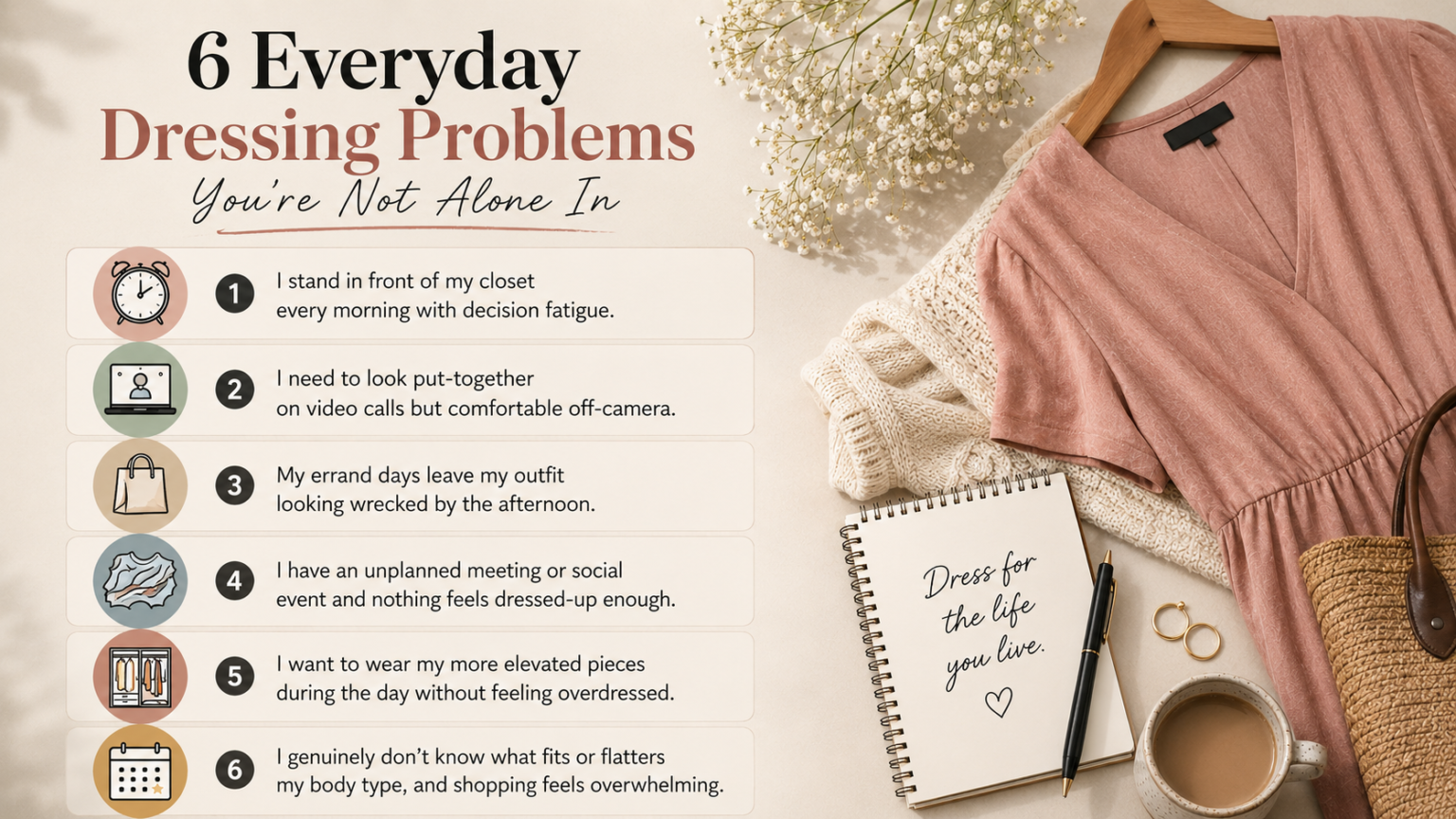
Most women don’t buy a new casual dress because they saw it trending — they buy it because getting dressed has become a genuine daily friction point. Mornings spent staring into a closet with “nothing to wear.” A video call outfit that needs to look intentional above the desk. A day of errands that leaves whatever you’re wearing looking wrecked by 3pm. Most dress guides skip straight to trend photos without asking the more useful question first:
- Problem 1: “I stand in front of my closet every morning with genuine decision fatigue”
- Problem 2: “I need to look put-together on video calls but comfortable off-camera”
- Problem 3: “My errand days leave my outfit looking wrecked by the afternoon”
- Problem 4: “I have an unplanned meeting or social event and nothing feels dressed-up enough”
- Problem 5: “I want to wear my more elevated pieces during the day without feeling overdressed”
- Problem 6: “I genuinely don’t know what fits or flatters my body type, and shopping feels overwhelming”
- Matching Problems to Dresses: Quick Reference
- A Word on Solving More Than One Problem at Once
- FAQ’s
- Conclusion
what’s actually making getting dressed harder than it needs to be?
Here are six common everyday dressing problems in 2026, and the specific casual dress styles built to solve each one.
Problem 1: “I stand in front of my closet every morning with genuine decision fatigue”
If getting dressed feels like a daily negotiation rather than a quick decision, the fix is a dress that functions as a complete outfit on its own, removing the need to coordinate separate pieces.
The right dress: The floral midi dress or the A-line dress. Both require almost no additional styling effort and look finished with nothing more than simple sandals or sneakers — genuinely reducing the morning decision to “which dress” rather than “which top, which bottom, which accessories.”
Where it falls short: Neither solves decision fatigue around fit or body-type concerns — if you’re unsure which silhouette actually flatters you, some initial trial and error is still necessary before either style becomes a true no-thought grab.
Problem 2: “I need to look put-together on video calls but comfortable off-camera”
Remote work created a genuinely specific dressing problem: something that reads as professional from the collarbone up, without sacrificing comfort for the hours you’re not on camera.
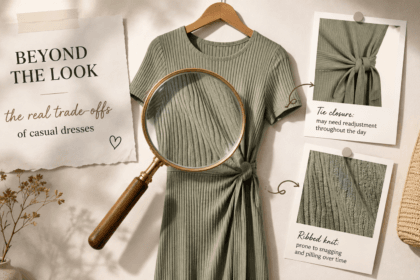
The right dress: The ribbed knit midi dress. Its fitted, polished knit construction reads well on screen, while its comfortable, flexible fabric doesn’t restrict movement around the house between meetings — a genuine dual requirement that a more rigid, structured piece wouldn’t satisfy as well.
Where it falls short: Ribbed knit fabric is more prone to snagging and pilling with repeated wear than a woven fabric, so it’s worth checking care instructions if you plan to wear this style as a near-daily work-from-home uniform.
Problem 3: “My errand days leave my outfit looking wrecked by the afternoon”
If a day spent in and out of the car, carrying bags, and moving quickly between stops leaves your clothes looking rumpled and worn out well before you’re actually done for the day, the fix is choosing fabric and construction specifically for durability over delicacy.
The right dress: The linen shirt dress. While linen does wrinkle, its practical button-front construction and breathable fabric are built to handle a long, active day without requiring careful handling — a genuinely different consideration than how it simply looks by evening.
Where it falls short: If a crisp, unwrinkled appearance matters more to you than practical durability, linen’s tendency to wrinkle visibly will be a recurring frustration regardless of how well it holds up structurally through an active day.
Problem 4: “I have an unplanned meeting or social event and nothing feels dressed-up enough”
An unexpected shift in your day’s plans — a last-minute client meeting, an invitation to something slightly nicer than you dressed for — calls for a piece that can flex upward without a full outfit change.
The right dress: The ribbed knit midi or wrap dress. Both are specifically noted for transitioning from a daytime look to a dressier evening one with minor adjustments — heels and a blazer for the ribbed knit midi, or simply removing a casual layer for the wrap dress — without needing to change the entire outfit.
Where it falls short: This only works if you’re already wearing one of these two styles when the plans shift — neither solves the problem retroactively if you started the day in something like a t-shirt dress that doesn’t flex upward as easily.
Problem 5: “I want to wear my more elevated pieces during the day without feeling overdressed”
Some dresses — a silky slip dress, in particular — feel too dressed-up for daytime, casual settings on their own, even though the piece itself is genuinely versatile.
The right fix: Layer the slip dress over a basic t-shirt. This specific styling trick takes a dressier piece and makes it completely appropriate for daytime casual wear, letting you get more use out of a dress that might otherwise sit unworn except for evening occasions.
Where it falls short: This requires having a well-fitting t-shirt on hand that actually layers well with the specific slip dress’s neckline and proportions — not every t-shirt and slip dress combination looks equally intentional together.
Problem 6: “I genuinely don’t know what fits or flatters my body type, and shopping feels overwhelming”
If choosing a casual dress feels harder than it should because you’re unsure which silhouette actually works for your specific body, the fix is starting with the styles broadly recognized as flattering across body types.
The right dress: The A-line dress or the wrap dress. Both are specifically noted for suiting almost every body type — the A-line’s fitted top and flared bottom, and the wrap dress’s adjustable, self-tied construction that adapts to your body rather than forcing a fixed silhouette.
Where it falls short: “Suits most body types” isn’t the same as “guaranteed to look great on you specifically” — these are reasonable starting points for a first purchase in an unfamiliar silhouette, not a substitute for trying a piece on and adjusting from there.
Matching Problems to Dresses: Quick Reference
| Your Problem | Best-Fit Dress | Not the Right Fit For |
|---|---|---|
| Morning decision fatigue | Floral midi or A-line dress | Anyone still unsure of their flattering silhouette |
| Looking polished on video calls | Ribbed knit midi | Anyone avoiding fabric that pills with wear |
| Errand days that wreck an outfit | Linen shirt dress | Anyone prioritizing a crisp, unwrinkled look |
| Unplanned dressier plans | Ribbed knit midi or wrap dress | Days that started in a very casual t-shirt dress |
| Wanting to wear elevated pieces by day | Slip dress layered over a t-shirt | Anyone without a well-fitting layering tee on hand |
| Uncertainty about flattering silhouettes | A-line dress or wrap dress | A definitive answer without trying pieces on |
A Word on Solving More Than One Problem at Once
It’s tempting to look for a single dress that solves every dressing frustration simultaneously — decision fatigue, video-call polish, errand durability, and flexibility for unplanned plans, all in one piece. In practice, the dresses above are strong specifically because they’re suited to a particular problem. Identify which frustration is actually costing you the most time or stress each week, and start solving that one specifically, rather than searching for one dress that claims to do it all.
FAQ’s
What if I have more than one of these problems in the same week?
Prioritize whichever problem repeats most often. Daily decision fatigue is a constant, low-grade friction, while an unplanned dressier event might happen rarely — solve the daily problem first, then keep one flexible piece on hand for occasional surprises.
Can the ribbed knit midi dress really work for both video calls and errands?
It can work reasonably well for both, but its fabric is more prone to snagging and pilling with the kind of rough daily wear errands involve, so a linen shirt dress may hold up better specifically for an errand-heavy day.
Is it worth buying multiple “universally flattering” dresses like both an A-line and a wrap dress?
If you’re still figuring out what genuinely works for your body, trying both is a reasonable way to compare — they flatter through different mechanisms (fitted-and-flared versus adjustable wrap), so one may end up suiting you better than the other.
How do I know if a slip-dress-and-tee combination will actually look intentional rather than mismatched?
Check that the t-shirt’s neckline sits appropriately beneath the slip dress’s neckline and that the sleeve or strap proportions don’t compete visually — a plain, well-fitting tee in a coordinating or neutral color is the safest starting combination.
Conclusion
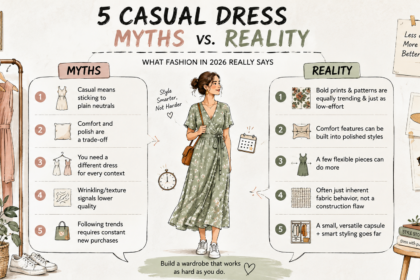
The fastest way to end up with a closet full of dresses you don’t actually reach for is buying based on trend appeal rather than the specific everyday problem you’re trying to solve. Match the dress to what’s actually making mornings harder — decision fatigue, video-call polish, errand durability, unplanned flexibility, wanting to wear elevated pieces casually, or uncertainty about fit — and you’ll get a dress that earns its place in regular rotation, not just one that looked good in a photo.
Fashion trends, product availability, and pricing change frequently and may have been updated since this article was published. Always check current pricing, sizing, fabric care instructions, and availability directly with the retailer before purchasing. This article reflects general style guidance and is not personalized styling advice.