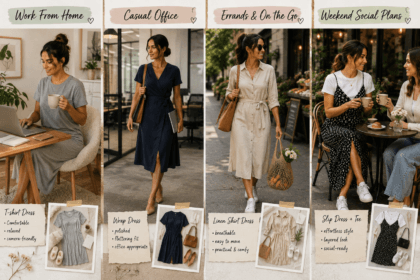


Ask ten women what makes a “good” casual dress, and a lot of the answers trace back to assumptions nobody’s actually tested — casual means plain, comfort and polish are opposites, you need a different dress for every part of your week. Some of this thinking made more sense when “casual” mostly meant loungewear. In 2026, several of these assumptions are quietly working against actually enjoying the process of getting dressed.
- Myth 1: “Casual means plain, so bold prints and colors don’t belong in a casual wardrobe”
- Myth 2: “Comfortable dresses can’t also look polished”
- Myth 3: “You need an entirely different dress for every context in your week”
- Myth 4: “A dress that wrinkles or shows texture easily is a lower-quality choice”
- Myth 5: “Following casual dress trends means constantly buying new pieces”
- Myth vs. Reality: Quick Reference
- FAQ’s
- Conclusion
Here are five of the most common casual dress myths, what current fashion coverage actually shows, and what to do instead.
Myth 1: “Casual means plain, so bold prints and colors don’t belong in a casual wardrobe”
The assumption: A truly casual, everyday dress should stick to simple neutrals — black, white, beige, navy — since bold prints and colors feel more suited to statement or occasion dressing.
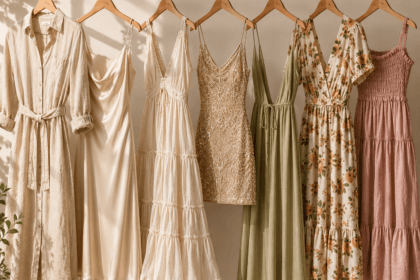
The reality: While solid-colored dresses in classic neutrals remain popular, bold prints and patterns are equally trending for casual dressing in 2026 — florals, geometric patterns, and abstract designs specifically add personality and visual interest without pushing a dress out of casual territory. The floral midi dress, in fact, is specifically called out as the definition of easy, effortless dressing.
What to do instead: Don’t limit a casual wardrobe to neutrals by default. A bold print can be just as low-effort and appropriate for everyday wear as a solid color, and it adds visual interest that a strictly neutral capsule sometimes lacks.
Myth 2: “Comfortable dresses can’t also look polished”
The assumption: There’s an inherent trade-off between a dress that’s genuinely comfortable to wear all day and one that reads as put-together — you have to pick one priority over the other.
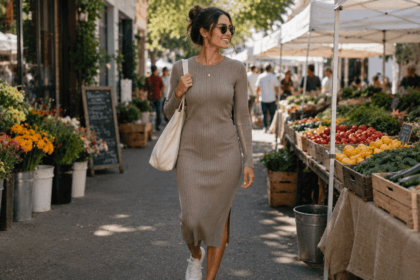
The reality: Several of 2026’s most popular casual dress trends specifically reject this trade-off. The ribbed knit midi dress is comfortable and flattering while still looking effortlessly polished with minimal effort; casual dresses broadly in 2026 are described as prioritizing ease and comfort without looking sloppy, often through details like hidden elastic waistbands and breathable fabric panels built directly into an otherwise polished silhouette.
What to do instead: Look specifically for dresses that build comfort features (stretch knits, elastic detailing, breathable fabric) into a genuinely considered silhouette, rather than assuming you need to choose between a “comfortable” dress and a “nice-looking” one.
Myth 3: “You need an entirely different dress for every context in your week”
The assumption: A work-from-home day, a casual office day, an errand day, and a weekend social plan each require their own dedicated dress, meaning a well-covered wardrobe needs a large number of distinct pieces.
The reality: Several 2026 trend pieces are specifically built around flexing across more than one context. The ribbed knit midi transitions from a sneaker-and-daytime look to a heels-and-blazer evening look with the same garment; a wrap dress works with flats for day or heels for evening. The broader guidance from current style coverage is explicitly to build a small collection of versatile pieces that mix and match, rather than a large wardrobe of single-context dresses.
What to do instead: Prioritize a small number of genuinely flexible pieces — a neutral slip dress, a ribbed midi, a wrap dress — that can shift between contexts with minor styling changes, rather than assuming full wardrobe coverage requires a dress for every single scenario.
Myth 4: “A dress that wrinkles or shows texture easily is a lower-quality choice”
The assumption: A dress that looks slightly rumpled or textured after a few hours of wear reflects a flaw in the garment’s construction or fabric quality, and a “better” dress would hold a crisp appearance all day.
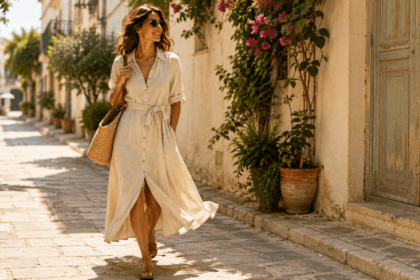
The reality: Fabric behavior is often simply inherent to the material rather than a quality issue. Linen wrinkles visibly and easily as a basic characteristic of the fiber, and ribbed knit fabric is textured by design. Neither is a sign of poor construction — in fact, current guidance specifically recommends sustainable fabrics like organic cotton and linen as a positive trend, wrinkling and all, rather than something to avoid.
What to do instead: Judge linen and knit fabrics by whether their inherent texture and drape suit your intended use, rather than expecting them to perform like a structured, wrinkle-resistant synthetic blend. If crispness matters more to you for a specific use case, choose a fabric blend suited to that goal rather than assuming any texture signals lower quality.
Myth 5: “Following casual dress trends means constantly buying new pieces”
The assumption: Keeping up with what’s trending in casual dressing — drop-waist silhouettes, ribbed knits, specific styling tricks — requires continually purchasing new dresses to stay current.
The reality: Current style guidance explicitly favors building a small, intentional capsule over chasing every individual trend — a neutral slip dress, a striped or solid midi, a floral option, and a solid knit dress are specifically framed as giving “endless mixing and matching possibilities,” describing this approach as more sustainable and ultimately easier than constantly buying new pieces. Several trends this season, like the slip-dress-over-tee styling trick, work with dresses many women may already own rather than requiring a new purchase at all.
What to do instead: Look at current trends for styling ideas that use pieces already in your closet (like layering an existing slip dress under a t-shirt) before assuming a new purchase is required to stay current.
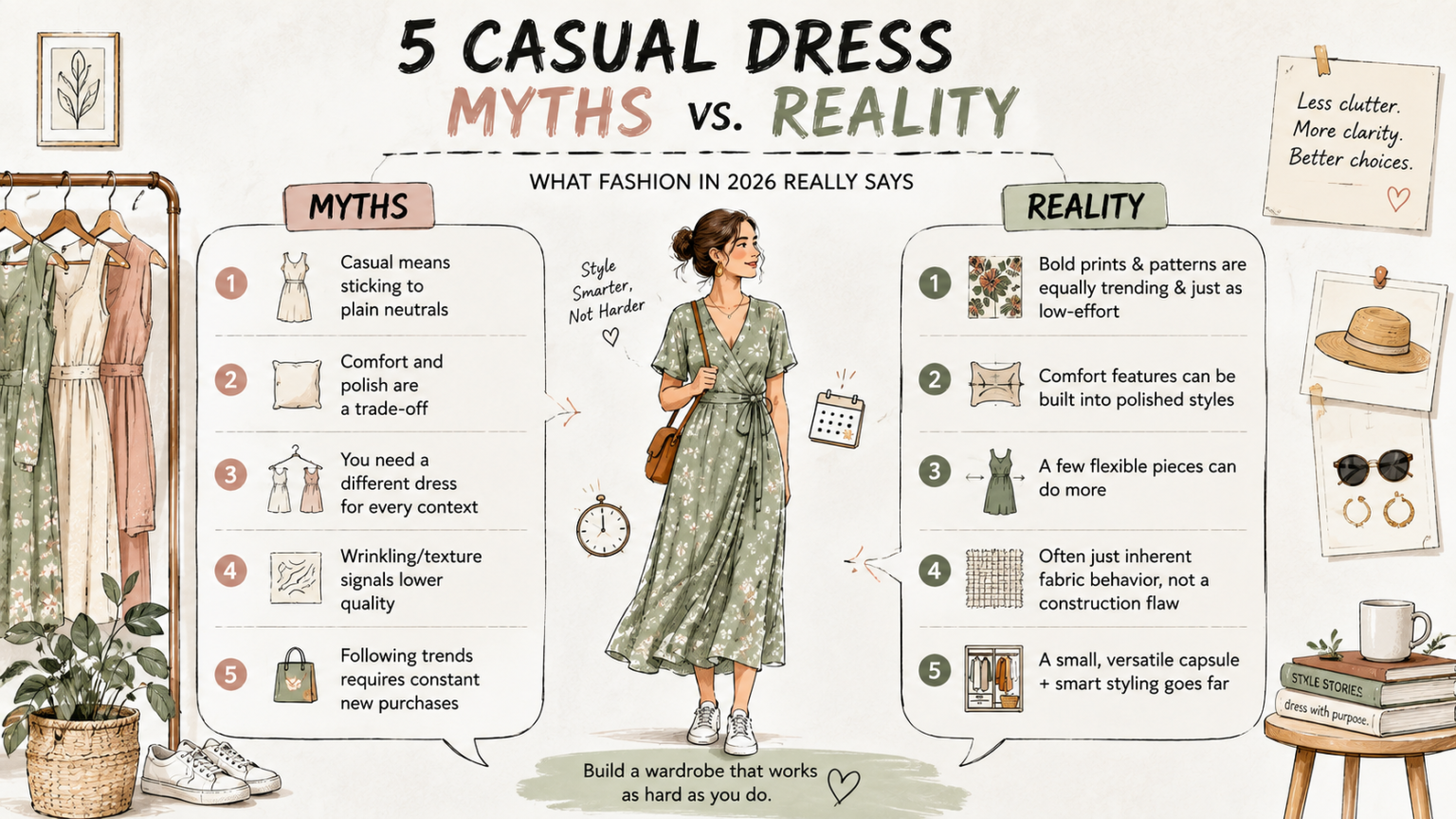
Myth vs. Reality: Quick Reference
| Myth | Reality |
|---|---|
| Casual means sticking to plain neutrals | Bold prints and patterns are equally trending and just as low-effort |
| Comfort and polish are a trade-off | 2026’s top trends build comfort features directly into polished silhouettes |
| You need a different dress for every context | A small number of flexible pieces can cover most contexts |
| Wrinkling/texture signals lower quality | Often just inherent fabric behavior, not a construction flaw |
| Following trends requires constant new purchases | A small, versatile capsule plus new styling tricks covers most trends |
FAQ’s
Is it risky to wear a bold printed dress if I want to look “put together” rather than “loud”?
Not particularly — a strong print genuinely functions as a complete outfit statement on its own, requiring minimal additional styling, which tends to read as intentional rather than loud when paired with simple accessories like sneakers or sandals.
How can I tell if a dress genuinely balances comfort and polish, or if it’s really just loungewear?
Look for specific construction details — hidden elastic waistbands, structured necklines or button fronts, breathable fabric panels — built into the dress rather than a purely soft, shapeless knit; these details are usually a reliable sign of a considered, dual-purpose design.
How many casual dresses do I actually need for a well-covered wardrobe?
A small capsule of four to six versatile pieces — covering a neutral solid, a print, a knit, and a slip-style dress — generally covers most casual contexts through styling variation, rather than requiring a large collection of single-purpose dresses.
Should I avoid linen or ribbed knit dresses if I don’t like how they look by the end of the day?
Not necessarily avoid them entirely — understand that their texture is inherent to the fabric, and choose them specifically for contexts where that relaxed, textured look is acceptable or even desirable, reserving a crisper fabric for situations where that matters more.
Conclusion
None of these five myths are unreasonable on their face — they’re mostly holdovers from thinking about “casual” as synonymous with “low-effort” or “plain” in ways that current casual dress trends have moved well past. The pattern across all five: bold choices, comfort-and-polish combinations, a smaller flexible capsule, and working with fabric’s natural behavior all serve women better in 2026 than the more restrictive, assumption-driven defaults. Test these assumptions against your own closet and routine before defaulting to what seems like the “safe” or “obvious” casual dressing choice.
Fashion trends, product availability, and pricing change frequently and may have been updated since this article was published. Always check current pricing, sizing, fabric care instructions, and availability directly with the retailer before purchasing. This article reflects general style guidance and is not personalized styling advice.