


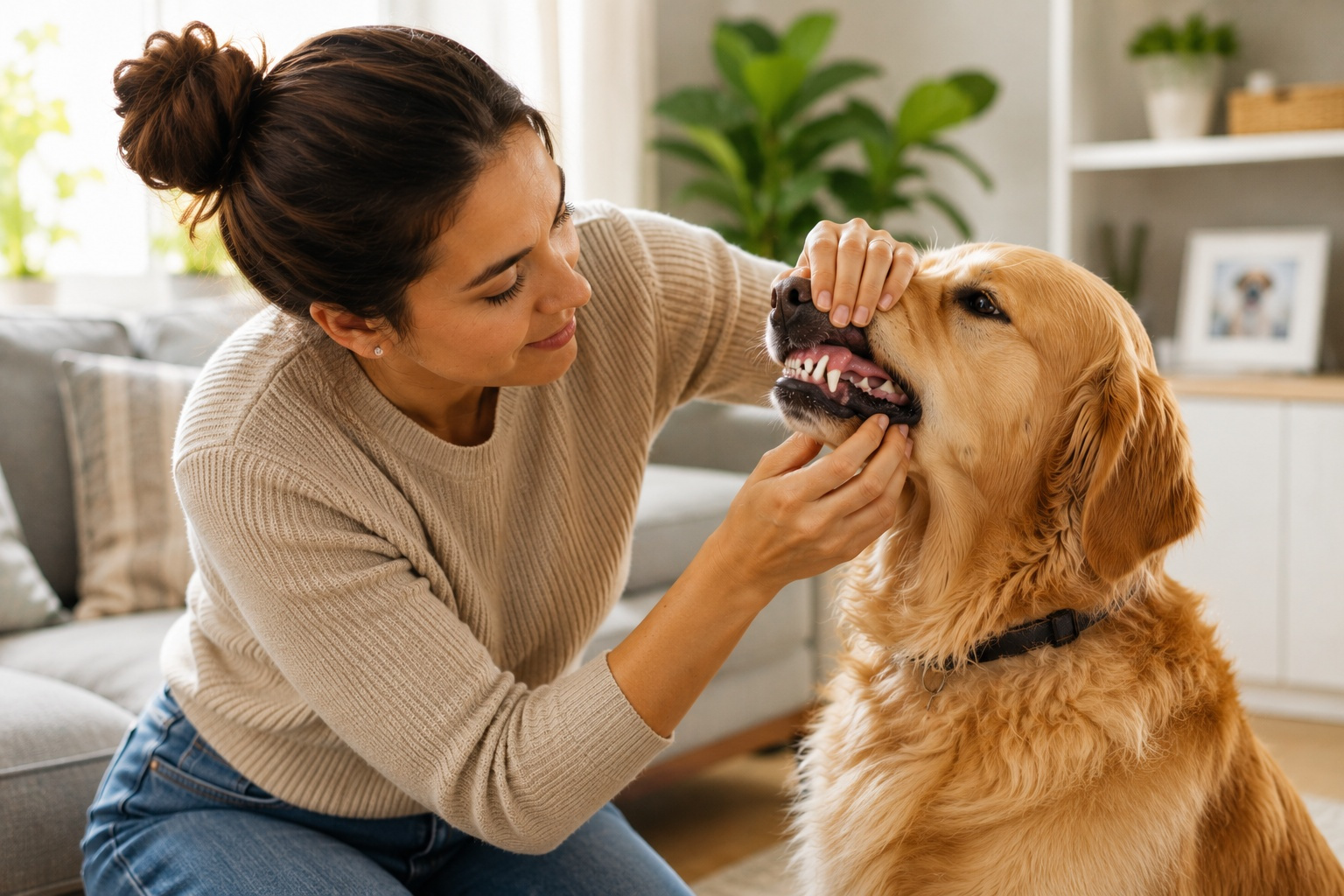
If you’ve never brushed your dog’s teeth, you’re in good company. Most owners haven’t. It’s one of those care tasks that sounds a little excessive at first — your dog seems fine, they’re eating normally, and “doggy breath” just feels like part of the package. Except it isn’t, and that smell is often the first clue that something is going on beneath the surface.
- “Doggy Breath” Isn’t Actually Normal
- Just How Common Is Dental Disease in Dogs?
- What’s Actually Happening: Plaque, Tartar, and Gum Disease
- Why This Isn’t Just a Mouth Problem
- Signs Your Dog May Already Have a Dental Issue
- Why Brushing Works Better Than Anything Else
- How Often Should You Actually Brush?
- How to Start Brushing Your Dog’s Teeth
- What Not to Use
- If Brushing Isn’t Happening, What Else Helps?
- When to See a Vet
- FAQ’s
- Is bad breath in dogs really a sign of a problem?+
- How common is dental disease in dogs, really?+
- Can I use my own toothpaste on my dog?+
- What if my dog absolutely won’t tolerate brushing?+
- Can dental disease actually affect other parts of my dog’s health?+
- How often does my dog actually need a professional dental cleaning?+
- Final Thoughts
Dental disease is one of the most common health issues in dogs, and it’s largely preventable. Here’s what’s actually happening in your dog’s mouth, why it matters more than most owners realize, and how to start a brushing routine without turning it into a wrestling match.
“Doggy Breath” Isn’t Actually Normal
A lot of owners write off bad breath as just something dogs have, like shedding or muddy paws after a walk. But persistent bad breath is usually a symptom, not a personality trait. It’s frequently one of the earliest signs that plaque and bacteria have built up along the gumline, and that the early stages of dental disease may already be underway.
That doesn’t mean every whiff of dog breath is a red flag. But breath that’s consistently strong, sour, or unpleasant is worth paying attention to rather than shrugging off.
This article is for educational purposes only and is not a substitute for professional veterinary advice. Please consult your veterinarian before making decisions about your dog’s dental care or health.
Just How Common Is Dental Disease in Dogs?
This is the part that tends to surprise people: according to the American Veterinary Medical Association, most dogs show at least some early evidence of periodontal disease by around age 3, and it tends to get worse with age if nothing is done to manage it. Veterinary research groups have reported similar numbers, generally putting the prevalence somewhere in the 80% range for dogs past that age.
In other words, dental disease isn’t a rare complication that happens to unlucky dogs. It’s closer to the default outcome if a dog’s teeth never get any kind of home care.
What’s Actually Happening: Plaque, Tartar, and Gum Disease
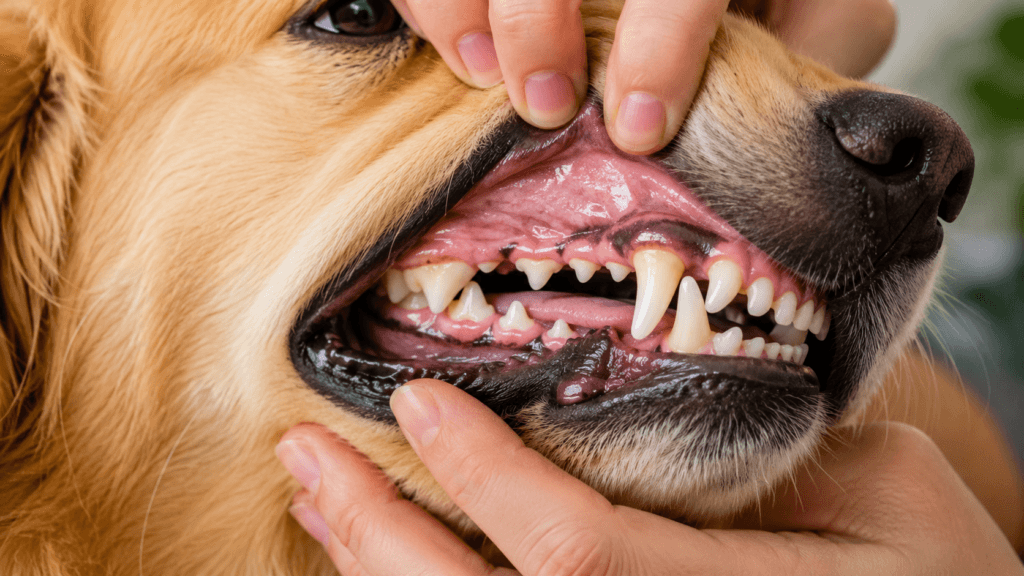
Here’s the basic chain of events. Bacteria naturally build up on a dog’s teeth throughout the day, forming a soft film called plaque. Left alone, plaque combines with minerals in saliva and hardens into tartar (also called calculus) within about a day or two. Once tartar has formed, it can’t be removed by brushing alone — it takes a professional cleaning.
As plaque and tartar build up along the gumline, they trigger inflammation, which is where periodontal disease starts. The earliest stage, gingivitis, involves red, swollen, or irritated gums, and it’s still reversible with proper care. If it progresses to periodontitis, the deeper structures supporting the teeth start breaking down, and that damage is generally considered permanent. Left untreated, this progression can eventually lead to painful tooth loss.
Why This Isn’t Just a Mouth Problem
Dental disease doesn’t necessarily stay contained to the mouth. Researchers have found associations between periodontal disease and other health issues, including conditions affecting the heart, liver, and kidneys, since the bacteria involved in gum disease can enter the bloodstream. Not every study agrees on exactly how strong or direct this connection is, but the general concern among veterinary professionals is that oral health may be more connected to a dog’s overall health than it first appears, rather than being an isolated cosmetic issue.
There’s also the simple matter of pain. Periodontal disease is a source of chronic discomfort for a lot of dogs who never show it obviously, since dogs are generally good at masking pain and continuing to eat even when their mouth hurts.
Signs Your Dog May Already Have a Dental Issue
Keep an eye out for:
- Persistent bad breath
- Red, swollen, or bleeding gums
- Visible yellow or brown buildup on the teeth
- Loose or missing teeth
- Pawing at the mouth or face
- Reluctance to chew, or dropping food while eating
- Excessive drooling
- Noticeable changes in behavior, such as increased irritability
Because dogs are prone to hiding pain, behavior changes can be one of the more reliable clues, even when nothing looks obviously wrong at a glance.
Why Brushing Works Better Than Anything Else
According to the American Veterinary Medical Association, regularly brushing a dog’s teeth is the single most effective thing an owner can do to maintain their pet’s dental health between professional cleanings. Brushing physically disrupts the plaque before it has a chance to harden into tartar, which is the step that makes the biggest difference.
Dental chews, water additives, and other products can help support the effort, but research reviews have generally found that mechanical brushing provides the most consistent results compared to other home care options. Nothing else fully replaces it.
How Often Should You Actually Brush?
Veterinary sources generally describe daily brushing as the gold standard, since it most closely mirrors how plaque actually forms and hardens. That said, several sources note that brushing at least three times a week can still meaningfully reduce plaque and slow tartar buildup, which matters if daily brushing isn’t realistic for your schedule or your dog’s tolerance.
The honest takeaway: more frequent is better, but a few times a week is genuinely better than not brushing at all. Consistency matters more than perfection here.
How to Start Brushing Your Dog’s Teeth
If your dog has never had their teeth brushed, easing into it works far better than diving in on day one. A commonly recommended approach:
- Pick a consistent cue. Say the same phrase, like “teeth time,” before each session so your dog starts to recognize the routine.
- Start with just your finger. Gently run a finger along your dog’s lips and gumline, then reward them with a treat or praise.
- Introduce the toothpaste. Once your dog is comfortable with step one, let them smell and taste a bit of dog-safe toothpaste, then run your finger along the gums again.
- Add the toothbrush gradually. Once your dog accepts the paste, introduce a soft-bristled dog toothbrush or a finger brush, working along the outside surfaces of the teeth.
- Keep sessions short and positive. Especially at first, a few seconds of brushing followed by praise is more effective than trying to do a full mouth in one sitting.
- Build up gradually. Over time, aim to brush the outer surfaces of all the teeth, working toward your goal frequency.
Starting this routine when a dog is young, ideally once their adult teeth have come in, tends to make the process easier, but plenty of adult dogs can be gradually trained to accept it as well.
What Not to Use
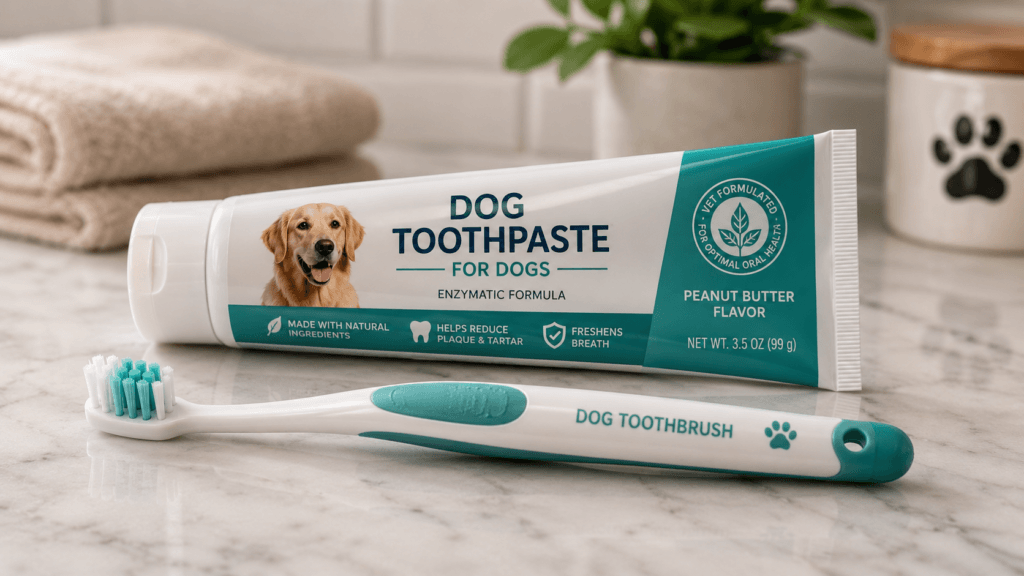
Never use human toothpaste on a dog. Many human formulas contain ingredients like xylitol, which is toxic to dogs, along with fluoride levels not intended for a dog to swallow. Dog-specific toothpaste is formulated to be safe if swallowed and often comes in flavors, like poultry or peanut, designed to make the process more appealing to dogs.
If Brushing Isn’t Happening, What Else Helps?
Brushing is the most effective single option, but it’s not the only one. Other supportive steps include:
- Dental chews and treats designed to help reduce plaque, ideally ones carrying the Veterinary Oral Health Council (VOHC) seal, which indicates the product has met a research-based standard for effectiveness
- Water additives formulated to help reduce bacteria in the mouth
- Dental-formula diets, which some veterinarians recommend for dogs prone to heavy tartar buildup
- Regular veterinary dental checkups, since professional cleanings remove tartar that’s already hardened and can’t be brushed away at home
These options can meaningfully reduce the workload, but according to veterinary guidance, they generally work best as a supplement to brushing rather than a full substitute for it.
When to See a Vet
Schedule a dental checkup if you notice any of the warning signs listed earlier, or simply as part of routine care — most veterinarians recommend an annual dental exam as a baseline, with some dogs needing more frequent checks depending on their individual risk factors, like breed or age. If your dog’s gums look inflamed or bleed easily, avoid aggressive brushing in that area and check with your vet first, since brushing over already-inflamed tissue can cause additional discomfort.
FAQ’s
Often, yes. While a little breath odor isn’t unusual, persistent or strong bad breath is commonly one of the earliest signs of plaque buildup and early dental disease, rather than something dogs simply have by nature.
Very common. Multiple veterinary sources report that a large majority of dogs, often cited around 80%, show some evidence of periodontal disease by roughly 2 to 3 years of age if preventive dental care isn’t part of their routine.
No. Human toothpaste can contain ingredients that are unsafe for dogs to swallow, including xylitol, which is toxic to dogs. Always use a toothpaste made specifically for pets.
Start slower than you think you need to, using just a finger and lots of positive reinforcement before introducing a brush. If your dog still won’t tolerate it after a gradual approach, ask your veterinarian about alternative dental care products and how often professional cleanings might be needed instead.
Researchers have found associations between periodontal disease and issues affecting organs like the heart, liver, and kidneys, likely related to bacteria entering the bloodstream through inflamed gum tissue. The exact strength of this connection is still studied, but it’s part of why veterinary professionals treat dental health as more than a cosmetic issue.
This varies by dog, since factors like breed, age, and how consistent home care has been all play a role. Your veterinarian is best positioned to recommend a schedule based on your dog’s individual mouth and health history.
Final Thoughts
Brushing your dog’s teeth probably isn’t the most exciting item on your care checklist, but it’s one of the most impactful. Given how common dental disease is in dogs who don’t get any home dental care, a few minutes a few times a week is a small trade-off for avoiding pain, tooth loss, and potential effects on your dog’s broader health down the road.
If you’re starting from zero, that’s completely normal — just start slow, keep it positive, and build the habit gradually. And if you notice any warning signs along the way, a conversation with your veterinarian is the right next step.