

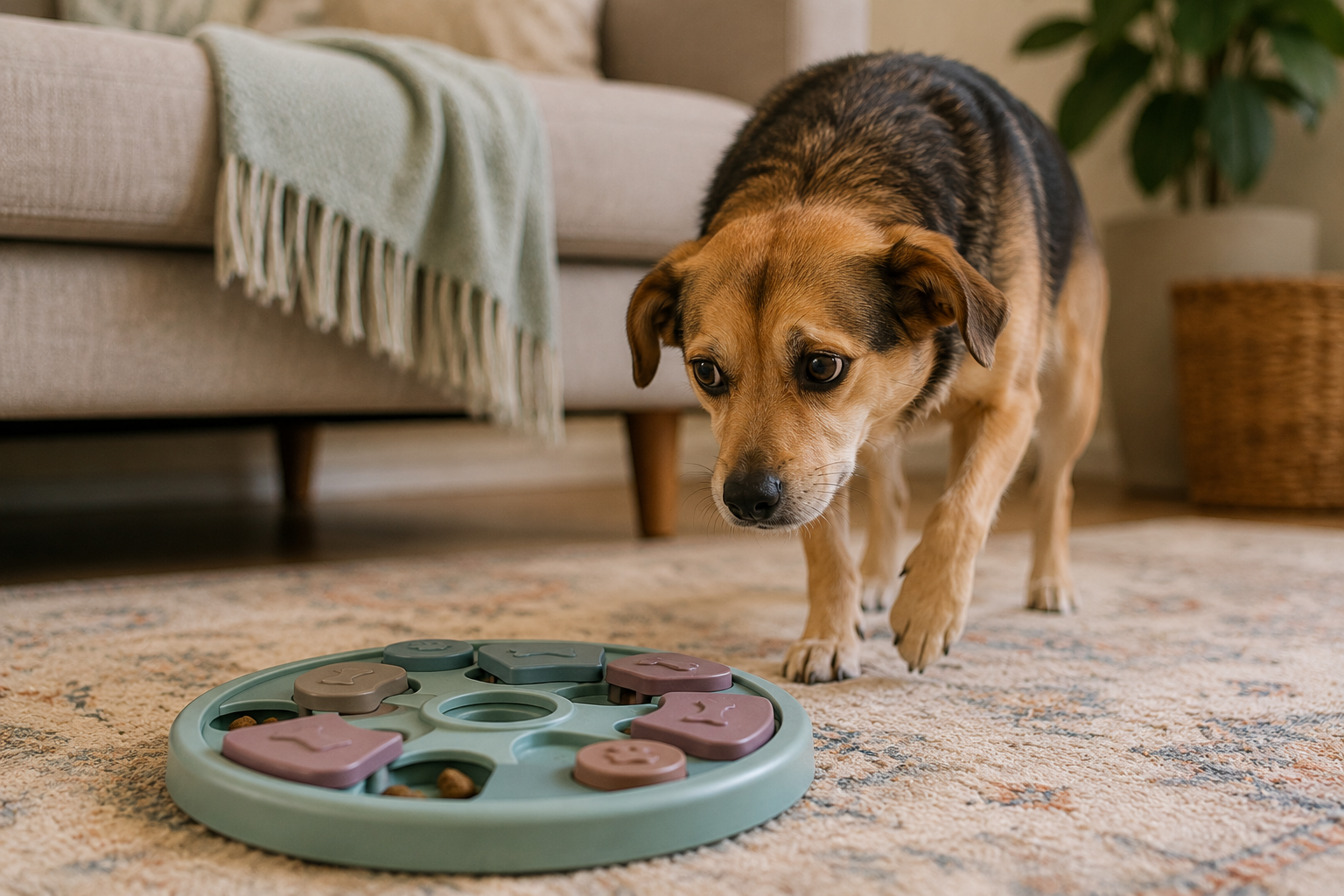
Some dogs walk into a room like they own it. Others hang back, tail low, waiting to see if the room is actually safe first. If your dog falls into that second group — hesitant around new people, uneasy in new places, quick to shrink from things that don’t seem like a big deal to you — you’re not stuck watching from the sidelines. There’s a lot you can do, and a good chunk of it looks less like “training” and more like play.
- Why Games Work Better Than Pushing Through Fear
- 1. Free Shaping
- 2. Find the Treats (Nose Work)
- 3. Yard or Room Foraging
- 4. The Engage-Disengage Game
- 5. Trick Training
- 6. Treat-Dispensing Puzzles
- 7. Balance and Body Awareness Games
- 8. Hand Targeting
- 9. Self-Controlled Sound and Movement Games
- 10. Choice-Based Games
- A Few Ground Rules for Any Confidence Game
- When Progress Feels Slow
- FAQ’s
- Final Thoughts
Games are one of the gentlest ways to help a shy or nervous dog build confidence, because there’s no pressure and no way to “fail.” Here are 10 worth trying.
This article is for educational purposes only and isn’t a substitute for professional veterinary or behavioral advice. Please consult your veterinarian or a certified dog trainer before starting a new training or behavior plan, especially if your dog shows signs of significant fear, anxiety, or reactivity.
Why Games Work Better Than Pushing Through Fear
It’s tempting to think the fastest way to help a nervous dog is to just expose them to whatever scares them until they get used to it. In practice, that approach tends to backfire, since it can reinforce the fear instead of resolving it. Games work differently. They give a dog something engaging to focus on, let them make choices, and build small wins that add up over time. There’s no “right” way to play most of these, which takes the pressure off both ends of the leash.
1. Free Shaping
Free shaping is a training method where you reward small, incremental steps toward a behavior, without luring or physically guiding your dog. For example, if you want your dog to learn to step onto a mat, you’d reward them for even glancing at the mat first, then for stepping near it, then for touching it with a paw, and so on.
The reason this works well for shy dogs is that there’s no wrong answer. Whatever your dog offers gets acknowledged in some way, which encourages them to keep experimenting rather than freezing up out of fear of getting it wrong.
2. Find the Treats (Nose Work)
Hide a few treats around a room, or scatter them across a small, enclosed area, and let your dog sniff them out. This kind of nose work taps into one of a dog’s strongest natural instincts, and it gives them a job to focus on that has nothing to do with whatever might be making them nervous.
Start easy, with treats in plain sight, and gradually make the hiding spots trickier as your dog gets the hang of the game.
3. Yard or Room Foraging
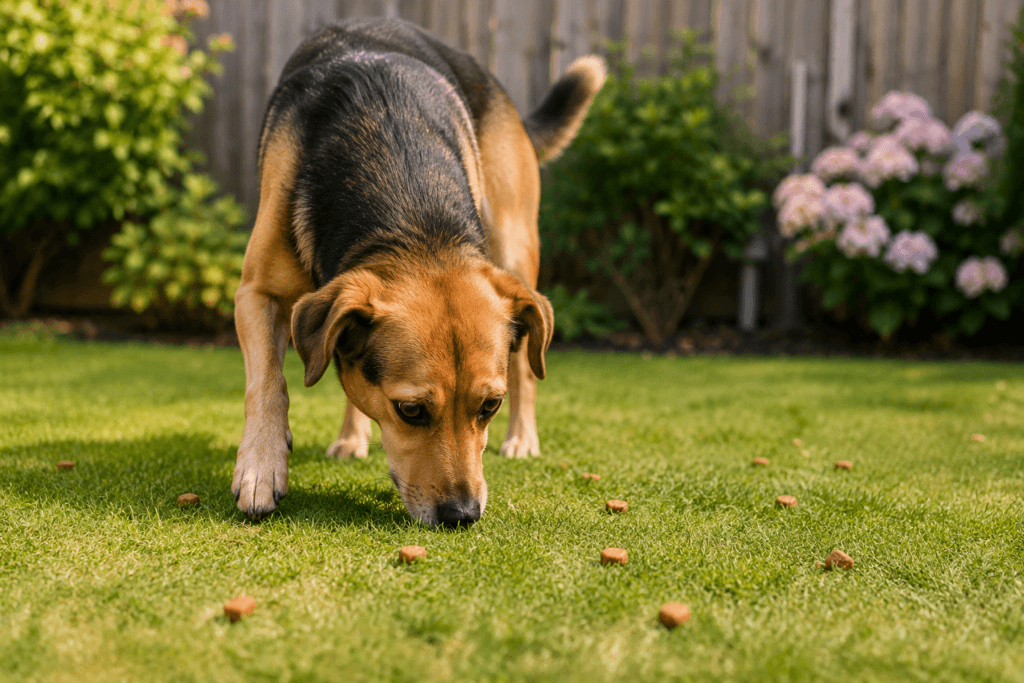
Similar to nose work, foraging involves scattering food or treats across a wider area, like a fenced yard or a room, rather than hiding them in specific spots. This lets your dog explore at their own pace, engaging their senses without any direct interaction required from you.
If you’re doing this outside, take a quick look around first for anything that could be a hazard, like certain plants or debris, before letting your dog loose to sniff around.
4. The Engage-Disengage Game
This one is specifically useful for dogs who get overwhelmed or reactive around certain triggers, like other dogs or strangers. The idea is simple: when your dog notices the trigger from a comfortable distance, you mark and reward the moment they look at it, and again when they look back at you. Over time, this teaches your dog to notice something unsettling and then voluntarily shift their attention back to you, instead of getting stuck staring or escalating.
This game works best started at a distance where your dog can notice the trigger without feeling overwhelmed by it, gradually decreasing that distance over many sessions.
5. Trick Training
Teaching tricks, whether it’s a simple paw shake or something more elaborate like crawling or spinning, gives a dog a skill they can feel good about. Mastering something new, even something small, tends to build a sense of competence that can carry over into other situations.
Start with tricks built on behaviors your dog already knows well, and build up in small steps, celebrating progress along the way rather than only rewarding a perfect finished trick.
6. Treat-Dispensing Puzzles
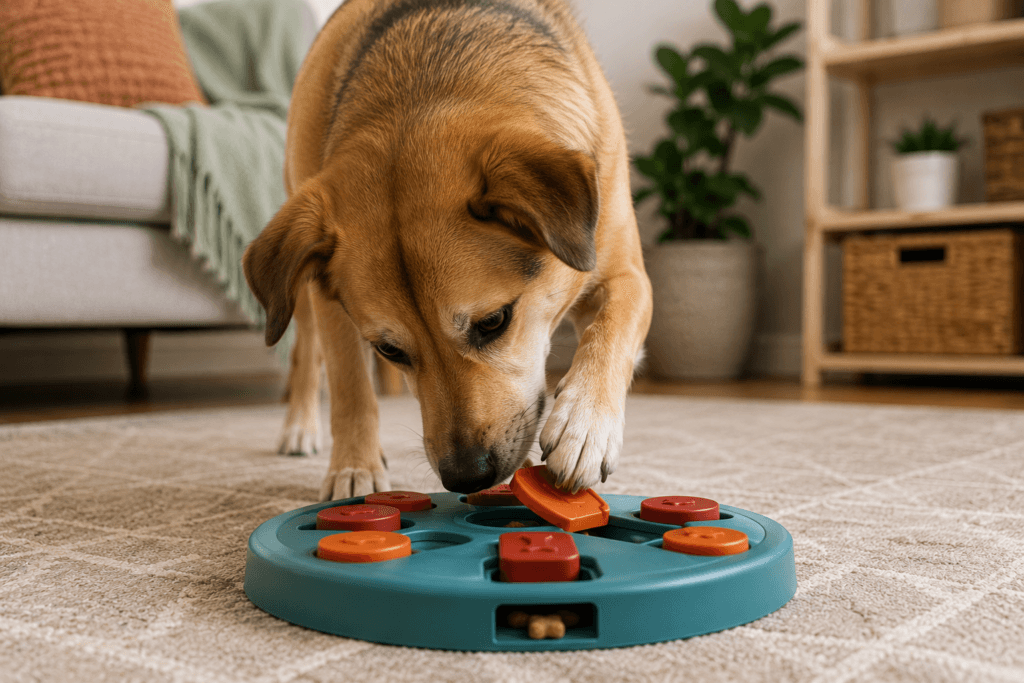
Puzzle toys that require a dog to work for their treats, like a stuffed Kong or a simple slider puzzle, give a dog a low-stakes problem to solve. For dogs who are new to this kind of enrichment, starting with something easy, like a lightly stuffed Kong, helps build confidence before moving on to trickier puzzles.
This type of game is particularly useful for dogs who need a mental outlet, since working through a puzzle can be almost as tiring, and just as confidence-building, as physical exercise.
7. Balance and Body Awareness Games
Simple obstacle-style games — walking over a low platform, stepping across cushions, or navigating a wobble board designed for dogs — help a dog become more aware of their own body and movement. Building physical confidence this way can translate into a more general sense of steadiness, since a dog who feels secure in their own movement often carries that same steadiness into new or uncertain situations.
Keep the obstacles low and stable at first, and let your dog approach them at their own pace rather than physically placing them on or over an obstacle.
8. Hand Targeting
Teaching your dog to touch their nose to your open hand on cue is a simple, versatile skill that doubles as a confidence exercise. Once your dog knows it well, you can use it to encourage them toward something new or unfamiliar, like a stranger’s hand or an unusual object, giving them a familiar, comfortable action to fall back on in an uncertain moment.
Practice this in calm, familiar settings first before trying it out somewhere more distracting or novel.
9. Self-Controlled Sound and Movement Games
Some dogs are especially sensitive to sudden noises or movement. Games where your dog controls the sound or motion themselves, like nudging a noisy toy or triggering a treat-dispensing gadget with their paw, can help build resilience, since your dog is initiating the surprise rather than having it happen to them unexpectedly.
Introduce sounds at a low volume or gentle intensity at first, letting your dog set the pace for how quickly things ramp up.
10. Choice-Based Games
Give your dog options and let them choose, whether that’s picking between two toys, choosing which direction to explore on a walk, or deciding whether to approach something new or hang back. Letting a dog make real choices, and respecting whatever they choose, reinforces that their preferences matter, which can be especially valuable for dogs who tend to feel like the world just happens to them.
A Few Ground Rules for Any Confidence Game
- Let your dog set the pace. Progress that feels forced tends to backfire.
- Keep sessions short. A few minutes of focused, positive play beats a long session that overstays its welcome.
- End on a high note. Wrap up while your dog is still enjoying themselves, rather than pushing until they lose interest or get overwhelmed.
- Watch your dog’s body language. Signs of stress, like lip licking, yawning, or trying to move away, are a cue to ease off or take a break.
- Celebrate small wins. A tentative step toward something new is progress, even if it doesn’t look dramatic.
When Progress Feels Slow
Confidence-building is rarely a straight line. Some days will look like real progress, and others might look like your dog barely moved past where they started weeks ago. That’s normal, and it doesn’t mean the games aren’t working. If your dog’s fear or anxiety seems severe, is getting worse, or is affecting their daily life, it’s worth talking to your veterinarian or a certified dog trainer or behaviorist, since they can help identify what’s driving the behavior and tailor a plan specifically for your dog.
FAQ’s
How long does it take to see a difference in a shy dog?
It varies a lot by dog. Some show small improvements within a few weeks of consistent, low-pressure practice, while others take months, especially if their fear is more deeply rooted. Patience and consistency generally matter more than speed.
Can these games help with dogs who are reactive, not just shy?
Some can, particularly the engage-disengage game, which is specifically designed for dogs who react strongly to certain triggers. For dogs with significant reactivity, working alongside a professional trainer is often a good idea alongside any games you try at home.
Is it okay to use treats during these games?
Yes, food rewards are a common and effective tool in most of these games, especially free shaping, nose work, and trick training. Just be mindful of your dog’s overall diet and portion sizes if you’re using a lot of treats during sessions.
What if my dog shows no interest in playing these games?
Some dogs need time to warm up to the idea of play, especially if they’re generally anxious. Starting in a very calm, familiar environment with minimal distractions, and keeping the very first sessions extremely short, can help a hesitant dog ease in.
Should I force my dog to approach something they’re scared of?
It’s generally better not to. Letting your dog approach at their own pace, and rewarding small steps forward, tends to build more lasting confidence than pushing them into a situation they’re not ready for.
Final Thoughts
Helping a shy or nervous dog build confidence isn’t about one big breakthrough moment. It’s about small, low-pressure wins that stack up over time, whether that’s sniffing out a hidden treat, mastering a new trick, or simply choosing to check out something new instead of retreating from it.
If your dog’s anxiety seems significant or isn’t improving with games and patience alone, reaching out to your veterinarian or a qualified trainer is a reasonable next step. They can help rule out any underlying causes and build a plan suited to your dog specifically.