


Vitamin K isn’t something most dog owners think about often. It plays a role in normal blood clotting and is also involved in bone health.
- What Is Vitamin K?
- Do Dogs Need Vitamin K-Rich Foods?
- 5 Foods That Contain Vitamin K
- Which Food Has the Most Vitamin K?
- Can These Foods Help With Blood Clotting Problems?
- Vitamin K and Rat Poison: What Dog Owners Should Know
- Does a Healthy Dog Need a Vitamin K Supplement?
- How to Add These Foods Safely
- Can Dogs Eat These Foods Every Day?
- What If My Dog Is on a Prescription Diet?
- What If My Dog Eats a Homemade Diet?
- FAQ’s
- Final Thoughts
Most dogs eating a complete, balanced commercial diet get the vitamin K they need without any extra effort from you. Some everyday foods do contain vitamin K and can be offered occasionally, but they’re not something your dog needs added to their routine.
What Is Vitamin K?
Vitamin K is a fat-soluble vitamin. Its main job is helping the body produce proteins involved in normal blood clotting, and it also plays a role in bone health.
For dogs, the main takeaway is simple: vitamin K is a normal, necessary part of a healthy diet. It’s not something you need to supplement just because a food happens to contain it.
If your dog already eats a complete commercial diet, there’s usually no need to add extra vitamin K-rich foods to “boost” anything. Treats and extras should stay a small part of the overall diet.
This article is for general informational purposes only and isn’t a substitute for veterinary advice. Always consult your vet before changing your dog’s diet or adding supplements, and seek immediate veterinary care if you suspect rodenticide poisoning.
Do Dogs Need Vitamin K-Rich Foods?
Not really.
A healthy dog eating a complete, balanced commercial food doesn’t need a special vitamin K plan. That said, plain vegetables and a few other foods can make fine occasional treats, as long as they suit your individual dog.
The key distinction: these foods can be nice additions, but they aren’t necessary supplements.
There’s also a difference between feeding a food that happens to contain vitamin K and treating an actual medical problem. If a vet diagnoses a vitamin K–related issue — say, after rodenticide exposure — the treatment is medical, not dietary. Feeding vegetables at home isn’t a substitute.
5 Foods That Contain Vitamin K
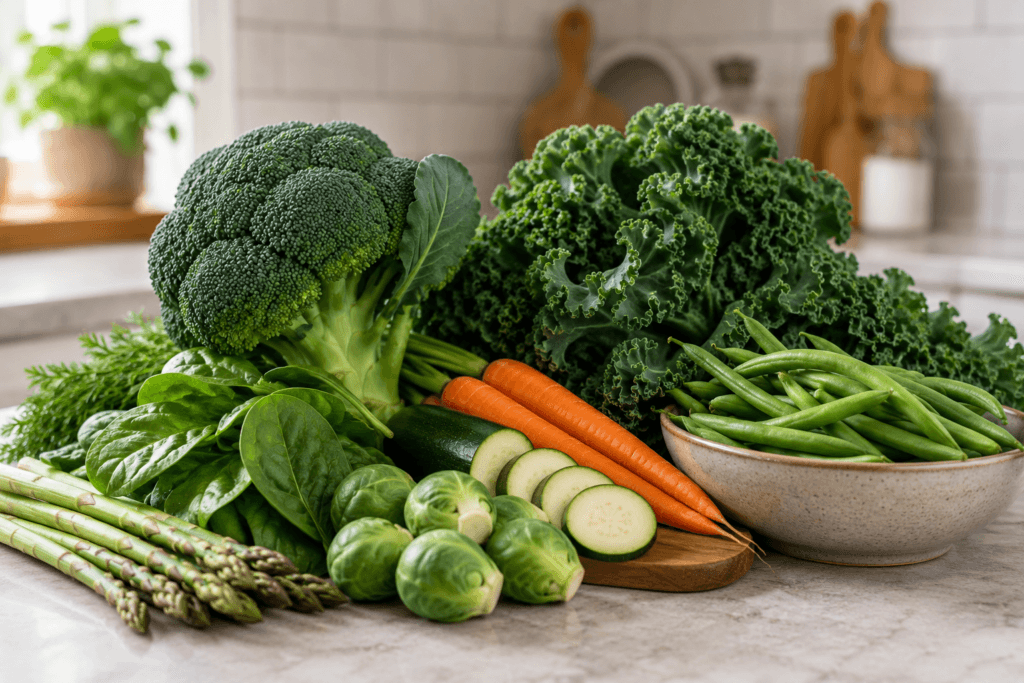
1. Broccoli
Broccoli is an easy one to work into occasional treats. It can be served raw or cooked, but always plain — no butter, sauces, garlic, onion, or heavy seasoning.
How to serve it: Cut it into small pieces sized for your dog. Lightly cooking it can make it easier to eat; let it cool fully before serving.
Keep in mind: Broccoli can cause gas or an upset stomach in some dogs, especially in larger amounts. Being nutritious for people doesn’t mean bigger portions are better for a dog.
2. Kale
Kale is another leafy green that contains vitamin K, along with other nutrients like calcium.
Can dogs eat it? Some dogs tolerate small amounts of plain kale fine; others don’t. If you’re trying it for the first time, start with a small amount and watch for any digestive upset. Finely chopping it makes it easier to mix into food.
Preparation: Raw or cooked can both work if your dog tolerates it — just keep it plain. Skip garlic, onion, salt, spicy seasoning, and heavy sauces. If your dog has a sensitive stomach or a digestive condition, check with your vet before making vegetables a regular thing.
3. Beef Liver
Beef liver is different from the vegetables here — it’s an animal-based food that also contains vitamin K, protein, and other nutrients.
Raw or cooked? Cooking liver plainly and letting it cool is a more cautious approach than feeding it raw, since cooking reduces the risk from harmful bacteria. Skip garlic, onion, salt, and heavy seasoning.
Why moderation matters: Liver is nutrient-dense, which is exactly why it shouldn’t be an everyday snack. A few small pieces now and then is plenty — it works well as a high-value training treat thanks to its strong smell and flavor. Larger regular amounts can throw off the overall nutritional balance of your dog’s diet.
4. Green Beans
Green beans are a practical, low-calorie option.
Fresh, frozen, or canned? Plain fresh or frozen beans work well. If using canned, check the label — canned vegetables often have added sodium, so look for a plain, no-salt-added option if you can find one.
How to serve: Cut into pieces appropriate for your dog’s size, either as standalone treats or mixed into their regular food. Some dogs take to them right away; others need time. There’s no need to push it if your dog isn’t interested.
5. Brussels Sprouts
Brussels sprouts also contain vitamin K, but they can be harder on some dogs’ stomachs than the other foods here.
Preparation: Plain, cooked, and cut into smaller pieces tends to be easier to tolerate than raw. Let them cool before serving. Skip bacon, butter, garlic, onion, and salty or spicy additions.
Watch for: Gas or digestive discomfort is more common with Brussels sprouts. If your dog gets diarrhea, vomiting, or noticeable gas after trying them, stop and check in with your vet if it continues or seems severe.

Which Food Has the Most Vitamin K?
It varies by food, serving size, and how it’s prepared — and honestly, the exact numbers matter less than you’d think for dogs. Human nutrition charts don’t translate directly into feeding guidance for a dog.
Your dog’s actual needs depend on things like body size, age, activity level, health status, current diet, and any medications. If you’re worried your dog isn’t getting enough of something, the right move is to talk to your vet rather than trying to fix it by feeding more of one food.
Can These Foods Help With Blood Clotting Problems?
Vitamin K plays a role in normal blood clotting, but that doesn’t mean feeding a vitamin K-rich vegetable can treat a clotting problem. It can’t.
If your dog has been exposed to an anticoagulant rodenticide, the clotting problems that can result are serious and need veterinary evaluation. Feeding broccoli or kale at home is not an adequate response to suspected poisoning.
Vitamin K and Rat Poison: What Dog Owners Should Know
This is probably the most important reason vitamin K comes up for dog owners at all.
Some rat and mouse poisons interfere with how the body recycles vitamin K, which can lead to abnormal bleeding. The effects aren’t always immediate — problems can take time to show up after exposure.
Possible signs include weakness, pale gums, fast breathing, nosebleeds, blood in urine or stool, bruising, or collapse. The specific signs depend on where and how severe the bleeding is.
If you think your dog has eaten rat or mouse poison, don’t wait for symptoms. Contact your vet or an emergency animal hospital right away, and bring the product packaging if you have it — different rodenticides work differently, and knowing which one is involved matters for treatment.
Does a Healthy Dog Need a Vitamin K Supplement?
Usually not. Dogs eating a complete, balanced commercial diet generally get what they need without extra supplementation.
A vet may prescribe vitamin K1 in specific situations, like after certain toxic exposures or for particular medical conditions — but that’s a different thing entirely from giving a general supplement to an otherwise healthy dog.
If your dog is on medication, has liver disease, a digestive disorder, unexplained bleeding, or eats a homemade diet, talk to your vet before adding any supplement.
How to Add These Foods Safely
If your vet has no concerns, treat these foods as occasional extras rather than a regular addition:
- Start small. Introduce one new food at a time so you can spot a problem if one shows up.
- Keep it plain. No garlic, onion, salt, spicy seasoning, or rich sauces.
- Cut food appropriately. Match the size to your dog to avoid choking risk.
- Watch for reactions. Vomiting, diarrhea, gas, itching, or loss of appetite are signs to stop and check with your vet.
- Don’t replace the main diet. Vegetables and organ meat should stay extras, not a replacement for a complete, balanced food — unless a vet has specifically designed the diet that way.

Can Dogs Eat These Foods Every Day?
There’s no need to. Feeding these foods daily isn’t necessary just because they contain vitamin K, and adding a lot of human food regularly can add extra calories or throw off nutritional balance.
Think of them as optional extras rather than something your dog’s diet is missing.
What If My Dog Is on a Prescription Diet?
Be extra cautious. Prescription diets are formulated for a specific medical purpose, and adding treats, vegetables, or supplements can change that nutritional balance. If your dog is on a prescription diet for kidney disease, GI issues, urinary problems, allergies, or another condition, check with your vet before adding anything new.
What If My Dog Eats a Homemade Diet?
Homemade diets can look healthy on the surface while still being unbalanced in ways that aren’t obvious. Rather than trying to fix one nutrient at a time, it’s worth having the whole diet reviewed — ideally by a veterinary nutrition professional who can account for your dog’s full nutritional needs.
FAQ’s
Is vitamin K good for dogs?
Yes — it’s an important nutrient for normal blood clotting and other functions. That doesn’t mean every dog needs a supplement, though. Most healthy dogs get what they need from a complete diet.
What foods are high in vitamin K for dogs?
Broccoli, kale, green beans, Brussels sprouts, and beef liver all contain vitamin K and can work as occasional additions for dogs that tolerate them, depending on preparation and portion size.
Can I give my dog these foods every day?
There’s usually no need to. Too many extras can add unnecessary calories or unbalance the overall diet.
Can dogs eat broccoli?
Many dogs can eat small amounts of plain broccoli. Cut it into appropriate pieces and skip seasoning. Some dogs get gassy or upset if they eat too much.
Is beef liver good for dogs?
It contains vitamin K, protein, and other nutrients, but it’s nutrient-dense and should be fed in moderation. Cooking it plainly is a more cautious choice than serving it raw.
Can these foods treat rat poison poisoning?
No. Don’t rely on food to manage suspected rodenticide poisoning. It requires veterinary care, and possibly vitamin K1 treatment. Seek help immediately if you suspect exposure.
Should I give my dog a vitamin K supplement?
Not without talking to your vet first. It can be appropriate in specific medical situations, but a healthy dog doesn’t automatically need one.
What should I do if my dog is bleeding?
Take unexplained bleeding seriously. Contact your vet or an emergency vet, especially if your dog seems weak, has pale gums, is breathing fast, or may have gotten into poison.
Final Thoughts
Vitamin K matters, but it doesn’t need to turn into a calculation exercise at mealtime. For a healthy dog already eating a complete diet, the priority is overall balanced nutrition, not maximizing one nutrient.
If you want to offer the occasional whole-food treat, plain broccoli, kale, green beans, Brussels sprouts, or a small amount of well-prepared beef liver are reasonable options for dogs that tolerate them.
Keep it simple: introduce new foods slowly, keep portions small, skip the seasonings, and don’t let extras replace a complete diet.
And the one thing worth repeating: if you suspect your dog has eaten rat or mouse poison, don’t try to handle it with food. Get veterinary help right away.
If your dog has ongoing health issues, unusual bleeding, dietary restrictions, or needs therapeutic nutrition, your vet is the right person to decide whether any dietary changes or supplementation make sense.