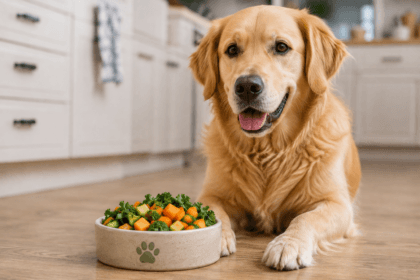


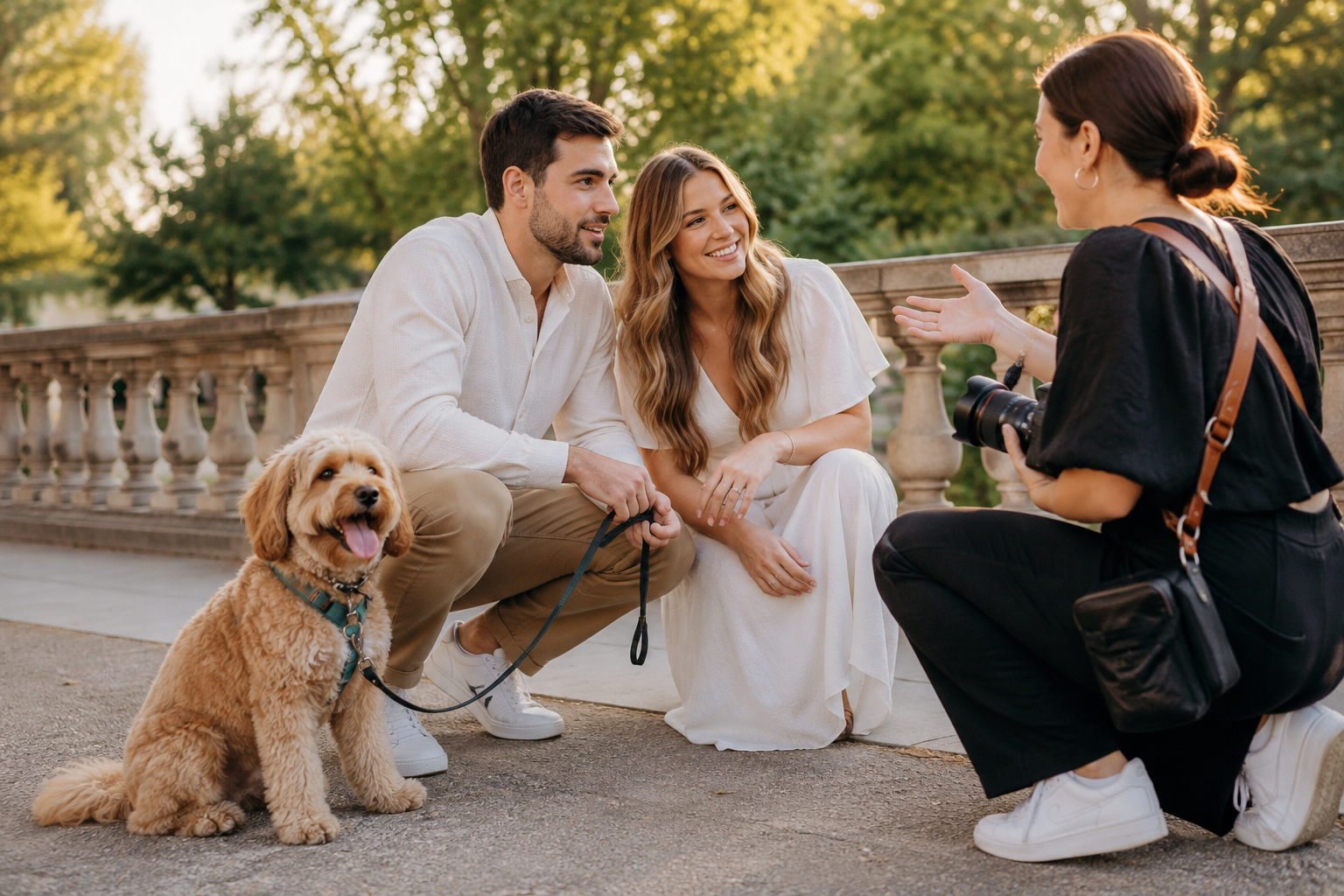
If your dog is basically a member of the family, leaving them out of your engagement photos probably feels wrong. Good news: more couples are bringing their pets along for the shoot than ever, and most photographers are happy to work them in. The catch is that a session with a dog takes a little more planning than one without.
- 1. Ask Your Photographer First
- 2. Pick a Dog-Friendly Location
- 3. Bring a Second Set of Hands
- 4. Get Your Dog Groomed Beforehand
- 5. Burn Off Some Energy First
- 6. Keep Gear Simple
- 7. Bring Treats and a Favorite Toy
- 8. Add a Few Fun Props
- 9. Plan for Breaks
- 10. Keep Expectations Realistic
- FAQ’s
- Will most photographers let me bring my dog to engagement photos?+
- How long should a dog be part of the session?+
- What if my dog doesn’t listen well outdoors?+
- Should I bring my dog’s own treats?+
- Is it okay if my dog isn’t in every photo?+
- Final Thoughts
Here are 10 practical tips to help the day go smoothly, whether your dog is a calm old soul or a chaos gremlin with four legs.
1. Ask Your Photographer First
Before you build your whole shoot around your dog, check with your photographer. Most are more than glad to include pets, but some locations they shoot at don’t allow animals, and a heads-up gives them time to plan poses, timing, and backup spots. This is also a good moment to mention your dog’s personality — a laid-back senior dog and a bouncy puppy call for pretty different approaches.
2. Pick a Dog-Friendly Location
Not every scenic spot allows dogs, so it’s worth confirming before you fall in love with a location on Pinterest. Parks, beaches, hiking trails, and open fields tend to be reliable options, but rules vary a lot by city and by specific property. If your dream location doesn’t allow pets, some couples split the difference: photos with the dog at one spot, and a second, dog-free location for a different look.
3. Bring a Second Set of Hands
This is one of the most repeated pieces of advice from photographers who shoot a lot of pet sessions, and for good reason. You’ll want some photos of just the two of you, which is hard to get if one of you is holding a leash the whole time. A friend or family member who can hold the leash, grab your dog’s attention, and step in between shots frees you up to actually be in the moment.
4. Get Your Dog Groomed Beforehand
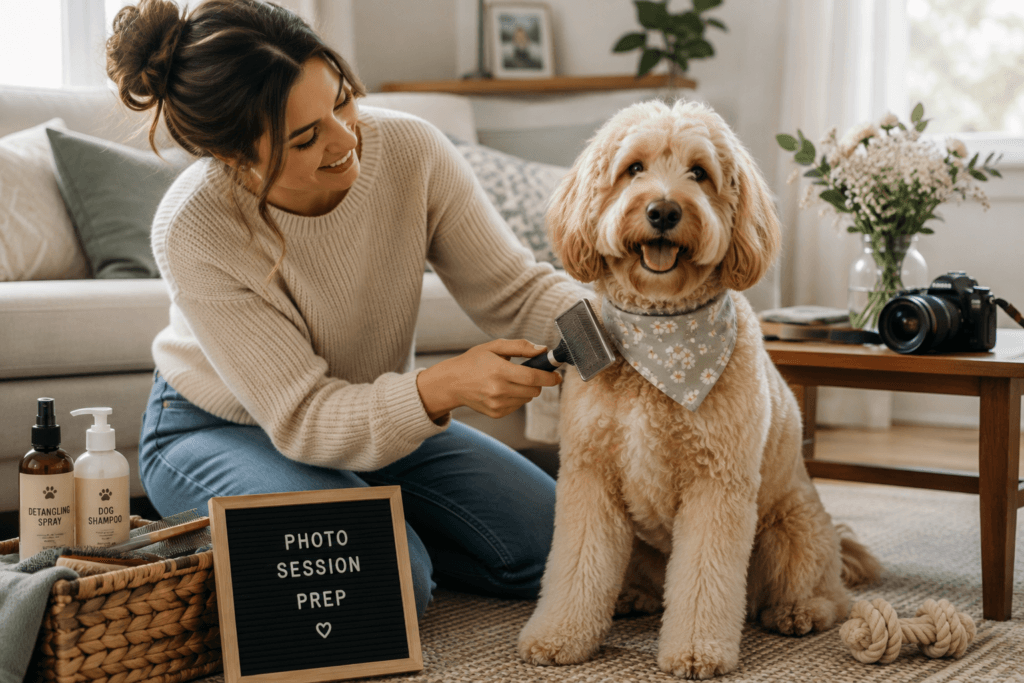
Just like you’d get a haircut or touch-up before your session, your dog can use a little prep too. A bath, a brush-out, and a nail trim a day or two ahead of time go a long way in photos. If your dog tolerates it, some couples add a small styling touch, like a bandana or bow, timed to when their coat is freshly groomed.
5. Burn Off Some Energy First
A dog with pent-up energy is going to have a hard time settling for photos. A walk, a game of fetch, or a good run before the session can take the edge off, especially for younger or high-energy dogs. The goal isn’t to tire your dog out completely, just enough that they’re not bouncing off the walls the second the camera comes out.
6. Keep Gear Simple
A bold, busy collar or a bulky harness can pull focus away from you and your partner in the final photos. A lot of photographers suggest going with a simple, well-fitted collar or leash in a color that complements your dog rather than competes with the shot. That said, safety comes first — if your dog needs a harness to stay secure and comfortable, use one, just aim for a simpler design if you can.
7. Bring Treats and a Favorite Toy
A squeaky toy or a handful of treats is one of the easiest ways to get your dog looking at the camera, sitting still, or perking up their ears at the right moment. Bring your dog’s own treats rather than relying on your photographer to have something on hand, since every dog has different preferences (and sometimes dietary restrictions). A little positive reinforcement throughout the session also keeps things fun for your dog instead of stressful.
8. Add a Few Fun Props
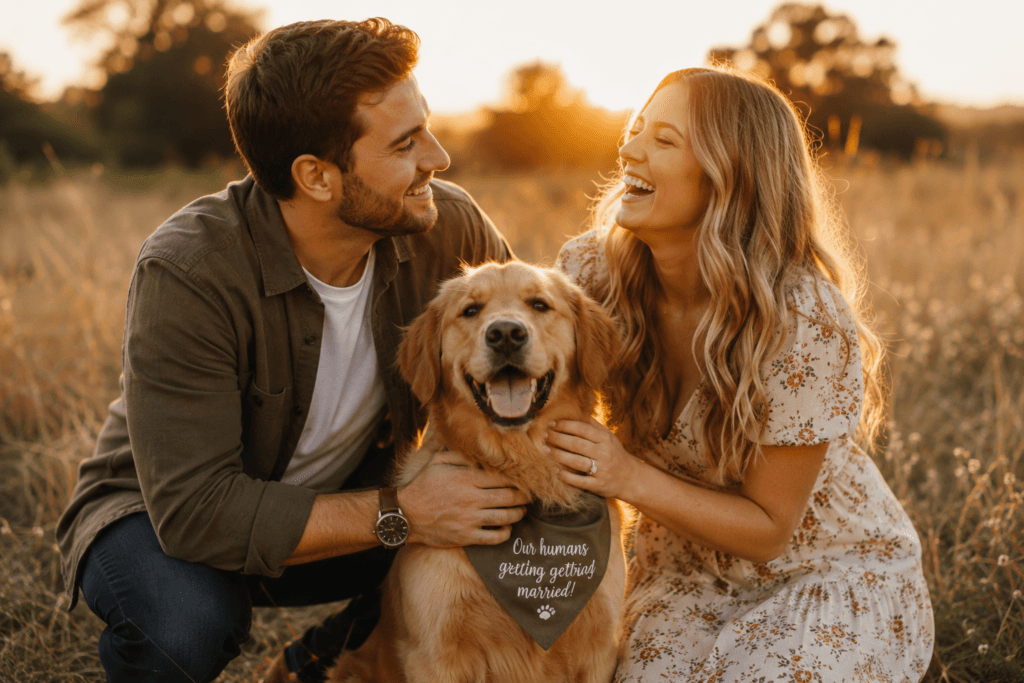
If you want to work your dog into the “we’re engaged” storytelling, a few simple props can help: a bandana or small sign with your wedding date, a ring-bearer-style accessory, or a leash that matches your outfits. Keep it to one or two touches rather than overloading the shot, since the goal is still a natural-looking photo, not a costume.
9. Plan for Breaks
Dogs don’t really understand the concept of “just five more minutes.” Build in some downtime during the session for water, a bathroom break, or just a chance for your dog to sniff around and reset. A short break can actually help you get better shots afterward, since a dog who’s had a moment to relax is easier to photograph than one who’s overstimulated.
10. Keep Expectations Realistic
Not every frame is going to be a perfect, magazine-ready shot, and that’s okay. Dogs have their own agenda, and some of the best, most genuine photos come from candid, slightly chaotic moments rather than a perfectly posed shot. Going in with a flexible mindset, and trusting your photographer to capture the good moments as they happen, usually leads to a better overall experience for everyone, including your dog.
FAQ’s
Many are happy to, but it’s still worth asking ahead of time, since some shoot locations have restrictions on pets and your photographer will want to plan accordingly.
It varies by dog, but many couples plan for their dog to join for part of the session rather than the entire shoot, especially if the dog gets tired, anxious, or overstimulated after a while.
A second person to help manage the leash and grab your dog’s attention, plus treats and a pre-session walk to burn off energy, can make a big difference even for dogs who aren’t perfectly trained.
Yes, that’s generally a good idea. Every dog has different preferences and sometimes dietary needs, so bringing treats you know your dog likes and can safely have works better than relying on whatever might be on hand.
Definitely. A lot of couples plan for a mix: some photos with their dog, and some just the two of them, which also makes it easier to get relaxed, dog-free shots without a leash in hand.
Final Thoughts
Including your dog in your engagement photos takes a bit of extra planning, but it’s rarely as complicated as it seems. A little prep — the right location, an extra set of hands, some treats, and a realistic mindset — goes a long way toward a session that feels natural instead of stressful for anyone involved, dog included.
At the end of the day, some of the best photos come from the in-between moments: your dog tilting their head at a squeaky toy, or leaning into your leg mid-laugh. Those are usually the shots you’ll love most anyway.